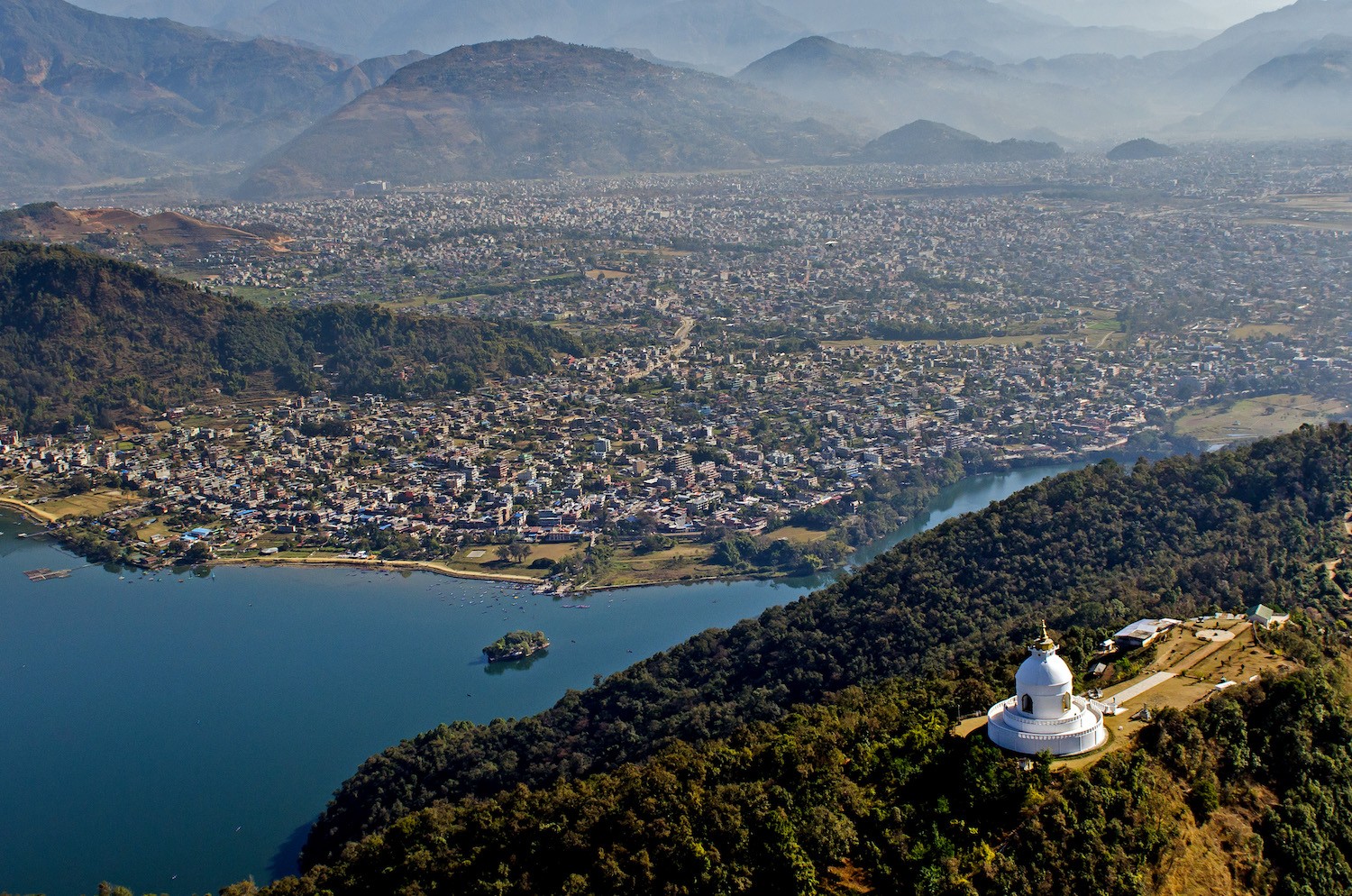
The significance of mountain tourism education was emphasized in a recent interaction program organized by Janapriya Multiple Campus, Simlachaur, on the topic “Tourism Education in the Tourism Capital”. Participants underscored the vital role of mountain tourism education in the context of Pokhara’s declaration as the tourism capital.
Associate Professor Dipendra Pahari, presenting a concept paper during the interaction, highlighted that various tourist destinations such as the Annapurna Circuit, Annapurna Base Camp, Mardi Himal, Poon Hill, and Ghorepani, directly impact Pokhara’s tourism. He noted that Pokhara is a key center for natural beauty, cultural heritage, and adventure tourism.
“Pahari pointed out that the entire Gandaki Province, including Pokhara, is intrinsically linked to mountain tourism. He mentioned that the ascent of Annapurna by French national Maurice Herzog and his team on June 3, 1950, established Pokhara as the gateway to the Annapurna region. Since then, there have been numerous opportunities for mountain tourism and trekking in the area,” said Pahari.
Mountain tourism education is not limited to academic programs, according to Associate Professor Pahari. It encompasses the development and promotion of the entire tourism system. With the declaration of Pokhara as the tourism capital, the provincial government and Pokhara Metropolitan City have plans to advance with special strategies, including the construction of related infrastructure alongside the commercial flights at Pokhara International Airport.
In 2019, out of 1.19 million tourists who visited Nepal, approximately 480,000 came to Pokhara. Among them, 65 percent were for trekking. Over NPR 192 billion has been invested in the tourism sector of the Gandaki Province, including Pokhara.
According to Pahari, 40 percent of the people involved in tourism in Pokhara work as trekking guides, in the hotel business, and in adventure sports. Janapriya Multiple Campus in Pokhara has been operating a Bachelor in Mountain Tourism Management program under Tribhuvan University’s autonomous programs. Pahari mentioned that through mountain tourism education, the campus aims to further contribute to Pokhara’s status as the tourism capital.
Campus Chief Ramesh Khadka expressed confidence that mountain tourism education will produce trained manpower, contributing to culture and environmental conservation, and creating job opportunities. Campus Management Committee Chairman Birendra Narayan Bijukchhe shared that the campus, which started 33 years ago in 1991 with 50 students and 10 teachers, has been adapting to the needs of the time.
Divyalakshmi Chalis, the coordinator of the campus’s autonomous program, noted that the Bachelor in Mountain Tourism Management program, launched in 2017, has produced 57 graduates to date. She emphasized the growing importance of mountain tourism education in light of Pokhara’s status as the tourism capital.