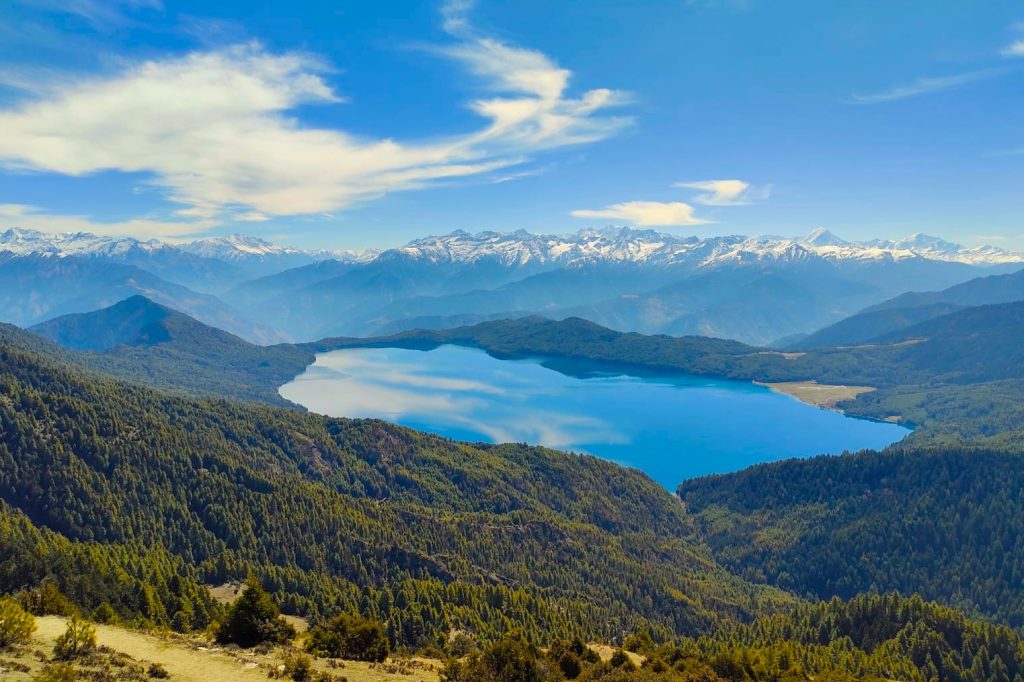
Khaptad Lake is one of far-western Nepal’s most serene and least explored natural destinations. Tucked away within the vast wilderness of Khaptad National Park, the lake sits at an altitude of around 3,050–3,200 meters, surrounded by rolling alpine meadows, dense forests, and a profound silence that defines the Khaptad landscape. Far from the crowded trekking routes of central Nepal, this remote lake offers a rare combination of natural beauty, spiritual depth, and ecological richness, making it a hidden treasure for those willing to venture into Nepal’s quieter highlands.
Journey into Remote Far-West Nepal
Reaching Khaptad Lake is an experience in itself, beginning with travel to Dhangadhi or Dipayal, followed by a long overland journey into the hills of Doti. From there, the route continues on foot through rugged terrain, traditional settlements, and gradually rising forest trails. As the trek progresses, modern life feels increasingly distant. Mobile signals fade, roads disappear, and nature takes over completely.

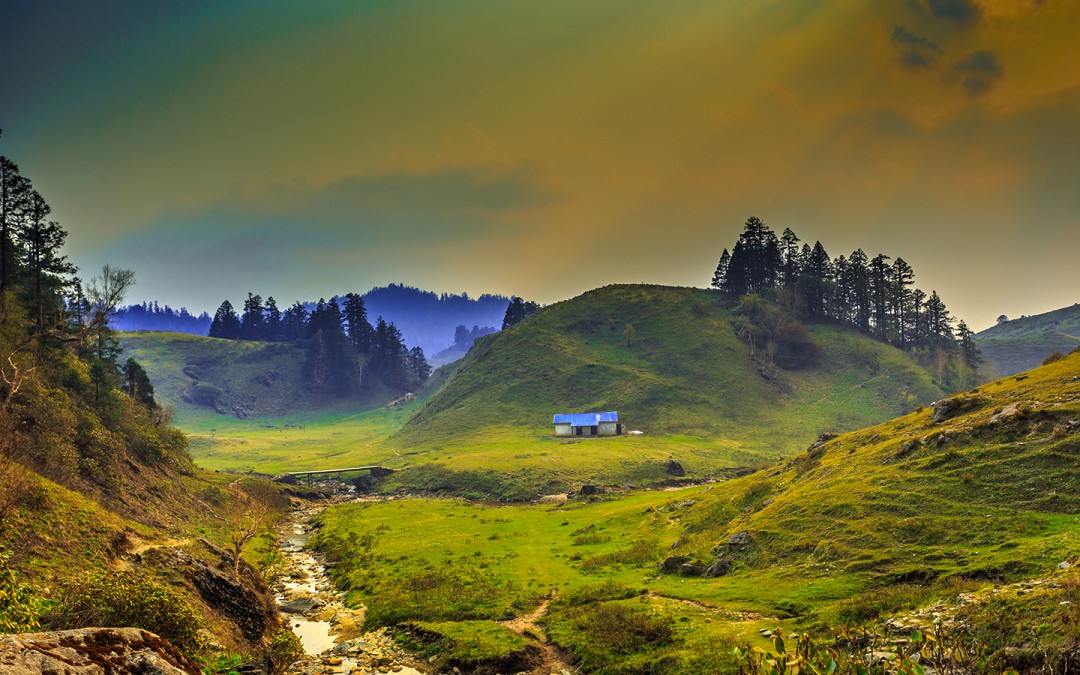
The trail passes through ancient rhododendron and pine forests, open “patans” (highland grasslands), and gentle ridges that offer sweeping views of the surrounding hills. Unlike commercial trekking routes, this journey is quiet and minimally developed, which preserves the authenticity of the experience. Most visitors reach the lake after trekking for several days, often staying in basic shelters or camping under open skies, fully immersed in the wilderness.
The Landscape and Tranquil Waters
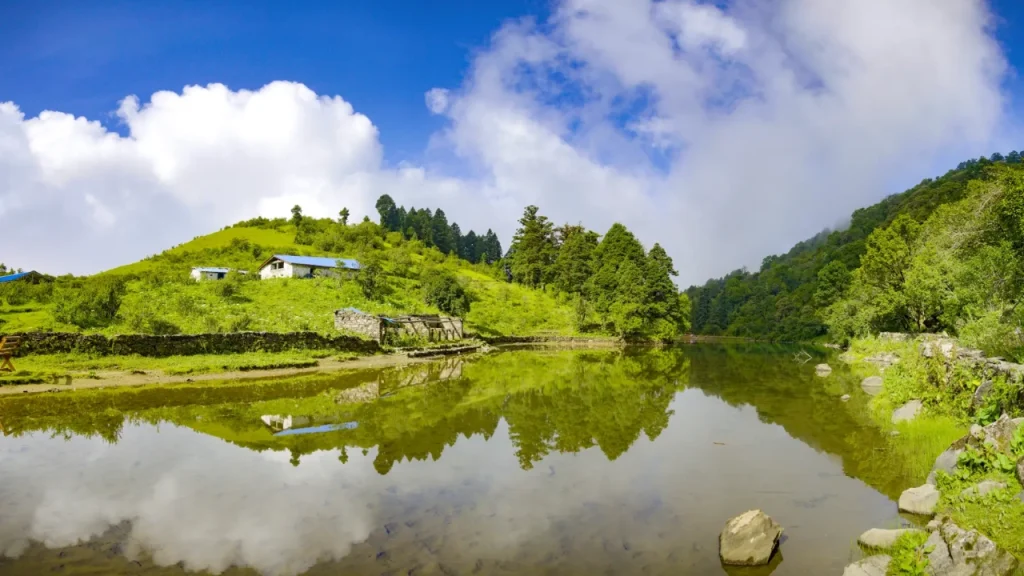
Khaptad Lake itself is modest in size, but its beauty lies in its purity and surroundings. The still water reflects the sky like a natural mirror, often capturing drifting clouds, pine silhouettes, and the changing hues of sunrise and sunset. On calm days, the lake appears almost motionless, blending seamlessly with the surrounding meadowland.
The broader landscape of Khaptad is equally captivating. Vast green grasslands stretch across rolling hills, interspersed with wildflowers during spring and monsoon seasons. In autumn, clear skies reveal distant Himalayan peaks, adding grandeur to an already peaceful setting. The entire region feels untouched, as if preserved in its natural state for centuries.
Spiritual Legacy of Khaptad Baba
Khaptad is not only a natural sanctuary but also a deeply spiritual place. The area is closely associated with Khaptad Baba, a revered ascetic who spent decades meditating in these hills. His former hermitage, located within the national park, continues to attract pilgrims and spiritual seekers who come to experience the peace he once sought in isolation.
Visitors often describe Khaptad as a place where silence itself feels meaningful. The absence of urban noise, combined with the expansive natural surroundings, creates an atmosphere conducive to reflection and meditation. Small shrines, sacred sites, and the nearby Triveni confluence further enhance its religious significance, blending Hindu spiritual tradition with the raw serenity of the Himalayas.
Biodiversity within Khaptad National Park
Khaptad National Park is one of Nepal’s important protected ecosystems, hosting rich biodiversity across its varied terrain. The region supports more than 175 species of birds, including the Himalayan monal, Nepal’s national bird, along with pheasants, eagles, and migratory species. Mammals such as musk deer, Himalayan black bears, leopards, and langurs also inhabit the forested areas.
Botanically, the park is equally diverse, with over 200 species of medicinal and alpine plants. Rhododendron, oak, pine, and fir forests dominate the mid-hills, while alpine grasses and seasonal flowers cover higher elevations. This ecological diversity makes Khaptad not only a scenic destination but also an important conservation zone in Nepal’s western Himalayas.

Best Time to Visit and Travel Experience
The ideal time to visit Khaptad Lake is during spring (March to May) and autumn (October to November). During these months, temperatures remain moderate, skies are clear, and trekking conditions are favorable. Spring brings blooming flowers and vibrant greenery, while autumn offers crisp air and panoramic Himalayan views.
Winter transforms Khaptad into a snow-covered wilderness, often making trails difficult or inaccessible. Monsoon season, on the other hand, brings lush vegetation but also slippery paths and travel challenges. Khaptad Lake is more than just a trekking destination; it is an experience of solitude, nature, and spiritual connection. For travelers seeking something beyond commercial tourism, it offers a rare opportunity to disconnect from modern life and reconnect with nature in its purest form. In every sense, Khaptad remains one of Nepal’s most quietly powerful Himalayan landscapes.