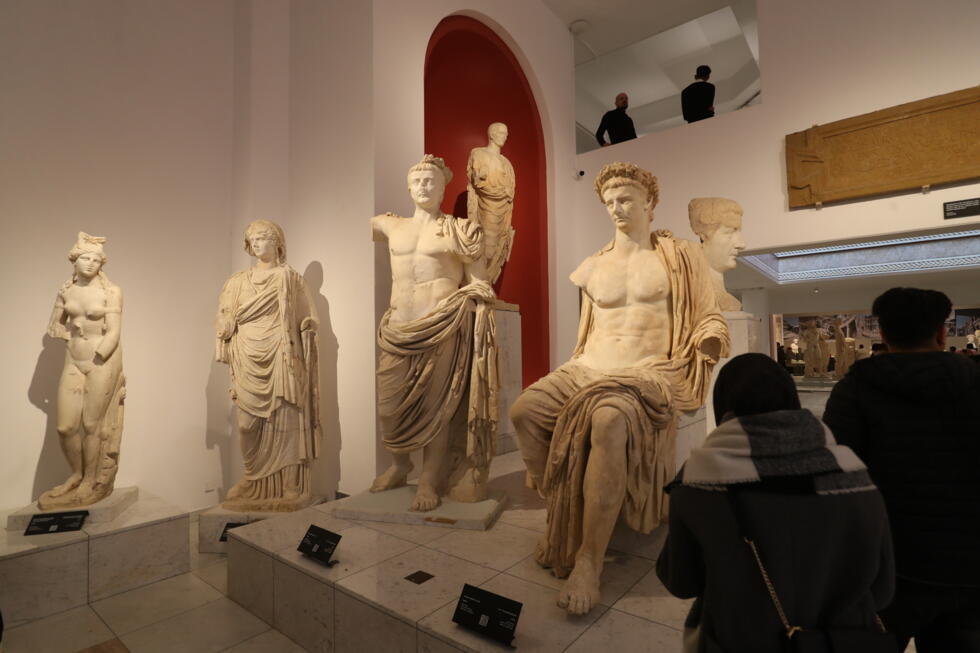
In a historic waterfront building in central Tripoli, Libyans are once again wandering past ancient statues, Greek and Roman antiquities, Ottoman-era weapons, and exquisite jewellery as the National Museum of Libya reopens this month. Known as the Red Citadel and once the seat of power, the museum’s reopening marks a significant milestone in the country’s cultural revival, nearly 14 years after the NATO-backed uprising that toppled longtime leader Moamer Kadhafi in 2011 plunged Libya into political chaos.
Visitors, including architecture and interior design students like Nirmine Miladi, 22, and her sister Aya, 26, have expressed awe at the museum’s modernized layout. “It’s a different world,” Nirmine said, marveling at the new facility, while Aya highlighted the careful lighting, interactive screens, and digital tools that make Libya’s heritage accessible to everyone.

Preserving Treasures During a Turbulent Period
Following Kadhafi’s overthrow, Libya faced years of instability, with rival administrations in Tripoli and Benghazi competing for authority. During this period, fears of looting and vandalism prompted the Department of Antiquities to remove all artefacts for safekeeping. Mohamed Fakroun, head of international cooperation at the department, described the closure as a “dark period” for the museum.
Curator Fathiya Abdallah Ahmad revealed that only a few staff members knew the locations of secret, sealed rooms where the museum’s treasures were stored for over a decade. Their efforts ensured that the priceless collections were protected until the museum could reopen in a modern, internationally compliant format.
Modern Facilities and Interactive Experiences
The revitalized museum now features digital projections, audio guides, QR codes, and interactive screens, allowing visitors to explore exhibits in depth. One room is dedicated to Roman Emperor Septimius Severus, born in the ancient city of Leptis Magna, now a UNESCO World Heritage Site. Another section showcases artefacts stolen during Libya’s turbulent years and later returned from the United States and the United Kingdom.
Visitors have embraced the museum as more than a cultural venue, it is seen as a national symbol and a step towards reconciliation. “It’s a chance to reconnect with our past,” Aya Miladi said, noting that the reopening represents stability and the preservation of Libya’s heritage after years of war.
Inspiring Patriotism and Education
The reopened museum is already serving as an educational hub. Teacher Fatima al-Faqi, 48, brought high-school students to explore the collection, ranging from Roman statues to stuffed animals in the natural history section. “There is a world of difference between this museum and the dark, dusty facility I visited 30 years ago,” she remarked. By engaging young Libyans, the museum helps nourish a sense of patriotism and a deeper understanding of their national history.
Investment Amid Challenges
Despite Libya’s ongoing economic struggles, including cash shortages and fuel crises, the Tripoli government invested over $5 million in rehabilitating the museum and its surrounding areas. The investment underscores the importance of culture and heritage as a unifying force in a nation still recovering from conflict.

A Step Towards Unity and Stability
The National Museum’s reopening is more than a restoration of artefacts; it is a symbol of resilience, reconciliation, and national pride. By preserving Libya’s ancient treasures and presenting them through modern techniques, the museum fosters a sense of shared identity and hope for a more stable future.
As Libyans stroll through the bright halls of the Red Citadel, the museum stands as a reminder that, despite years of political upheaval, the country’s cultural heritage endures, offering both inspiration and a bridge to a more unified, peaceful Libya.