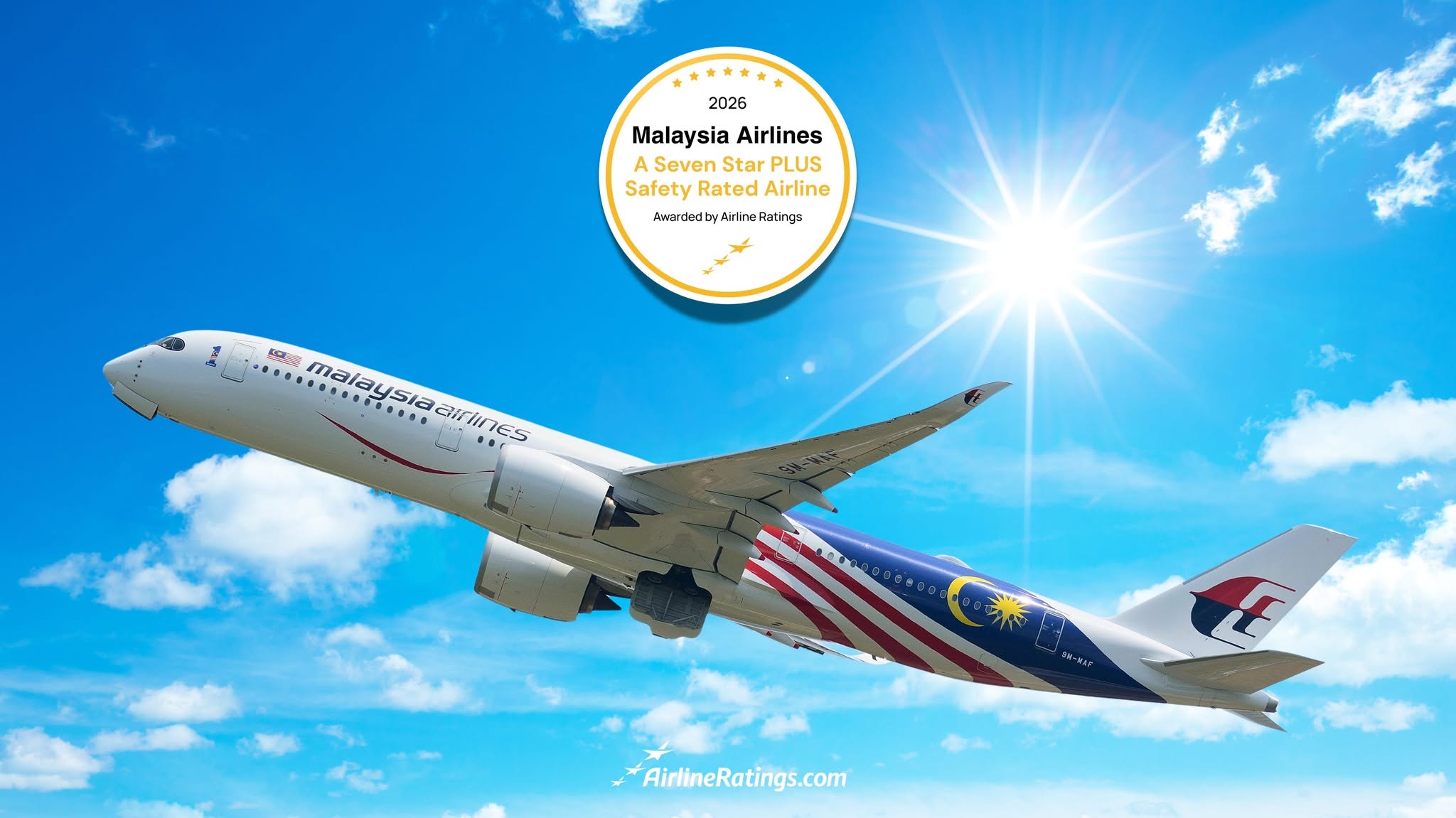
Malaysia Airlines has achieved the highly coveted Seven Star PLUS Safety Rating from AirlineRatings.com, placing the national carrier among an elite group of global airlines recognized for exceptional in-flight safety standards and operational excellence. The latest recognition elevates Malaysia Airlines into the top tier of the global aviation industry, positioning it alongside internationally renowned carriers such as Etihad Airways, Cathay Pacific, and Air New Zealand, airlines widely recognized for maintaining some of the world’s highest safety benchmarks. The award marks another major milestone for Malaysia Airlines as it continues strengthening its reputation for safety, operational discipline, and passenger confidence in an increasingly competitive global aviation sector.
Recognition Highlights Strong Safety Culture
The Seven Star PLUS rating is considered one of the aviation industry’s most rigorous independent safety recognitions. Unlike standard airline safety rankings that primarily focus on aircraft maintenance records, regulatory compliance, and fleet age, this rating places significant emphasis on real-time cabin crew performance, operational discipline, and in-flight safety management.

Malaysia Airlines had already held AirlineRatings.com’s highest Seven Star Safety Rating, but achieving the upgraded PLUS designation required passing an extensive independent audit process designed to evaluate how effectively safety procedures are implemented during actual flight operations. According to AirlineRatings.com, only a small number of airlines worldwide successfully achieve this distinction, making the recognition particularly significant for Malaysia Airlines.
Independent Audit Conducted Across Six Flights
To qualify for the Seven Star PLUS designation, airlines must voluntarily open their operations for an independent and anonymous safety audit conducted under normal operating conditions. The assessment involves airline auditors observing cabin crew performance during six separate flights, closely monitoring whether safety protocols are properly communicated, enforced, and consistently followed throughout the passenger journey.
The audit specifically examines critical operational areas including emergency procedures, crew coordination, passenger management, safety briefings, and compliance with cabin safety regulations. Airlines that fail to meet the required standards do not receive the PLUS designation and retain their standard Seven Star rating, with an opportunity to undergo reassessment after addressing operational shortcomings. Industry analysts note that the audit provides airlines with valuable operational feedback while giving passengers additional confidence that safety procedures are being independently verified rather than simply self-reported.
Cabin Crew Professionalism Earns High Praise
One of the strongest factors contributing to Malaysia Airlines’ success was the exceptional professionalism demonstrated by its cabin crew during the audit process. Sharon Petersen, Chief Executive Officer of AirlineRatings.com, praised the airline’s disciplined onboard safety procedures and the professionalism of its flight attendants.
She highlighted the crew’s vigilance in ensuring passengers remained seated whenever the seatbelt sign was illuminated, even during extended periods when travelers naturally become restless and attempt to move around the cabin. Petersen stated that maintaining passenger compliance under such circumstances reflects strong crew discipline and excellent safety management.
She also commended the airline’s emergency exit briefings, describing them as highly impressive and reflective of well-trained cabin personnel. According to Petersen, what stood out even further was the airline’s commitment to strengthening operational systems beyond the visible passenger experience.
Following the audit, AirlineRatings.com visited the airline’s operational facilities and observed extensive safety improvements implemented over the last decade. She noted that Malaysia Airlines had made significant progress in areas such as crew resource management, human factor analysis, and fatigue management systems, areas many international airlines continue to struggle with.
A Decade of Safety Transformation
For Malaysia Airlines and its parent company, Malaysia Aviation Group, the recognition represents years of sustained investment in safety modernization and operational reform. Over the past decade, the airline group has worked extensively to strengthen internal operational systems, improve crew coordination frameworks, and establish a stronger organizational safety culture.
Executives say safety has increasingly become central to every operational decision made across the company, from ground operations and flight management to cabin procedures and workforce training. The recognition reflects not just individual employee performance but the company’s broader institutional commitment to continuous operational improvement.
Leadership Responds to Major Achievement
Bryan Foong, Chief Executive Officer of Airline Business at Malaysia Aviation Group, said the recognition validates years of work invested in building a culture where safety remains the organization’s highest priority. According to Foong, the Seven Star PLUS designation is meaningful because it specifically acknowledges the professionalism, operational discipline, and robust safety practices demonstrated consistently by employees across the airline’s operations.
He stated that safety remains a shared responsibility embraced by every employee throughout the organization and continues to guide the company’s long-term strategic planning. Foong added that the recognition reinforces Malaysia Aviation Group’s commitment to continuously strengthening operational resilience, improving internal capabilities, and maintaining the highest possible standards of passenger safety and service excellence.
What Seven Star PLUS Means for Travelers
For travelers, the Seven Star PLUS rating serves as a powerful indicator of trust and reassurance. Unlike traditional airline rankings that largely assess technical infrastructure, this certification focuses heavily on the human element of aviation safety, examining how effectively safety procedures are carried out by cabin crews during real passenger flights.
Industry experts say such certifications have become increasingly important as passenger expectations continue evolving after years of heightened attention on airline safety and operational transparency. Recent global aviation studies indicate that nearly 40 percent of international travelers experience some degree of flight anxiety, making independent third-party safety certifications an increasingly influential factor in booking decisions. The PLUS designation signals that an airline has voluntarily subjected itself to independent scrutiny and successfully met exceptionally high operational safety standards.

Setting New Global Aviation Standards
Malaysia Airlines’ latest achievement reinforces its growing position as one of Asia’s most trusted premium carriers while highlighting the increasing importance of operational discipline in modern aviation safety management. As global airlines continue investing in new aircraft technology and digital innovation, experts increasingly emphasize that human factors, including crew preparedness, passenger communication, fatigue management, and emergency response readiness, remain among the most critical components of aviation safety.
By earning the Seven Star PLUS rating, Malaysia Airlines has not only strengthened passenger confidence but also established itself as a benchmark for other airlines seeking to raise global in-flight safety standards. The recognition demonstrates that safety excellence extends far beyond aircraft engineering, requiring a deeply embedded organizational culture where operational discipline and passenger wellbeing remain central to every flight. With this achievement, Malaysia Airlines joins an exclusive circle of world-class carriers setting the future standard for safer, smarter, and more resilient air travel worldwide.