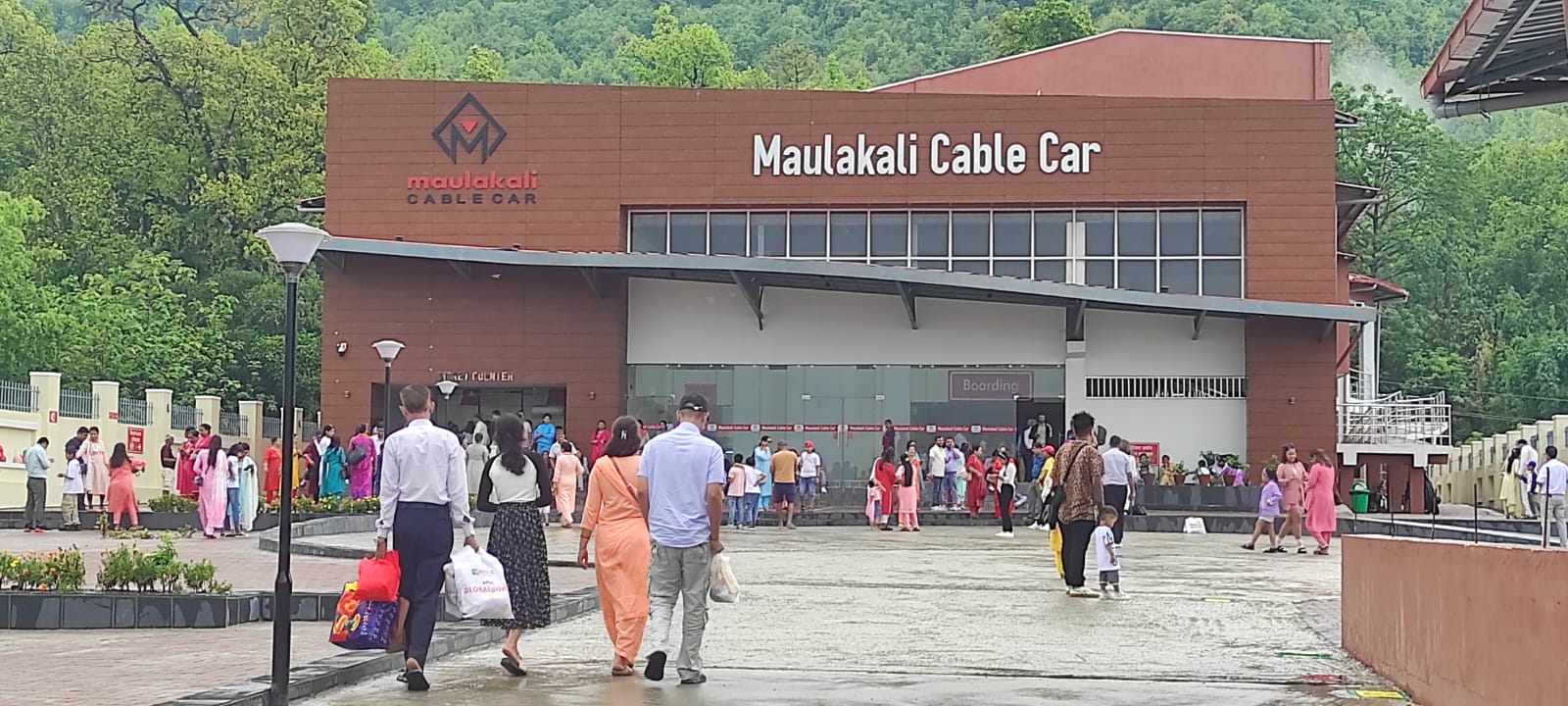
The Maulakali Cable Car, a key transport facility connecting pilgrims and tourists to the historic Maulakali Temple, has officially resumed operations following a two-month shutdown. The service had remained closed since Bhadra 24, when violent protests during the Gen Z movement resulted in arson and vandalism that severely damaged the infrastructure.
Successful Technical Testing Clears Path for Reopening
According to Suraj Poudel, Station Manager of Maulakali Cable Car Ltd., the system successfully completed its technical trial run on Sunday evening. He stated that if upcoming routine tests show no complications, the cable car will be fully operational for the public within the next few days.
The cable car, which began commercial service in Baisakh last year, was specifically built to enhance access to the revered Maulakali Temple located in Gaindakot-1. The vandalism during the protests had forced a sudden suspension of services.

“During the arson and destruction, the bottom station of the cable car sustained major damage,” Poudel said. “A specialized technical team from the Austrian company that originally installed the system conducted a week-long detailed assessment and testing.”
Following these evaluations, engineers identified the faults in the damaged equipment and carried out essential repairs. Internal safety checks later confirmed that all systems were functioning in a stable and secure manner. Poudel confirmed that the cable car is now ready for full-capacity operation after final-stage inspections.
System Verified Safe; Public Operation to Restart Soon
“The entire system has been technically verified as safe,” Poudel noted. “Once the last phase of testing is completed, the cable car will be relaunched at full capacity.” He further assured that passengers traveling to the Maulakali Temple and guests heading to the hilltop hotels can now look forward to safe and reliable service. The reopening is expected to bring significant relief to devotees who rely on the cable car for convenient access to the temple, which sits atop a hill overlooking the scenic Narayani region.
Heavy Losses Reported by Management
Chandra Prasad Dhakal, Chairperson of Maulakali Cable Car Ltd. and President of the Federation of Nepalese Chambers of Commerce and Industry (FNCCI), highlighted the extensive losses caused during the violent protests. According to Dhakal, the destruction of structures and equipment resulted in damages worth several crores of rupees.
The shutdown also dealt a blow to religious tourism. With the cable car out of service, the number of visitors to the Maulakali Temple declined sharply. The interruption came at a time when the temple typically sees a significant rise in pilgrims, especially during the festive season.
Lower Visitor Turnout at Maulakali Temple
Shalikram Sapkota, Chairperson of the Maulakali Temple Religious Service Committee, said visitor numbers had noticeably decreased in recent months. “When the cable car is in operation, we see a substantial increase in devotees,” he said. “This year, especially during Dashain, the turnout was far lower due to the shutdown.”
Sapkota expects footfall to rise again as operations return to normal. The temple has also become a growing attraction for nature lovers and domestic tourists who come to enjoy the surrounding landscapes.

A Reawakening for Religious and Nature Tourism
Beyond its religious importance, the Maulakali Temple is gaining popularity among visitors for its breathtaking natural scenery. Sapkota noted that during winter, tourists can witness a stunning panorama of fog-covered valleys at sunrise, along with views of the hills of Tanahun and Gorkha and distant Himalayan peaks.
Situated at an elevation of 561 meters above sea level, the Maulakali Temple lies about five kilometers northwest of Narayanghat Bazaar. The cable car plays a crucial role in offering easy and safe access to this culturally and naturally rich site.
With the reopening of the Maulakali Cable Car, the region anticipates a revival in both pilgrimage activity and tourism, marking an important step toward restoring normalcy after months of disruption.