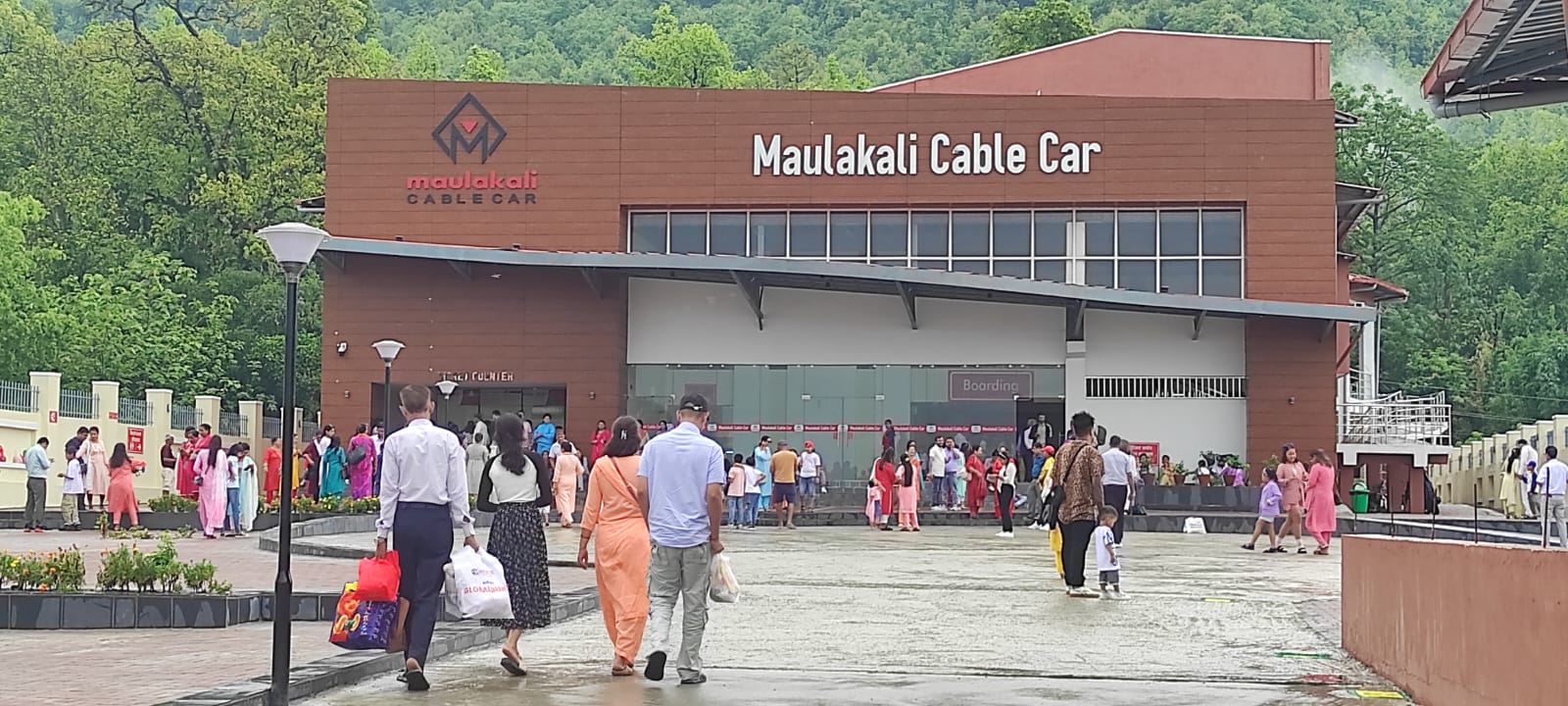
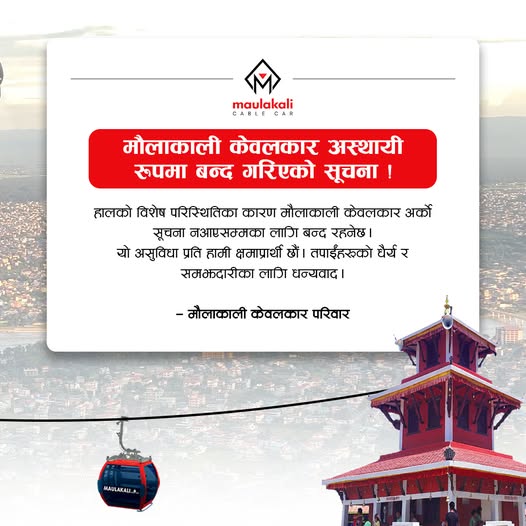
The Maulakali Cable Car, one of the prominent tourism and religious attractions of Nepal, has announced a temporary suspension of its services. In an official notice released by the Maulakali Cable Car management, it was informed that the operation will remain closed until further notice due to the prevailing special circumstances. The management extended apologies to visitors, devotees, and local communities for the inconvenience caused, while also expressing gratitude for their patience and understanding.
Background of Maulakali Cable Car
The Maulakali Cable Car is a vital infrastructure that connects devotees and tourists to the historic Maulakali Temple, situated in Gorkha district. The temple is regarded as one of the most sacred sites, attracting thousands of pilgrims during festivals, particularly Dashain, Navaratri, and other cultural occasions. The cable car not only serves as a convenient means of transport for worshippers but has also become an important hub for promoting tourism in the region. With modern cabins and a safe transport system, the cable car has been instrumental in providing easy access to the temple, reducing the time and effort required for visitors.
Importance for Pilgrims and Tourists
For many, the cable car is not just a transportation service but a lifeline that connects cultural, religious, and economic values. The steep trails and challenging routes to the temple are often difficult for elderly devotees, children, and those with health concerns. The operation of the cable car has therefore played a critical role in ensuring that people of all ages and backgrounds can comfortably visit the temple. Furthermore, it has encouraged domestic and international tourists to explore the natural beauty, religious significance, and hospitality of Gorkha district.
Impact of Temporary Closure
The temporary suspension is expected to have a notable impact on both religious devotees and the local economy. Pilgrims who had planned their visit during upcoming festive seasons will face inconvenience, as they may need to walk the traditional uphill trails. Similarly, local businesses, including restaurants, souvenir shops, and lodges that depend heavily on the inflow of visitors through the cable car service, are likely to experience reduced income during the closure period.
Management’s Commitment
The Maulakali Cable Car management team has assured the public that the closure is a necessary step in light of the current special circumstances. While specific details behind the suspension have not been publicly disclosed, the company emphasized its commitment to public safety and long-term service reliability. Management stated that all decisions are being taken with the wellbeing of visitors as the highest priority. They further pledged to provide timely updates and resume services as soon as the situation allows.
Religious and Cultural Significance
The Maulakali Temple is deeply rooted in the cultural and spiritual fabric of Nepal. Dedicated to Goddess Kali, the temple is believed to hold immense power and is a focal point of worship for devotees across the nation. The existence of the cable car has made access to this sacred site easier, strengthening its reputation as both a pilgrimage and a tourism destination. The suspension of services therefore resonates not only as a logistical setback but also as a cultural concern for many who hold religious ties to the temple.
Looking Ahead
Despite the temporary inconvenience, the Maulakali Cable Car management has expressed optimism that services will resume in the near future. Devotees and tourists are advised to stay updated through official announcements and plan their visits accordingly. Authorities have also urged the public to show understanding during this period, while highlighting that safety and quality service remain the cornerstone of the cable car operation.
The closure of the Maulakali Cable Car is a reminder of the delicate balance between infrastructure management, safety concerns, and public service. While the suspension will create short-term challenges for devotees, tourists, and local businesses, it reflects the management’s responsibility toward ensuring sustainable and secure operations. Once services resume, the cable car is expected to once again revive its role as a bridge between faith, culture, and tourism, contributing significantly to the local economy and Nepal’s religious heritage.