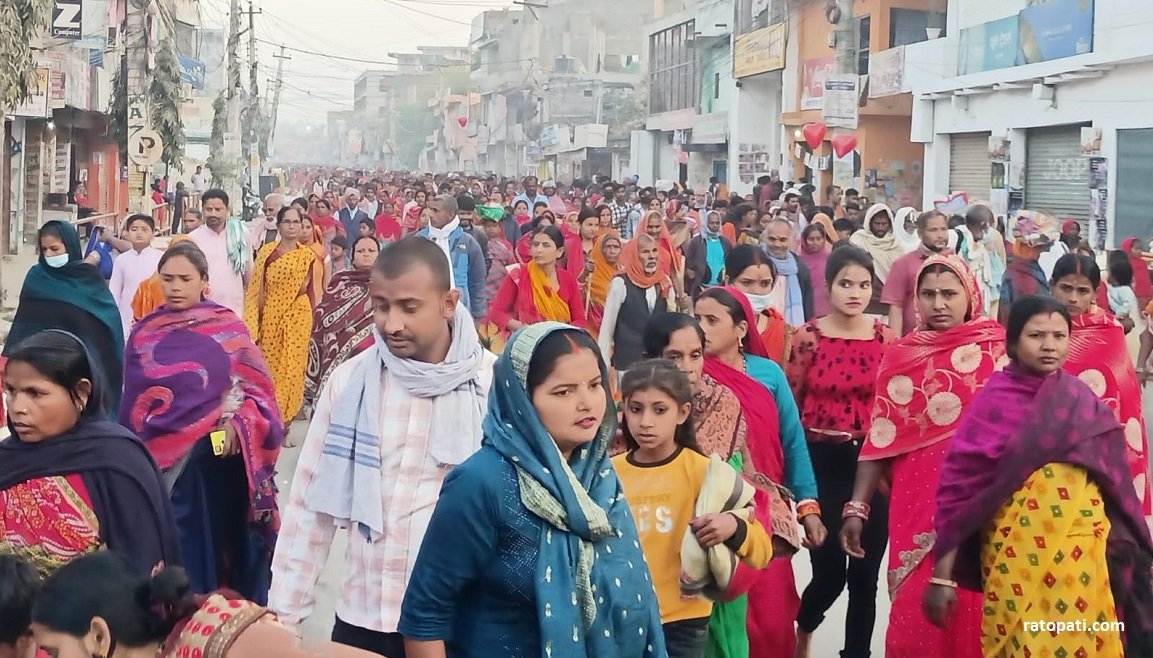
The revered Mithila Madhyama Parikrama, often described as the “Maha Kumbha of Mithila,” progressed into Dhanusha on Tuesday after completing its religious journey across Mahottari on the ninth day of the annual pilgrimage.
The spiritually significant procession, marked by deep devotion, cultural vibrancy, and cross-border participation, continues to draw thousands of pilgrims who walk together through sacred sites across the historic Mithila region shared by Nepal and India.
Sacred Halt at Kanchanban
On the eighth day, pilgrims stayed overnight at Kanchanban in Bhangaha Municipality–9, a site regarded as one of the most festive and spiritually uplifting stops of the journey. The area is widely known for its celebratory Holi traditions, where devotees combine religious observance with communal joy.
Kanchanban transformed into a hub of devotion as participants engaged in evening prayers, recitation of hymns, and ritual gatherings under the open sky. The atmosphere reflected a blend of ascetic discipline and cultural celebration, symbolizing the inclusive nature of the Mithila Madhyama Parikrama.
A Time-Honoured Pilgrimage Tradition
The Mithila Madhyama Parikrama is an age-old religious tradition in which devotees undertake a barefoot pilgrimage to multiple sacred sites across the greater Mithila region. The route spans both Nepal’s Mahottari and Dhanusha districts as well as adjoining Indian territories, reinforcing the deep civilizational ties between the two nations.
According to the ancient scripture Mithila Mahatmya, the tradition dates back to the 18th century and has since been observed annually with unwavering faith. The pilgrimage is believed to cleanse the soul, foster humility, and strengthen communal harmony.
Warm Reception by Local Communities
Throughout the route, residents welcome the Mithila Madhyama Parikrama participants with elaborate traditional rituals. Villagers perform puja, chant Vedic mantras, and offer flowers and sacred items as gestures of reverence.
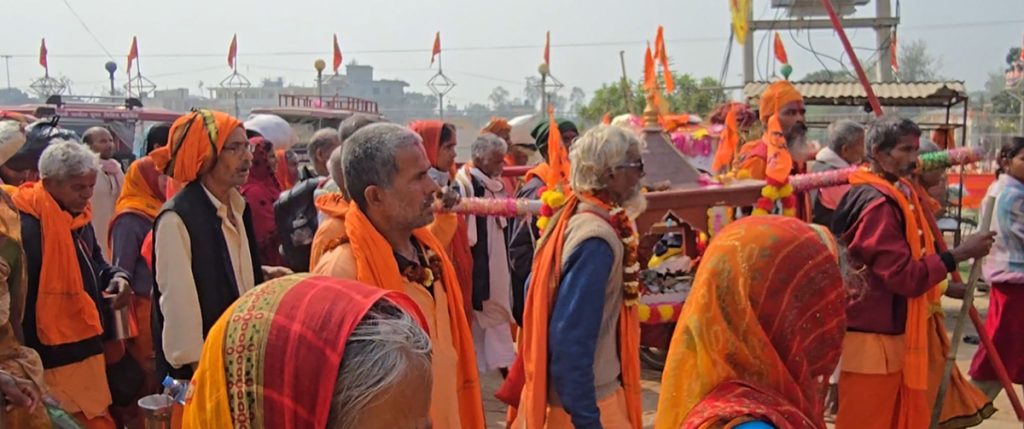
Communities also organize free services for the pilgrims, including meals, drinking water, temporary shelter, electricity, and even fireworks displays to mark the arrival of the procession. These acts of hospitality, largely volunteer-driven, reflect Mithila’s enduring culture of service and devotion. Local organizers describe the event not merely as a pilgrimage but as a collective cultural responsibility passed down through generations.
A Journey Across Borders
The Parikrama covers approximately 107 kilometres within Nepal and an additional 26 kilometres in India, making it a rare example of a transnational religious journey conducted entirely on foot. Several designated resting points are arranged along the route to accommodate the large number of participants.
This year, devotees and ascetics have arrived from prominent spiritual centres such as Ayodhya, Mathura, Haridwar, Darbhanga, Sitamarhi, and Baidyanath Dham, among other religious locations. Their participation underscores the shared spiritual geography of Mithila, where faith transcends political boundaries and nurtures centuries-old people-to-people connections.
Symbol of Cultural and Religious Goodwill of Mithila Madhyama Parikrama
Scholars and cultural observers often describe the Mithila Madhyama Parikrama as a living heritage festival that strengthens Nepal–India relations at the grassroots level. Unlike modern diplomatic exchanges, the pilgrimage sustains a traditional bond shaped by shared mythology, rituals, language, and social values.
The event also serves as a platform for preserving Maithili culture, promoting local traditions, and encouraging intergenerational transmission of knowledge about sacred geography and customs.
Continuing the Spiritual March
As the procession advances into Dhanusha, preparations are underway to host the pilgrims at upcoming sacred sites, where similar rituals of welcome and devotion will continue. Organizers expect participation to increase further in the coming days as more devotees join the march.
For the thousands walking together in prayer, the Mithila Madhyama Parikrama is not just a physical journey but a spiritual discipline, an act of faith that unites communities, honours tradition, and keeps the cultural heart of Mithila alive.