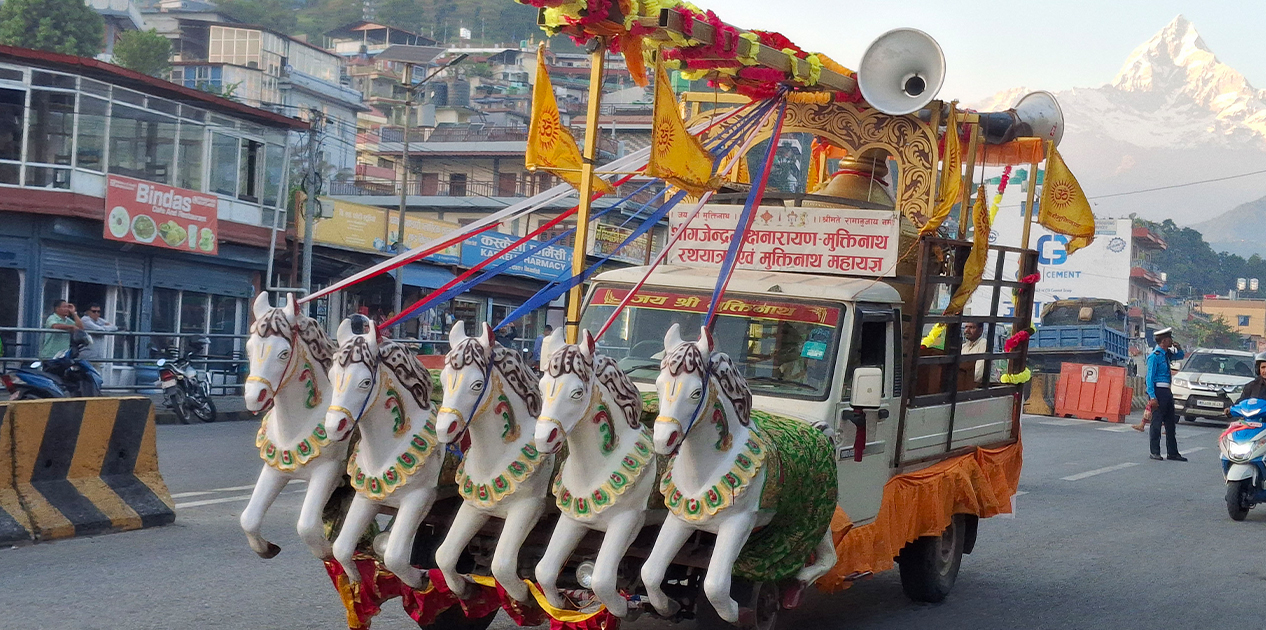
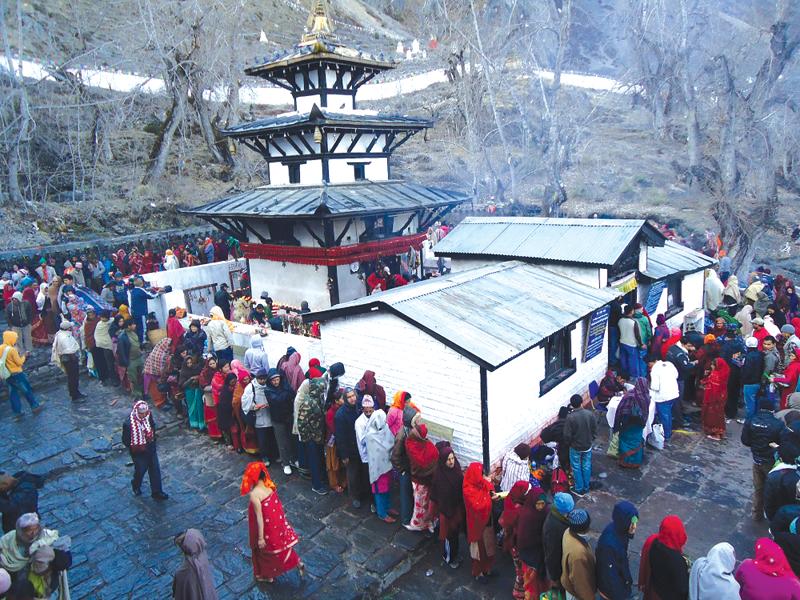
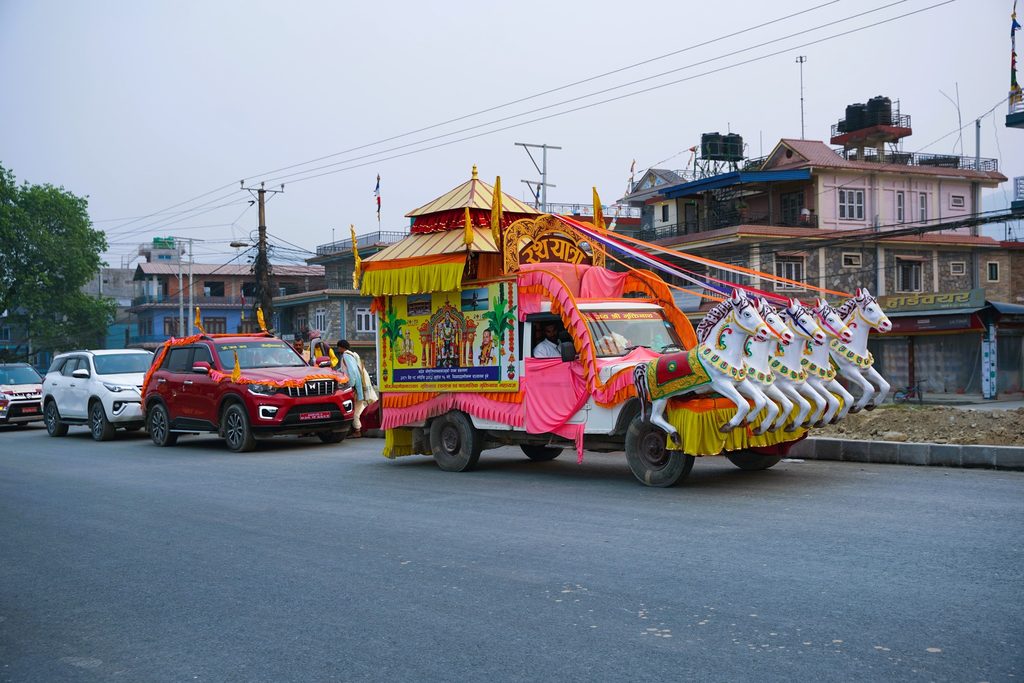
The Mechi–Mahakali Gajendra Moksha Narayan Muktinath Chariot Procession arrived in Pokhara on Monday, promoting Sanatan Dharma, spiritual awareness, and religious and cultural unity across Nepal. The religious procession of the chariot began at the renowned Muktinath Temple on October 25 (Kartik 8, 2083 BS), under the spiritual guidance of Swami Kamalnayanacharya, widely known as Muktinath Baba. The month-long initiative aims to connect major religious destinations, temples, monasteries, ashrams, and pilgrimage sites across eastern and western Nepal while promoting the country’s spiritual heritage and religious tourism.
Grand Welcome at Bindhyabasini Temple
The chariot procession received a special welcome at the historic Bindhyabasini Temple in Pokhara, where a large number of devotees and visitors gathered to participate in the religious programme. On the second day of the journey, the chariot procession travelled through Panchakot, Baglung Bazaar, Mal Dhunga, Kushma, Naudanda, and Hemja before reaching Bindhyabasini Temple.
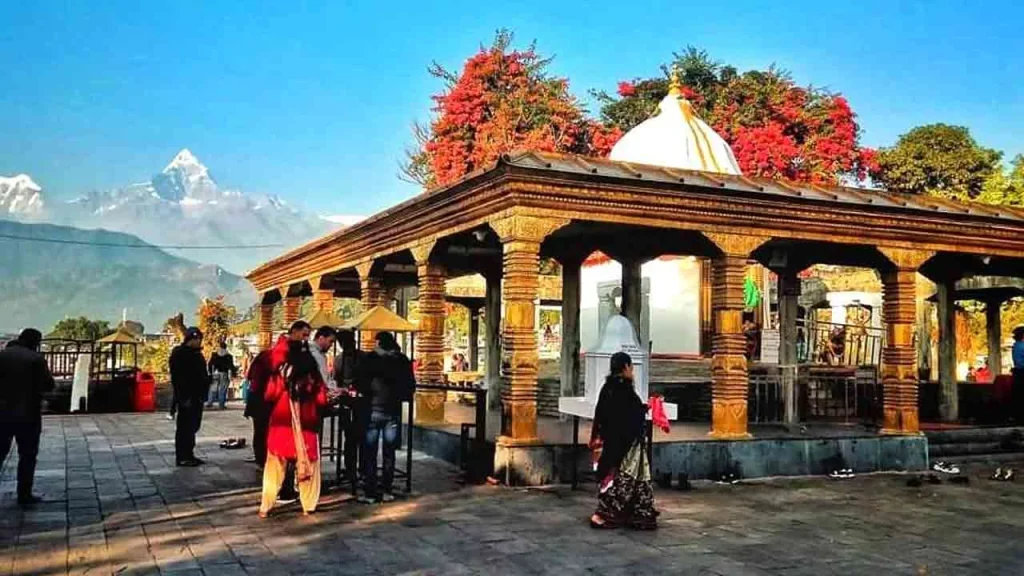
Following the welcome ceremony, the chariot travelled through Pokhara city and reached Shree Muktinath Santsewashram in Ramghat, where the participants stayed overnight. The reception at Bindhyabasini Temple highlighted Pokhara’s importance as a destination for religious tourism and pilgrimage. The gathering also provided an opportunity for devotees to participate in spiritual activities and celebrate Nepal’s religious traditions.
Chariot Procession Aims to Strengthen Religious Tourism and National Unity
According to Swami Shrikrishna Prapannacharya, the successor of Muktinath Baba, the procession aims to strengthen religious faith, expand spiritual awareness, preserve Sanatan culture, and promote national unity. He stated that the journey would connect important religious and cultural destinations from Mechi in eastern Nepal to Mahakali in the west.
By bringing these sites together through a common religious initiative, the procession seeks to strengthen relationships among pilgrimage centres and encourage people to explore Nepal’s spiritual heritage. Prapannacharya also highlighted the role of the procession in promoting religious tourism, explaining that connections between temples, ashrams, and pilgrimage destinations could encourage more people to visit sacred places across the country. The procession is scheduled to continue throughout the month of Kartik, concluding at the end of the month.
Trivenidham to Host Grand Gajendra Moksha Narayan Mahayagya
Following the conclusion of the chariot procession, the Gajendra Moksha Narayan Vaibhav Virat Mahayagya is scheduled to take place at Trivenidham from November 17 to December 15, 2026, according to Swami Shrikrishna Prapannacharya. The religious gathering aims to promote Sanatan Dharma, preserve traditional cultural practices, encourage agricultural development, and recognise the contributions of farmers.
One of the major attractions will be the establishment of a 25-foot-tall Siddhi Stambha, or ceremonial pillar, as part of the historic Dhyanyachal Mahayagya. Thousands of grain donors are expected to contribute rice and other grains for the offering, symbolising the importance of agriculture, food production, and collective participation in religious traditions. The organisers intend to bring together religious followers, farmers, community members, and visitors through the programme, linking spiritual observances with agricultural promotion and cultural preservation.
Extensive Religious and Cultural Programmes Planned
The Virat Mahayagya will feature a range of religious and cultural activities, including Dhyanyachal and Ashtachal ceremonies, recitations of the four Vedas and 18 Puranas, and readings of other traditional Hindu scriptures. The programme will also include Vedic rituals, fire offerings, religious discourses, devotional music, cow worship, and daily worship of 108 young girls and young boys as part of traditional religious observances.
Organisers have additionally announced a large-scale lamp-lighting ceremony involving five crore lamps and a national conference on Vedic Sanatan Dharma. These activities are intended to encourage collective worship, spiritual learning, cultural exchange, and the preservation of religious traditions. The scale of the event could also attract pilgrims from different parts of Nepal and neighbouring countries, creating opportunities for tourism-related businesses and local communities.
Bindhyabasini Temple Committee Welcomes the Initiative
Sushila Baral Regmi, general secretary of the Bindhyabasini Religious Area Development Committee, expressed happiness at welcoming the procession to the historic temple. She said that initiatives of this kind could contribute to the promotion of Nepal’s religious and cultural heritage by connecting important pilgrimage destinations and encouraging greater public participation in traditional religious activities. Bindhyabasini Temple is one of Pokhara’s prominent religious landmarks and attracts devotees throughout the year. Hosting the procession further highlights the temple’s role in religious gatherings and its potential to support the development of spiritual tourism in the region.
Religious Events Offer Opportunities for Tourism Development
The Mechi–Mahakali Gajendra Moksha Narayan Muktinath Chariot Procession represents an effort to connect Nepal’s religious destinations through a shared spiritual and cultural initiative. By linking temples, monasteries, ashrams, and pilgrimage centres, the journey seeks to strengthen religious networks and increase awareness of the country’s spiritual heritage. For Pokhara, which is already known for its natural beauty and adventure tourism, religious events offer an additional opportunity to diversify tourism activities and attract pilgrims alongside domestic and international visitors.
Better coordination among religious institutions, local governments, tourism organisations, and community groups could help integrate pilgrimage activities into broader tourism programmes. Improved visitor information, transportation, accommodation, sanitation, and event management would further enhance the experience of pilgrims and tourists. As the chariot procession continues across Nepal and preparations advance for the Mahayagya at Trivenidham, the initiative is expected to contribute to religious awareness, cultural preservation, and tourism promotion. With effective coordination and responsible management, such events can help showcase Nepal’s spiritual identity while creating opportunities for local communities and the wider tourism sector.