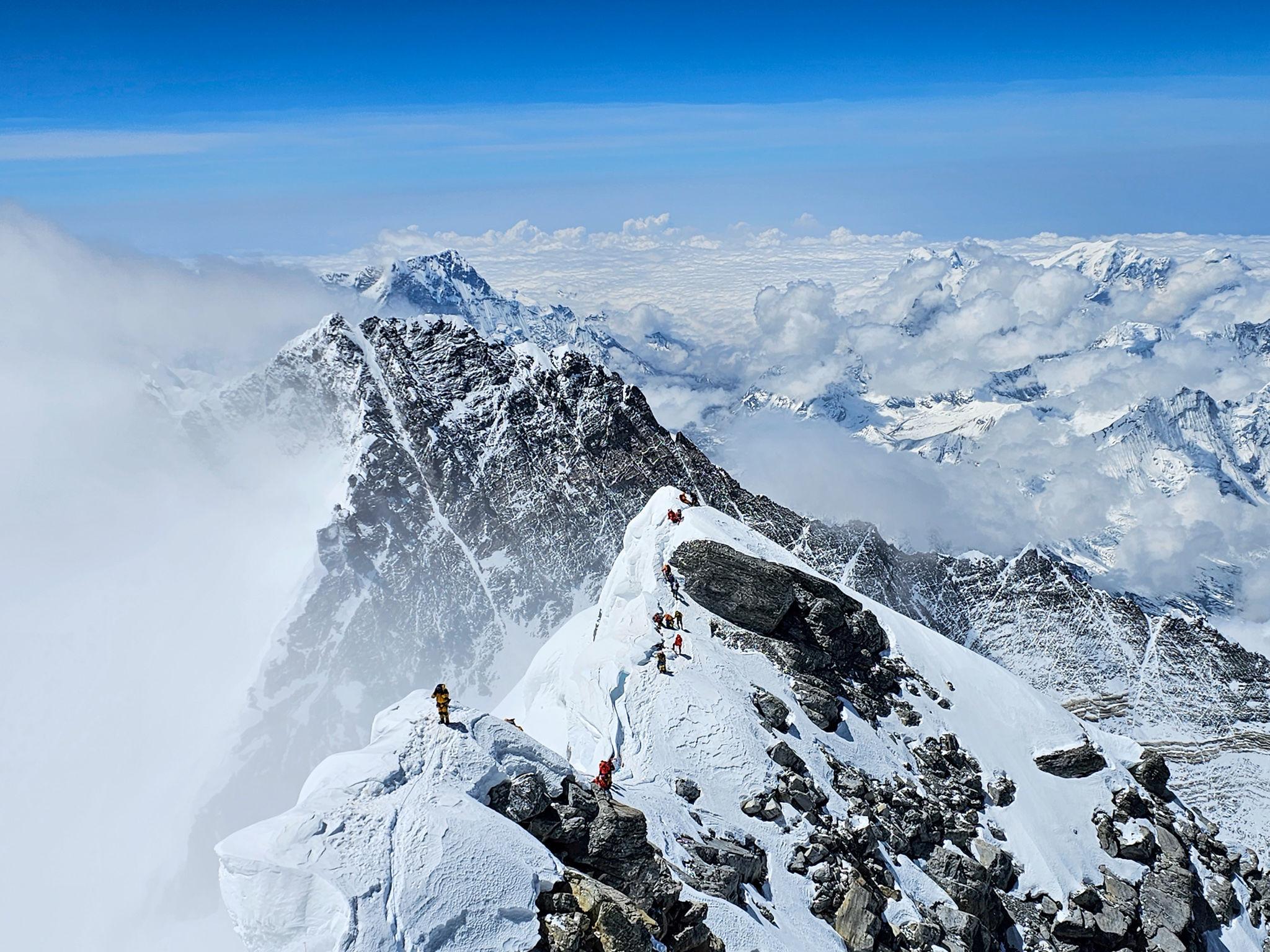
Nepal has issued climbing permits to 1,050 mountaineers across 125 expedition teams for 29 Himalayan peaks during the Spring 2026 climbing season, generating substantial revenue of USD 7,840,671, approximately Rs 1.16 billion.
According to the royalty report released by the Department of Tourism covering March 1 to April 30, 2026, the figures represent one of the most active and internationally diverse mountaineering seasons in recent years, with climbers arriving from 78 countries. Officials said the data reflects Nepal’s continued dominance as the world’s premier high-altitude mountaineering destination.

Everest Dominates Climbing and Revenue Share
Mount Everest (Sagarmatha) remains the central attraction, accounting for the majority of both climbers and royalty income. A total of 464 climbers from 47 teams have received permits to climb Everest this season. The mountain alone generated USD 6,792,041, contributing nearly 87 percent of the total royalty income for the entire spring season.
Out of the total Everest climbers, 364 are male and 100 are female. The expedition roster includes climbers from 55 countries, with China leading at 100 climbers, followed by the United States (67), India (58), the United Kingdom (32), and Japan (14). Nepal has issued permits to 12 domestic climbers for Everest this season.
Lhotse, Ama Dablam, and Makalu See Strong Activity
Beyond Everest, several other peaks have also attracted significant climbing interest. Mount Lhotse (8,516m) recorded 111 climbers across 9 teams, generating Rs 49.7 million in royalties, making it the second most popular peak of the season.
Ama Dablam (6,814m), known for its iconic pyramid shape, saw 92 climbers across 8 teams, continuing its reputation as a technical yet popular Himalayan climb. Mount Makalu (8,463m) attracted 62 climbers from 10 teams, earning USD 183,330 in royalties, while Nuptse (7,855m) registered 52 climbers across 5 teams. Other significant peaks include Himlung Himal (7,126m) with 46 climbers and Dhaulagiri I (8,167m) with 30 climbers across 4 teams.
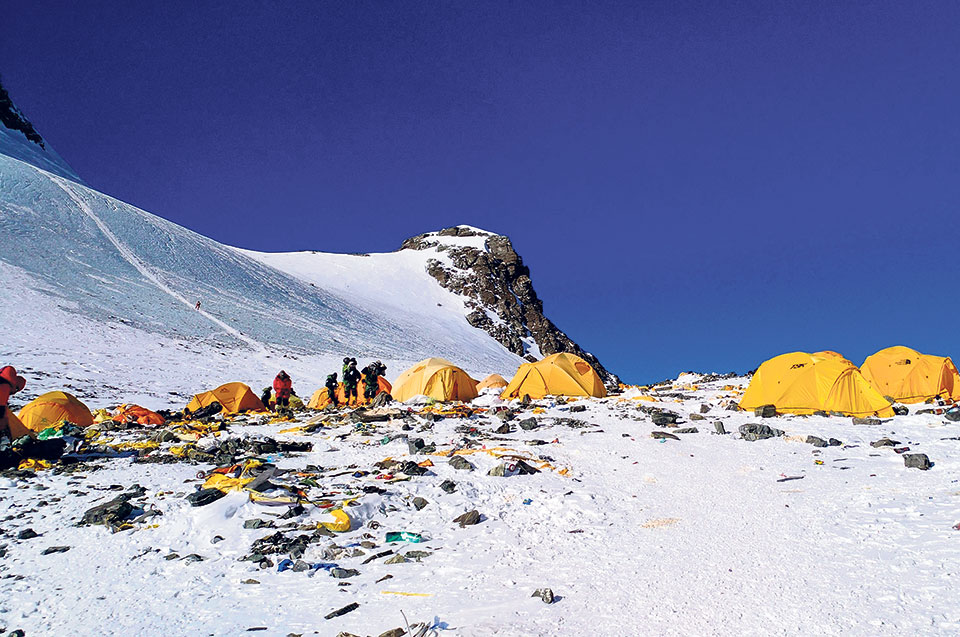
Kanchenjunga and Annapurna Also Draw Climbers
Kanchenjunga (8,586m) recorded 36 climbers across 4 teams, generating USD 108,000 in royalties. Meanwhile, Annapurna I (8,091m) attracted 27 climbers across 4 teams. Officials noted that these peaks continue to maintain strong appeal despite their technical difficulty and high fatality risk.
Emerging Interest in Less-Explored Peaks
One of the notable trends of the season is the growing interest in lesser-climbed peaks. Makalu II (Kangchung Tse) (7,678m) recorded 7 climbers from a single expedition team, earning USD 7,000 in royalties. Officials said such entries reflect a gradual shift among climbers toward more exploratory and less-crowded Himalayan objectives, particularly within the Makalu massif.
Diverse International Participation Across 78 Countries
Across all 29 peaks, climbers from 78 countries have received permits, highlighting Nepal’s global appeal in high-altitude adventure tourism. China leads overall participation with 139 climbers, followed by the United States (128), India (84), Germany (69), the United Kingdom (71), and Russia (66). Other notable contributors include France (25), Poland (31), and Australia (24). Nepal has issued permits to 16 domestic climbers across various peaks. Officials described the diversity as a strong indicator of Nepal’s sustained position in global mountaineering tourism.
Gender Participation Shows Gradual Progress
The gender breakdown for the season shows 794 male climbers and 256 female climbers, with women making up just under one-quarter of the total participants. While male climbers continue to dominate high-altitude expeditions, officials noted a gradual increase in female participation in Himalayan climbing over recent years.

Royalty Revenue Crosses Rs 1.16 Billion
Total royalty earnings for the Spring 2026 season stand at USD 7,840,671, equivalent to approximately Rs 1,169,144,159. Mount Everest alone accounts for the vast majority of revenue, while other peaks such as Lhotse (USD 333,000), Kanchenjunga (USD 108,000), Annapurna I (USD 81,000), and Dhaulagiri I (USD 90,000) also contributed significantly.
Climbing Season Progress and Route Update
Officials confirmed that the Khumbu Icefall route to Camp II has now been fully established after delays earlier in the season. This development has cleared the way for acclimatization rotations and summit pushes on Everest, Lhotse, and Nuptse, which share the same icefall route. With route preparation completed, expedition teams are now advancing toward higher camps as the spring summit window approaches, marking the peak phase of the 2026 Himalayan climbing season.