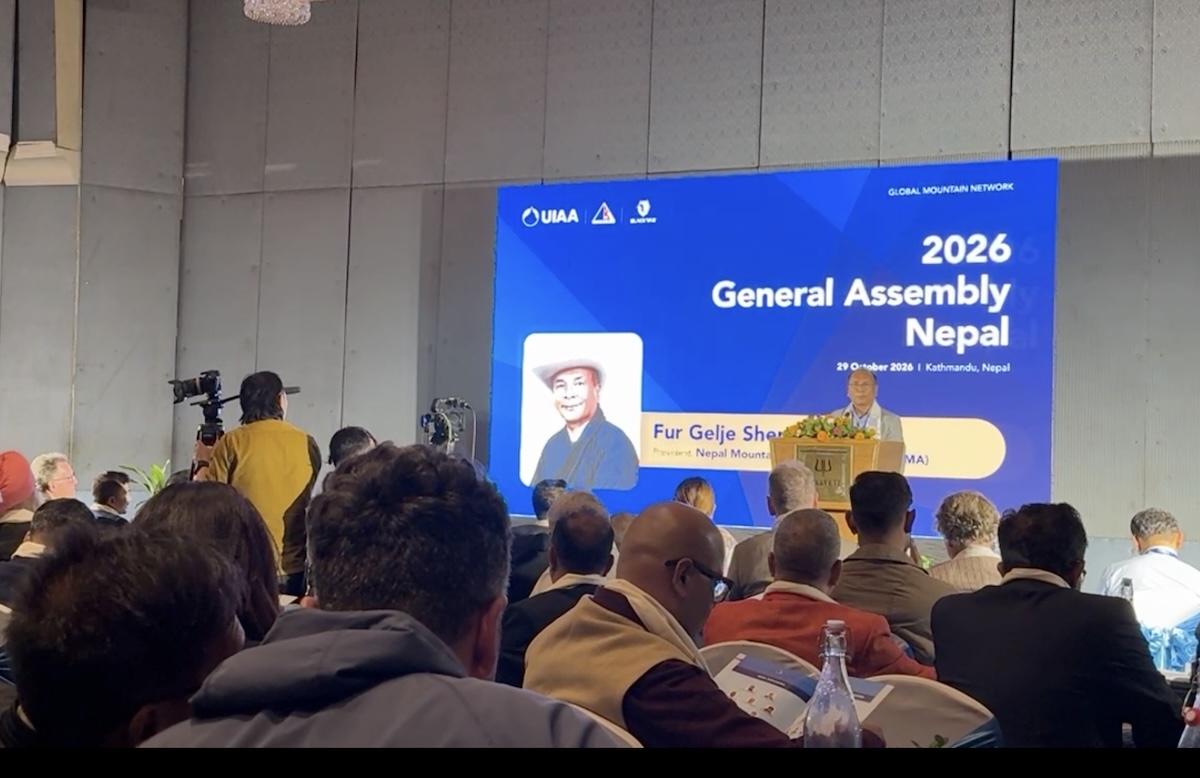
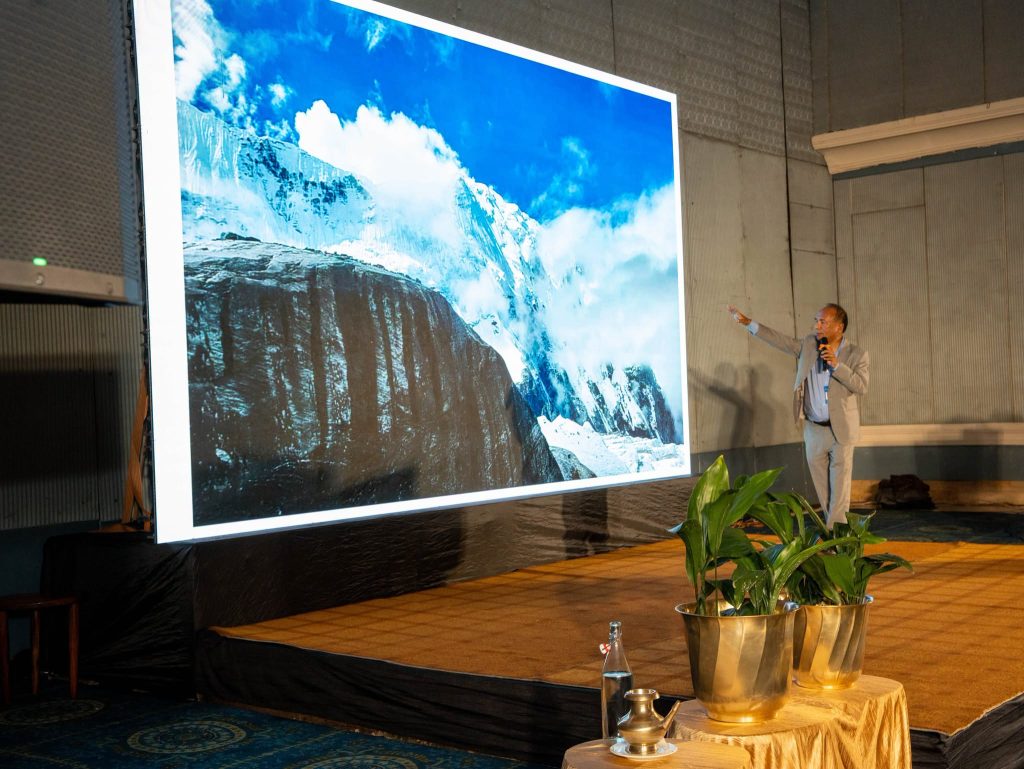
Nepal has officially asked for the international recognition of 6 new 8,000m mountains. This would raise the total amount of officially recognized 8,000m mountains in the world to 20. The proposal was shown to the international mountaineering community at the opening ceremony of the International Mountaineering and Climbing Federation (UIAA) General Assembly. The ceremony took place in Kathmandu.
Phur Gelje Sherpa, President of the Nepal Mountaineering Association (NMA), presented information on the 6 mountains and a study report was presented about why these mountains should be recognised as 8,000m mountains. This aims to show their identity as individual mountains and could help boost the reputation of Nepal in high mountain sport.
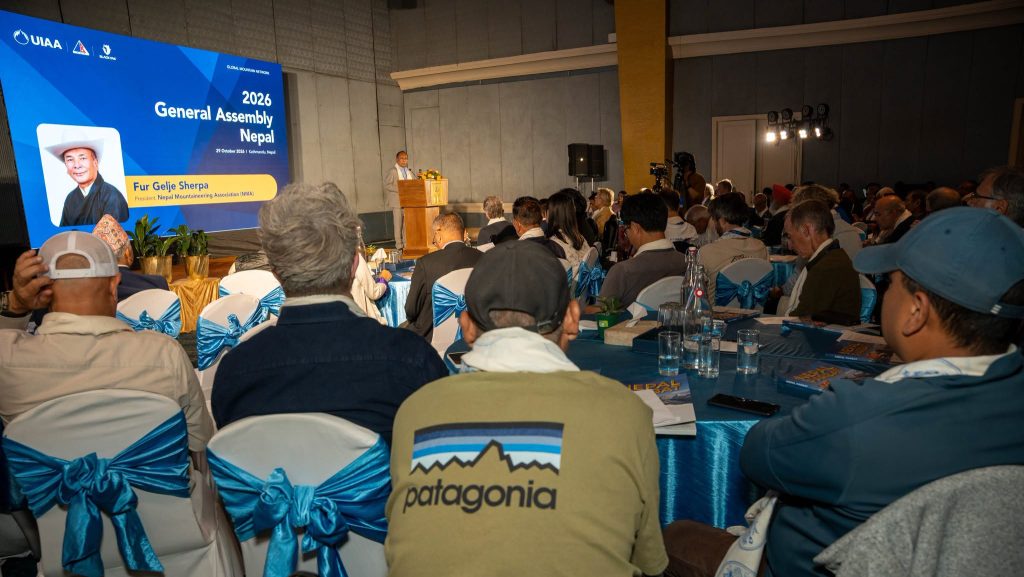
NMA Show Evidence of 6 New Mountains
NMA created a study team to measure these mountains and gather evidence to show their identity as individual mountains. They have created a report to back up Nepal’s request for international recognition. The purpose of the report is to show why these mountains are individual mountains.
Sherpa explained that whilst Nepal has opened these six mountains to mountaineers and climbers have been getting permits, climbing them and receiving certificates for years, they have not been recognized internationally. He asked that the international community take this seriously as they have always contributed to mountaineering globally.
Four Mountains in Kanchenjunga Range and Two in Everest Lhotse Region
Four of the mountains are in the Kanchenjunga range. Kanchenjunga South, 8476m; Kanchenjunga West, 8077m; Kanchenjunga Central, 8473m; and Yalung Khang, 8595m. The last two are part of the Everest-Lhotse Region. Lhotse Middle, 8410m; and Lhotse Shar, 8400m.
Sherpa explained that the Kanchenjunga range has identity attached to them. As the name suggests these mountains are known as the ‘Five Great Mountains’. Sherpa explained that people who live nearby call them ‘Kanchen Che Nga’ meaning the five great peaks. He said that they all have their own identity and names. Each mountain has its own route and cannot be said to have been climbed if you climb one peak.
Help Boost Nepal’s Mountaineering Reputation
If the proposal gains acceptance internationally then Nepal will have 14 recognised mountains over 8000m rather than 8. This will raise the total amount of recognised 8000m mountains in the world to 20. Currently there are 8 recognised mountains in Nepal. Everest, 8848.86m; Kanchenjunga, 8586m; Lhotse, 8516m; Makalu, 8463m; Cho Oyu, 8201m; Dhaulagiri, 8167m; Manaslu, 8163m; and Annapurna I, 8091m.
Sherpa explained that the topic has been brought up many times by previous NMA Presidents and Executive Committees. However, previous proposals have not been accepted. He stated that all mountains over 8000m are very technical and require lots of experience and preparation. If these mountains are recognzsed it could open new challenges and accomplishments for mountaineers. It would mean that people would look to climb all the recognized mountains over 8000m. In 2019, Nepalese climber Nirmal Purja (Nimsdai) climbed all 14 recognized mountains in just 6 months and 6 days.
General Assembly Focuses on Protecting Mountains
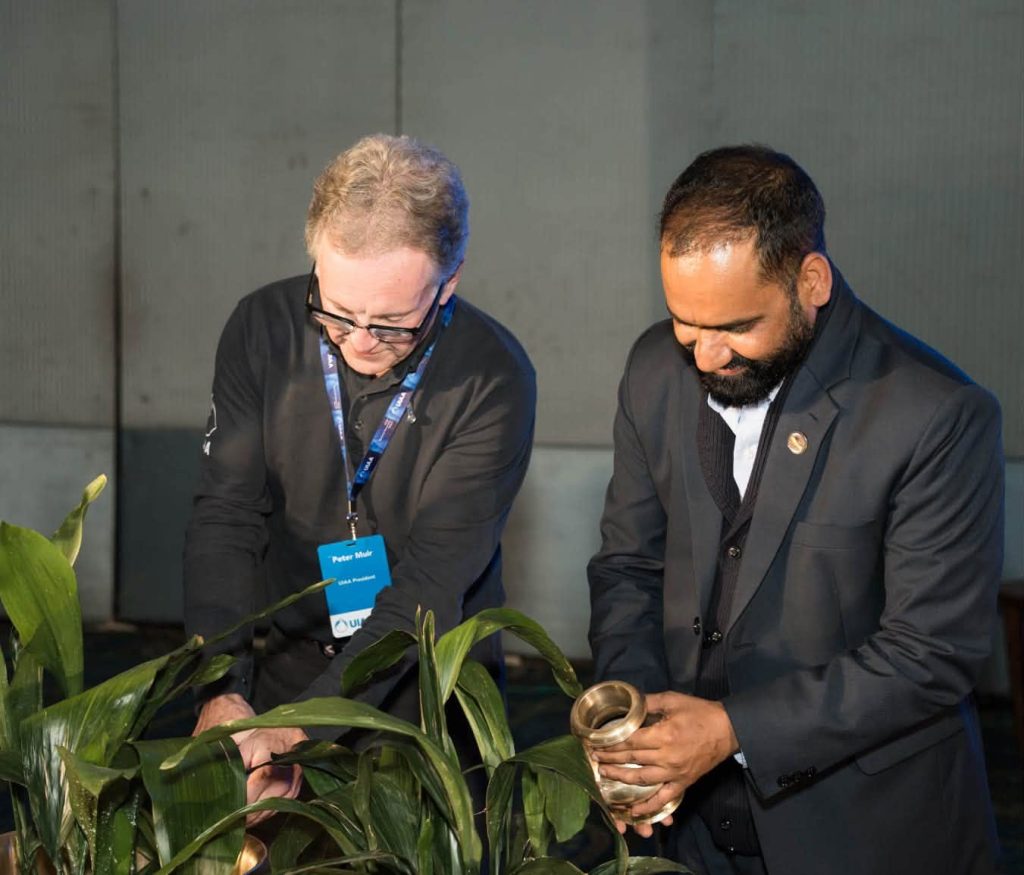
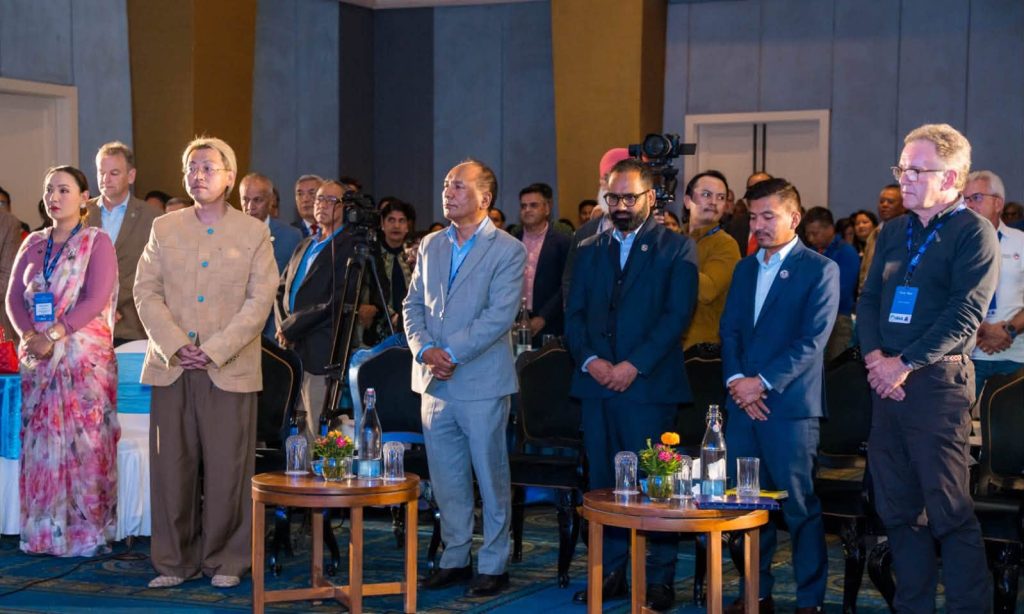
Khadak Raj Poudel, Minister for Culture, Tourism and Civil Aviation in Nepal, explained during the opening ceremony that the mountains are a source of pride for the country. The mountains are very linked to the culture of the area. He also mentioned that we must work to protect the Himalayas which are a large source of water for billions of people in Asia.
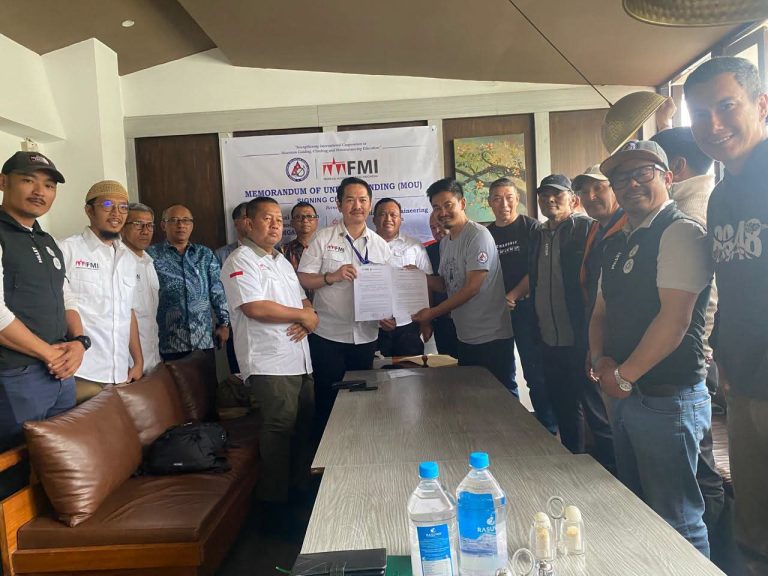
The Kathmandu General Assembly has brought together 95 delegates from 45 countries across 5 continents. This is the third time that Nepal has hosted the assembly after hosting in 1982 and 2011. The UIAA was founded in 1932 to promote safe climbing. The organisation aims to ensure sustainable climbing and encourage international collaboration. There are 99 member Associations from 70 countries and around 3.5 million people. The Nepalese Mountaineering Association joined the federation in 1975. The General Assembly comes after the third UIAA Mountain Safety Symposium which took place in Kathmandu on the 27 th and 28 th of October. Over 60 people attended to share their knowledge. Practical demonstrations and training took place in Kakani, Nuwakot.