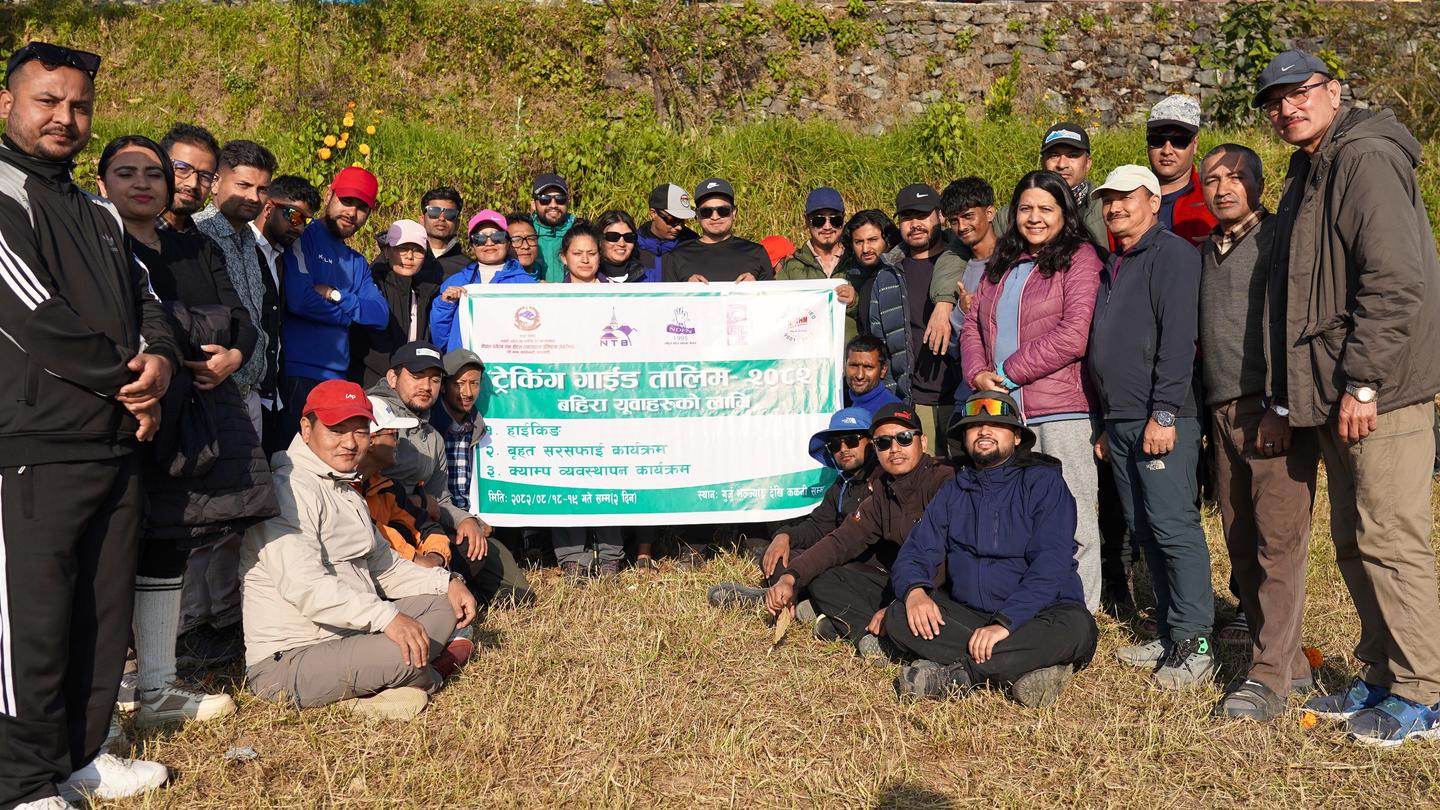
Two years ago, what began as a spontaneous request in Kathmandu has now evolved into a groundbreaking step in Nepal’s tourism sector. Rajita Deula, a deaf Nepali woman with no formal guiding experience, found herself unexpectedly at the centre of an international travel experience when a group of deaf tourists asked her to guide them around the capital city.
The visitors, travellers from Indonesia, the Philippines, and Thailand, had met Rajita at a conference for the deaf and hard of hearing community. Excited to explore Nepal’s cultural and natural beauty, they quickly realised a major challenge: none of the available professional guides could communicate with them in sign language.
At that moment, Rajita had no formal training as a trekking or cultural guide. Yet, she possessed something far more important for the group, fluency in sign language and the ability to communicate naturally with them. Despite her hesitation and lack of experience, she decided to step forward.

“I knew my knowledge was limited, but I was determined to try. That moment sparked a new dream,” Rajita recalled. Her decision marked the beginning of a personal journey that would soon grow into a national initiative aimed at making Nepal’s tourism industry more inclusive.
From Informal Guide to National Opportunity
Following her first experience, Rajita was occasionally called upon by the National Federation of the Deaf Nepal (NDFN) to assist visiting deaf delegations. Each experience strengthened her confidence and deepened her interest in tourism and guiding.
Her turning point came when she saw a Facebook announcement inviting applications for a formal trekking guide training programme designed specifically for deaf participants. Without hesitation, she applied. That decision would place her among the pioneers of a historic initiative in Nepal’s tourism industry, the country’s first structured trekking guide training programme for deaf individuals.
A Landmark Training Programme for Deaf Guides
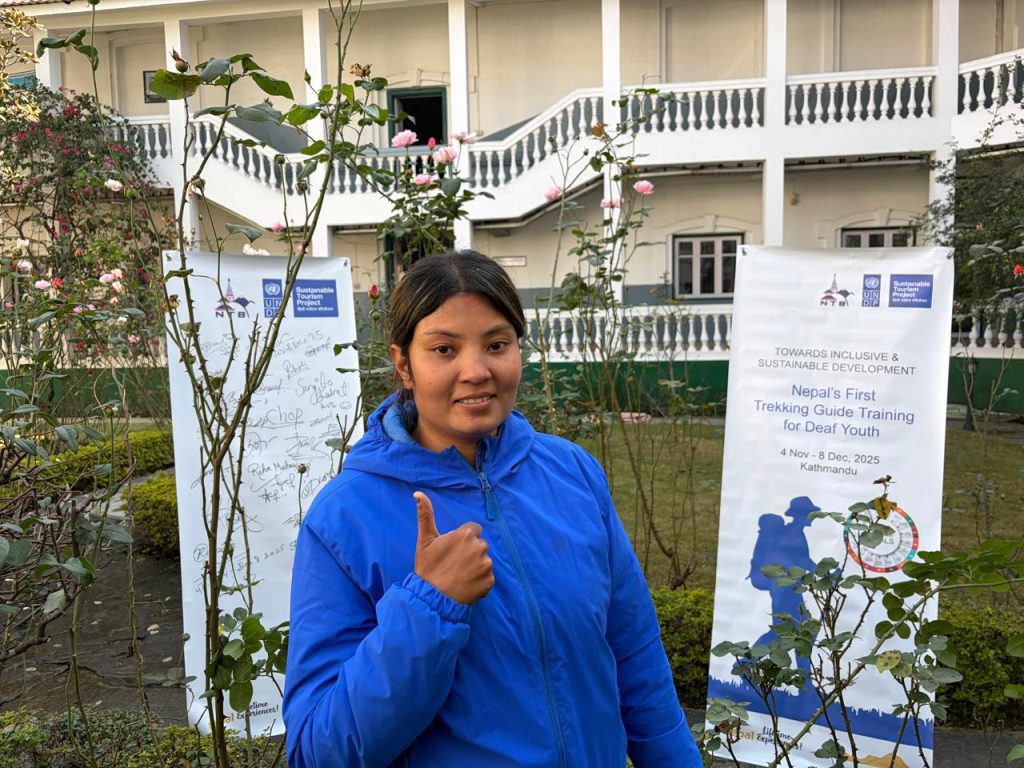
The initiative was jointly launched by the Nepal Tourism Board (NTB), the United Nations Development Programme (UNDP), NDFN, and the Nepal Academy of Tourism and Hotel Management (NATHM). It marked a significant milestone in Nepal’s efforts to build a more inclusive tourism sector.
A total of 25 participants, four women and 21 men, were selected for the training. The curriculum was comprehensive, covering trekking safety, mountain logistics, first aid, geography, history, culture, client management, insurance protocols, and environmental awareness. Experienced instructors, including mountaineers, medical professionals, and rescue experts, led both classroom and field-based sessions. Participants were trained to handle real-world trekking challenges such as altitude sickness, weather fluctuations, route planning, and emergency response.
For deaf guides, the training also emphasised alternative communication systems. Since trekking environments often rely on auditory signals, the trainees learned to use visual cues, pre-agreed hand gestures, vibrations, and environmental awareness techniques. Trust and teamwork were highlighted as essential components of safe trekking experiences.
Redefining Communication on the Trails
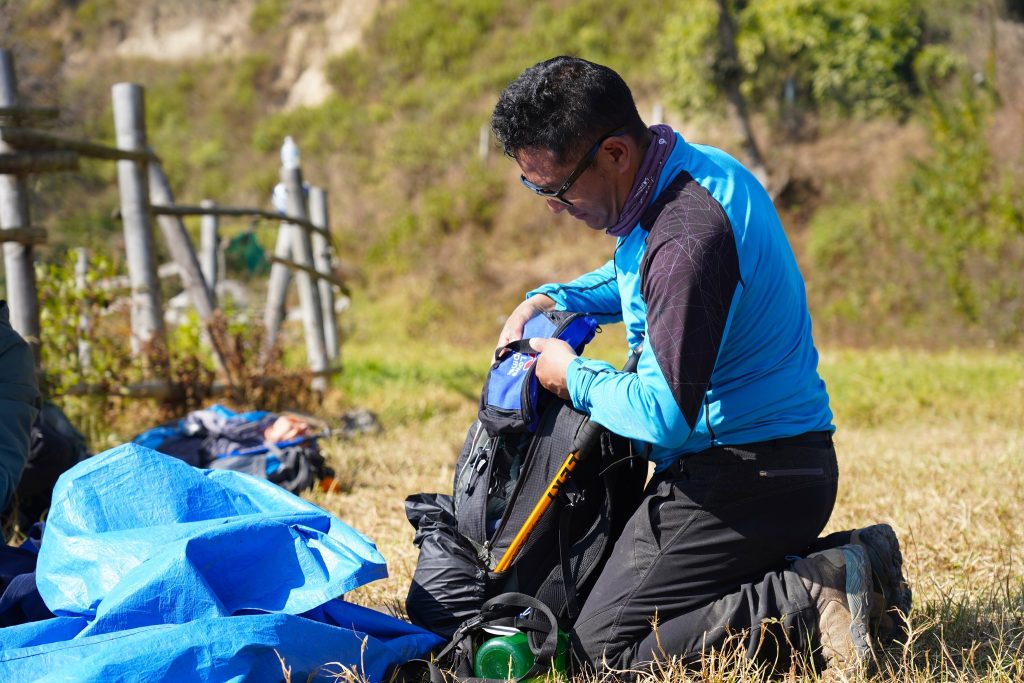
One of the most unique aspects of this programme is the adaptation of trekking communication to suit deaf guides and clients. In mountain environments, sudden risks such as falling rocks, avalanches, or abrupt weather changes are usually signaled through sound. Deaf guides, however, rely on visual indicators such as shifting shadows, movement patterns of fellow trekkers, and subtle changes in terrain conditions.
They also develop coordinated non-verbal systems with clients before beginning a trek. These include emergency signals, directional cues, and safety instructions communicated entirely through sign language or visual gestures. This innovative approach not only ensures safety but also strengthens trust and coordination between guides and trekkers, setting a new standard for inclusive adventure tourism.
Personal Dreams and Expanding Horizons
For many participants, the training is more than a professional qualification, it is a gateway to long-held dreams. Among them is 29-year-old Riha Maharjan, who has quickly emerged as one of the most promising new trekking guides. Inspired by her family’s love for trekking, she has explored many high-altitude regions with her husband and relatives, all of whom are deaf. “That’s how I fell in love with trekking,” she said through sign language. “I want to take my foreign friends to Annapurna and Manaslu routes after this training.”
Beyond trekking, Riha is pursuing a master’s degree in business studies. She also secured a top-10 position in Miss Deaf Universe 2024 and plans to establish a tourism-related business in Kathmandu to stay engaged during the off-season. Her journey reflects a broader transformation, where deaf individuals are no longer seen as limited by communication barriers, but as capable professionals entering mainstream tourism.
Breaking Barriers in Professional Trekking
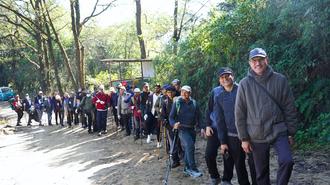
Several trainees had prior experience working as porters or informal guides in Nepal’s trekking routes. However, without official certification, they often faced restrictions in accessing major trekking destinations, especially regulated regions like Everest.
One of the trainees, Chop Prasad Poudel, highlighted these challenges. He has long worked in tourism, balancing seasonal trekking jobs with employment at a Kathmandu hotel. “I have been to all major tourist destinations, but since porters from outside districts aren’t allowed in the Everest region, I was waiting for this certification,” he said. “Now it’s our turn to shine as certified guides.” For many like him, official recognition is not just about employment, it represents dignity, opportunity, and equal access to Nepal’s thriving tourism economy.
A Platform for Ambition and Aspiration
The training programme also highlighted the extraordinary ambition of participants. Raj Bahadur Budha, 28, from Mugu district, demonstrated remarkable enthusiasm during practical sessions. During a climbing exercise, he successfully scaled a 15-metre wall using professional gear, celebrating his achievement with confidence and pride.
“I have a dream to climb Mount Everest,” he said. “After this training, I am aiming for big mountains.” Such aspirations reflect how the programme has ignited confidence among participants, encouraging them to aim for both professional and personal milestones once considered out of reach.
Nepal’s Tourism Sector and Untapped Potential
Nepal, home to eight of the world’s fourteen highest mountains, attracts over one million trekkers annually. Its globally renowned routes such as Everest Base Camp, Annapurna Circuit, and Manaslu Circuit are among the most visited trekking destinations in the world.
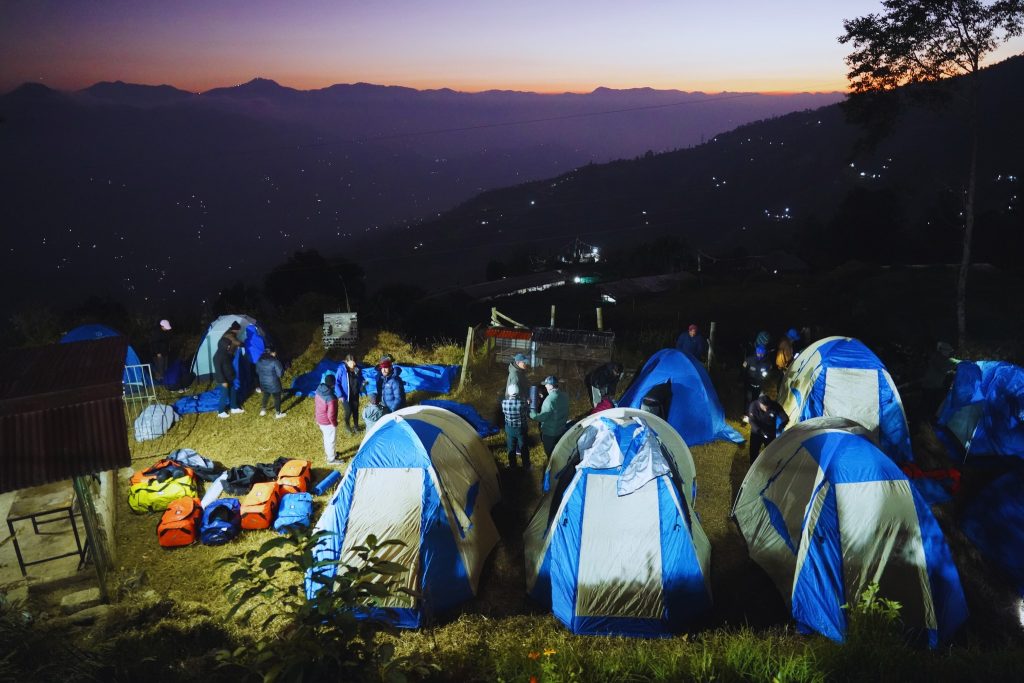
Despite this global reputation, the tourism sector has historically overlooked accessibility for deaf and hard-of-hearing travellers. Communication barriers have limited participation, both for tourists and local guides with hearing disabilities.
However, experts estimate that more than 430 million people worldwide live with disabling hearing loss, representing a significant yet underdeveloped tourism market. Recognising this gap, UNDP through its Sustainable Tourism Project fully supported the partnership to launch Nepal’s first sign-language-based trekking guide training programme.
A Step Toward Inclusive Tourism
According to Deepak Raj Joshi, Former Chief Executive Officer of the Nepal Tourism Board, the initiative represents a shift in how Nepal views tourism development. “Our first-ever training proves that talent is universal and Nepal’s tourism sector must be human-centred and inclusive,” he said. “Even attracting a small number of deaf tourists can significantly contribute to the industry.” He emphasised that inclusivity is not only a social responsibility but also an economic opportunity that can expand Nepal’s global tourism reach.

Similarly, Ajaya Kumar Dhakal, Principal of NATHM, noted the exceptional enthusiasm shown by participants. “They were more active and motivated than many regular trekking trainees,” he said. “Their dedication shows that deaf guides are not just ready to participate, they are ready to lead.”
A Future Shaped by Inclusion
The success of this pioneering programme marks a turning point for Nepal’s tourism industry. It demonstrates that with proper training, support, and recognition, individuals with disabilities can play leading roles in one of the country’s most important economic sectors.
For Rajita Deula and her fellow trainees, what began as an unexpected encounter has now become a life-changing journey. From guiding small groups in Kathmandu to preparing for professional careers in high-altitude trekking, they are redefining what it means to be a tour guide in Nepal. More importantly, they are paving the way for a future where Nepal’s trails are not only pathways through mountains, but also pathways toward equality, opportunity, and inclusion.