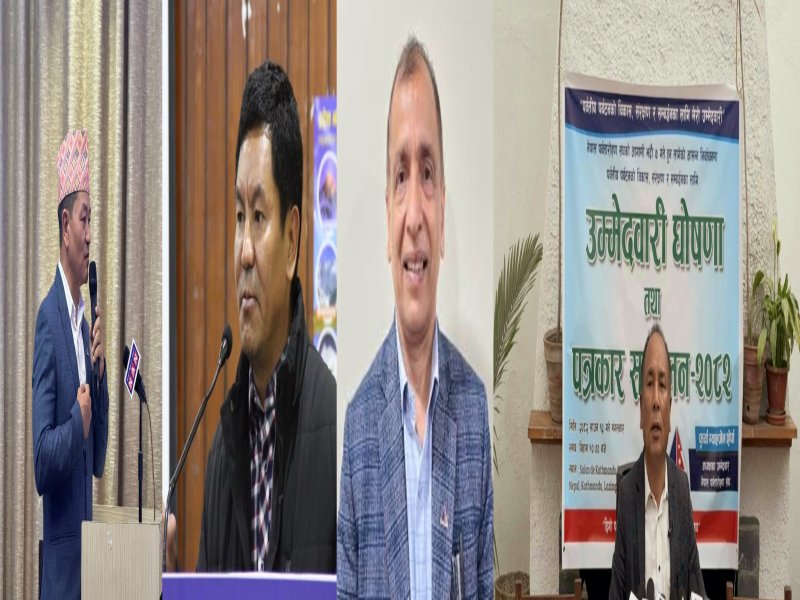
Four Tourism Veterans Vie for Top Post as NMA Election Nears
With the Nepal Mountaineering Association (NMA) set to hold its much-anticipated leadership election on Bhadra 7, 2082 (August 23, 2025), the contest for the position of President has attracted intense public interest and strategic mobilization from various tourism sectors and political affiliations. The election, to be held at the Nepal Academy in Kamaladi, Kathmandu, has drawn four veteran tourism entrepreneurs into the presidential race, each bringing distinct visions, backgrounds, and alliances to the table.
Kul Bahadur Gurung: The Policy Reformer with “8M” Vision
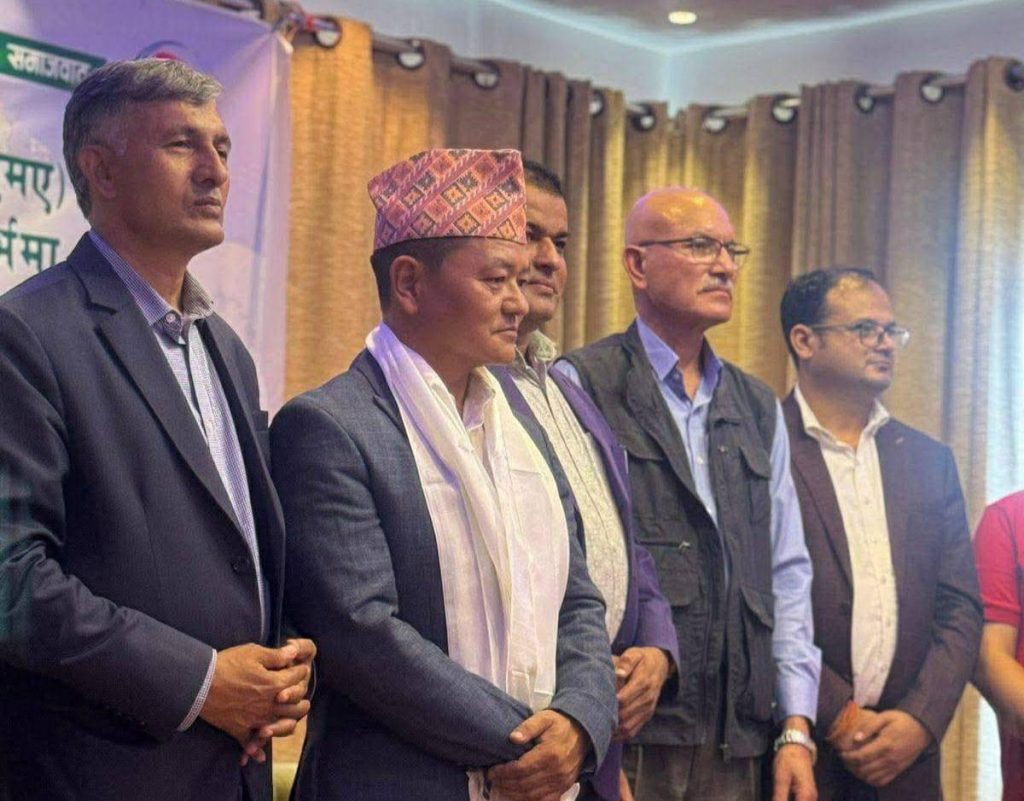
Among the contenders, Kul Bahadur Gurung has emerged as one of the most prominent and widely discussed candidates. A former General Secretary of the NMA, Gurung’s candidacy is seen as a strong call for reform, accountability, and professional dignity in the mountaineering industry. Speaking at his candidacy declaration event organized by the Nepal Democratic Tourism Entrepreneurs Association, a group close to the Nepali Congress, at Yatri Suites in Thamel, Gurung laid out a clear and ambitious vision.
“My leadership is focused on making the NMA more transparent, inclusive, and effective, with a strong emphasis on sustainable mountain tourism,” he said. Gurung has built an impressive career spanning over thirty years in the adventure tourism sector, holding roles such as Vice President of the Trekking Agencies’ Association of Nepal (TAAN), member of the International Climbing and Mountaineering Federation (UIAA), and Managing Director of Alliance Treks and Expedition. He also founded key organizations like GTEAN and GHTDC.
What distinguishes Gurung’s campaign is his proposed “8-M Strategy”, a holistic approach to Himalayan tourism that focuses on: Mountains, Mountain Environment, Mountain People, Mountain Culture, Mountain Heritage, Mountaineers, Mountaineering Service Providers, and Mountain Workers. Gurung strongly advocates for securing the rights of workers and promoting Nepal’s Himalayan brand on the global stage. His policy agenda includes safe climbing practices, community empowerment, labor rights protection, and a reformed and democratic NMA structure.
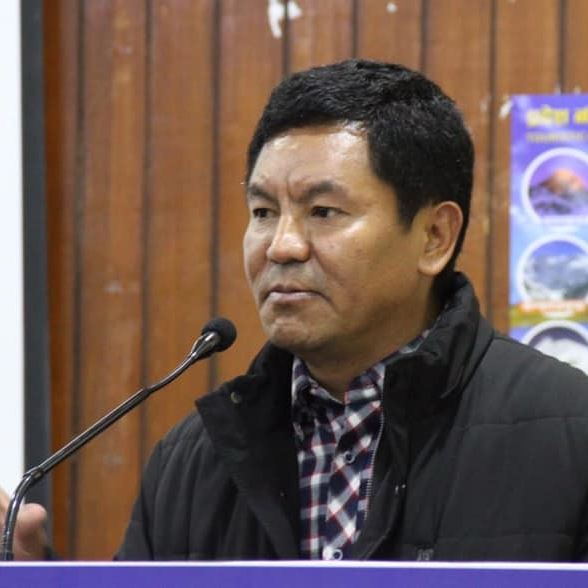
Tikaram Gurung: Field Expertise and Left-Aligned Backing
Another serious contender is Tikaram Gurung, a former Secretary of the NMA and an accomplished Everest summiteer. Backed by the Nepal National Tourism Entrepreneurs Organization, affiliated with the CPN-UML, Tikaram’s candidacy presents a ground-up leadership model rooted in extensive field experience. His supporters emphasize his longstanding relationships with climbing communities and his first-hand understanding of the risks and logistics associated with Himalayan expeditions.
Although he has not yet released a detailed policy document, Tikaram is known for championing climbers’ safety, fair expedition practices, and the ethical promotion of mountaineering. His leadership style is seen as responsive and grounded, qualities that appeal to many in the base camp and expedition sectors.
Tikaram’s alliance with UML-affiliated tourism groups may also provide his campaign institutional strength and network reach, giving him a formidable presence in what is shaping up to be a competitive election.
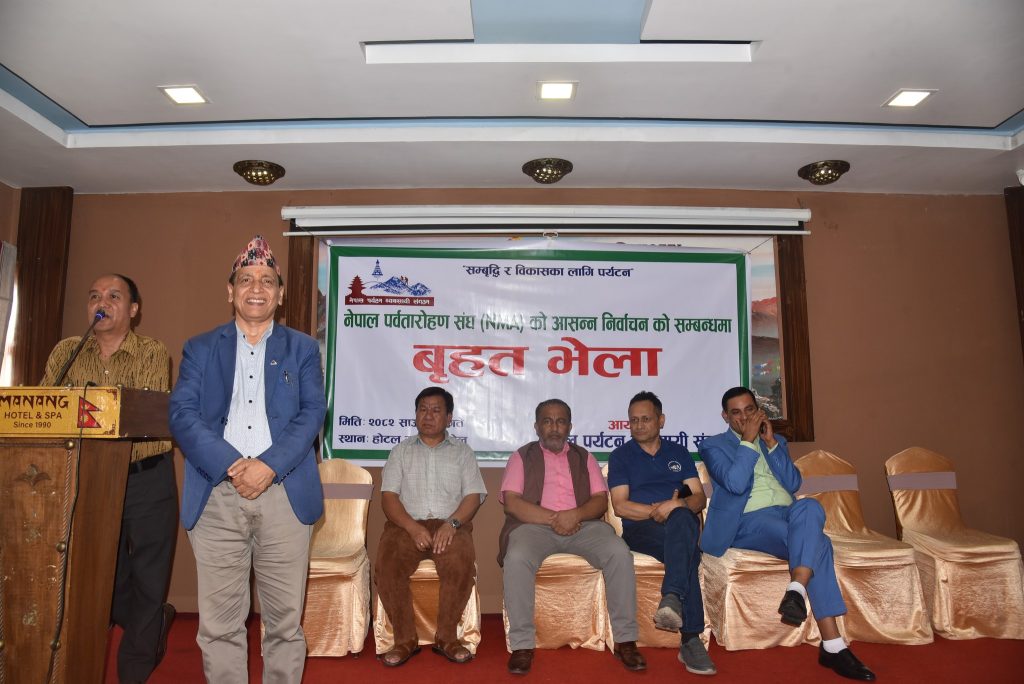
Thakur Raj Pandey: Experience and Institutional Reform
Thakur Raj Pandey, the current Senior Vice President of the NMA, has also entered the race with significant backing from the Nepal Tourism Entrepreneurs’ Organization, a group associated with the CPN (Maoist Centre). A respected figure in the tourism sector from Dhading District, Pandey has built a reputation for calm, collaborative leadership and has served previously as NMA’s General Secretary.
Pandey’s platform emphasizes organizational efficiency, transparency, and social inclusion. One of his standout proposals is the idea that NMA officials should bear their own expenses during foreign visits, using the saved funds for the education of climbers’ children. He has also committed to employing staff only within the budget capacity of the association and conducting extensive training programs to develop skilled human resources in mountain tourism.
His ambitious development agenda includes upgrading Pokhara’s international museum, improving the training center in Manang, and constructing a major Mountain Hub and Health Retreat at NMA’s land in Kakani. Pandey has also pledged to advocate for mountaineer welfare funds, push for the inclusion of NMA under the Tourism Act, and promote climate resilience programs for mountain communities. His focus on female climbers and plan to provide off-season employment through teaching programs adds an inclusive dimension to his candidacy.
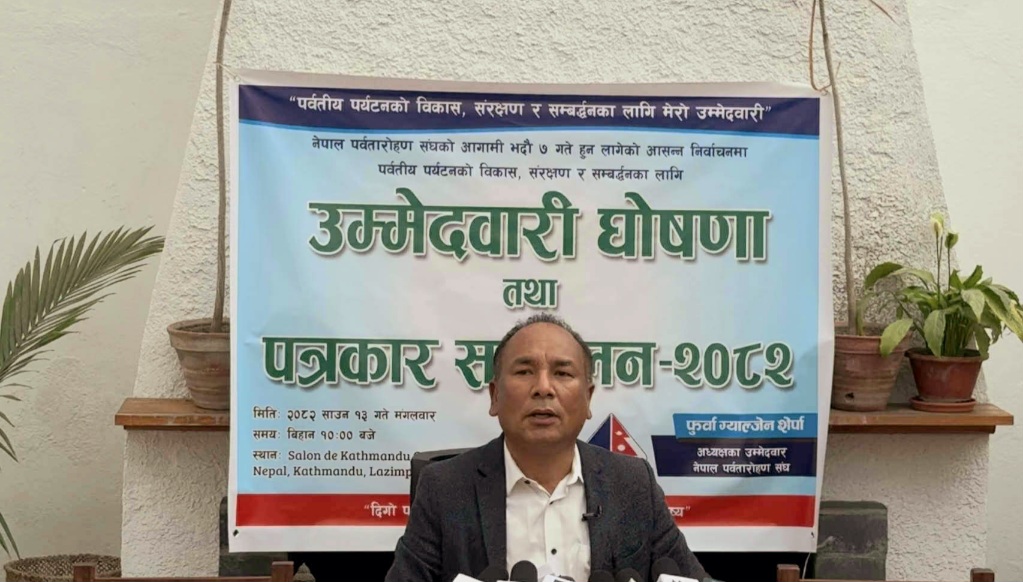
Fur Gelje Sherpa: Vision for a Global Mountaineering Education System
The fourth candidate, Fur Gelje Sherpa, brings with him a bold and futuristic vision centered on education, rescue systems, and international recognition. Announcing his candidacy with the slogan, “For the Development, Protection, and Promotion of Mountain Tourism,” Sherpa is advocating for the establishment of a Mountain Tourism University to provide deep academic and technical training related to Himalayan climbing.
Sherpa also wants to integrate and upgrade existing mountain training centers in Thame, Kongbuche, Manang, and other regions to align with international standards. Perhaps one of the most innovative aspects of his proposal is the formation of community-based rescue teams, with local youths trained and equipped to respond to emergencies in high-altitude zones. Their contact data would be maintained in a centralized system to ensure swift coordination during crises.
He has also called for special privileges at international airports for record-holding Nepali mountaineers as a mark of national pride. His candidacy is geared toward building infrastructure and systems that can make Nepal not just a destination for climbers, but also a hub for mountaineering education, ethics, and rescue excellence.
Panel Talks and Political Undertones
With each candidate backed by a different tourism network or politically affiliated group, the NMA election is gaining the contours of a proxy battle between ideological forces and industry agendas. The Nepal Tourism Entrepreneurs’ Organization has even launched a Dialogue Committee, comprising figures like Nawaraj Pandey, Rishi Bhandari, Dawa Sherpa, and others, to explore the possibility of a consensus panel to reduce division within the NMA leadership.
Whether such consensus will emerge remains to be seen. But one thing is certain: this election is more than just a routine leadership change. It is a turning point for Nepal’s most important mountain tourism body, a body that holds the potential to reshape mountaineering practices, worker protections, climate action, and global reputation of the Himalayas.
As the countdown begins, industry insiders, climbers, and policymakers alike are watching closely. The winner of this election will inherit not just a title, but the future of Nepal’s identity as the home of the Himalayas.