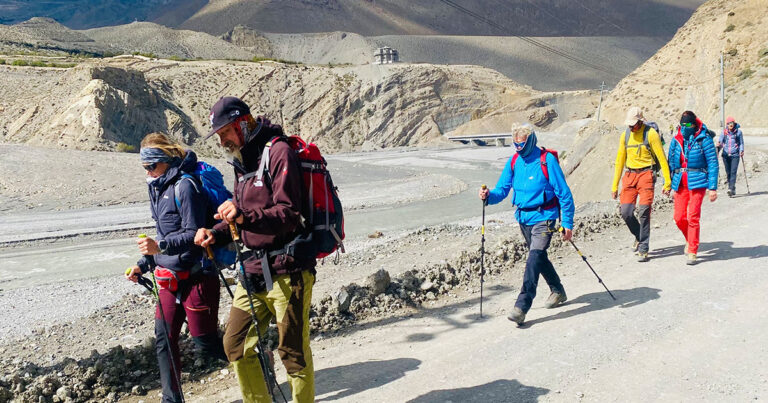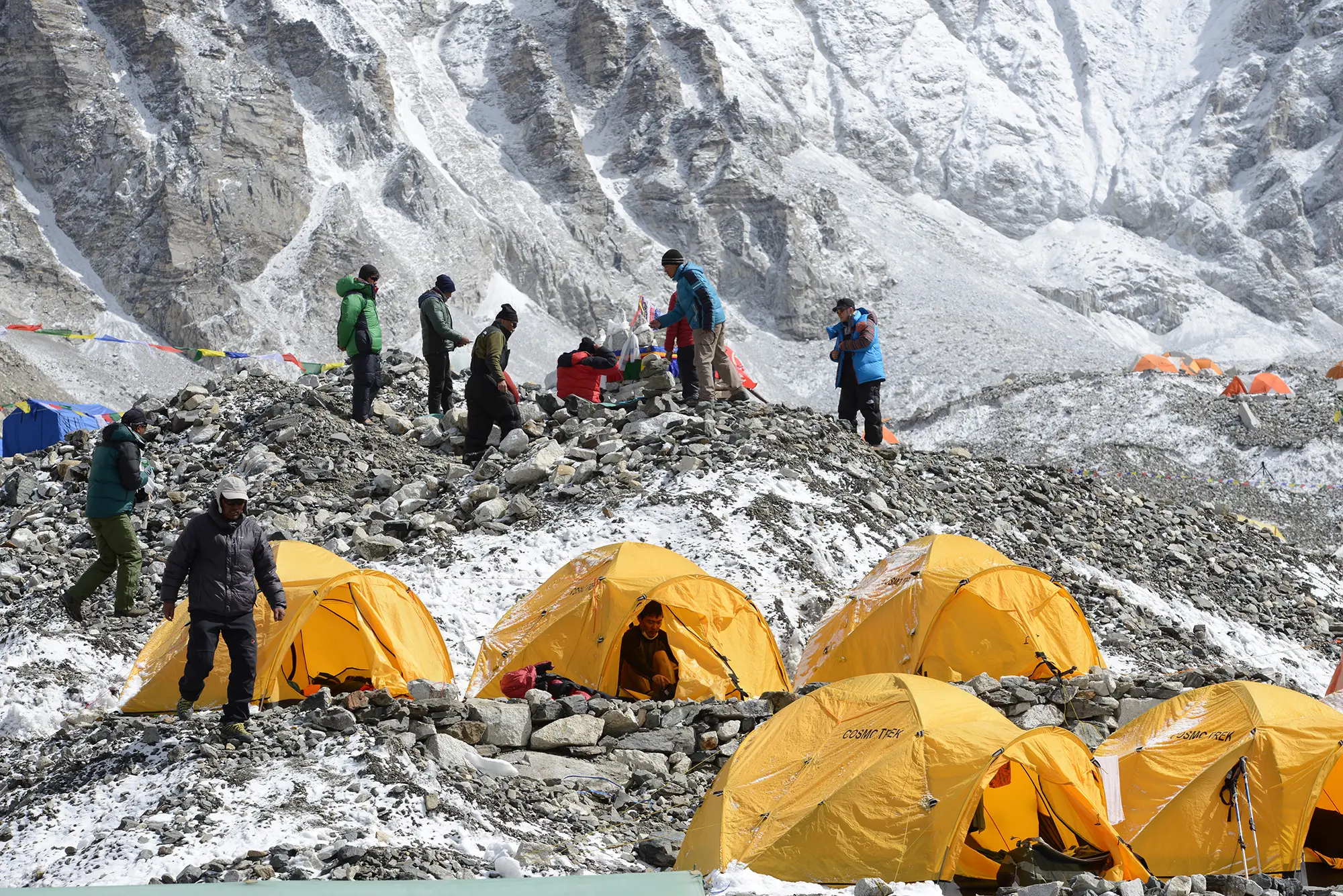
The Nepal National Mountain Guide Association (NNMGA) has strongly rejected recent allegations linking certified mountain guides to fake helicopter rescue operations in the Nepalese Himalaya, stating that there is no verified evidence connecting professional guides to such activities.
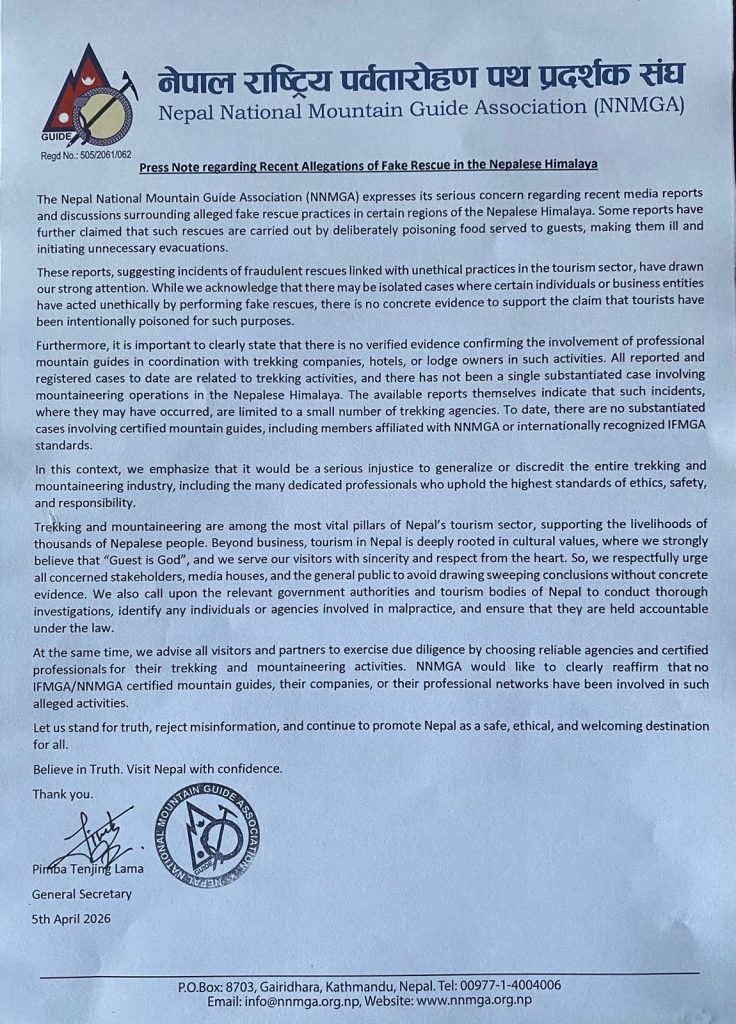
In a detailed press statement issued on Sunday, the association clarified that neither its members nor guides holding internationally recognized IFMGA certification have been involved in any fraudulent rescue practices. The statement comes amid growing international attention and viral reports alleging misconduct within Nepal’s tourism sector.

No Evidence Against Certified Mountain Guides
NNMGA emphasized that all verified cases of fake rescue scams reported so far were related to trekking activities and not mountaineering expeditions. According to the association, there has not been a single substantiated case involving professional mountain guides operating in Nepal’s Himalaya.
General Secretary Pimba Tenjing Lama stated that available evidence points to isolated incidents involving a limited number of trekking agencies or business entities, rather than a systemic issue within the mountaineering community. He reaffirmed that certified guides, including those affiliated with NNMGA, adhere to strict professional and ethical standards.
Poisoning Allegations Termed Unsubstantiated
Addressing one of the most serious claims circulating in international media, that tourists were deliberately poisoned to justify fake rescues, NNMGA categorically denied the accusation. The association stated that no concrete evidence has been found to support such claims.
While acknowledging that fraudulent rescues may have occurred in isolated cases, NNMGA stressed the importance of distinguishing these incidents from unverified and sensational allegations that risk damaging the reputation of Nepal’s tourism industry.
Call for Responsible Reporting and Investigation
The association urged media organizations, stakeholders, and the general public to avoid sweeping generalizations that could unfairly discredit an entire industry built on safety, professionalism, and trust. NNMGA called on the Government of Nepal and relevant tourism authorities to conduct thorough and transparent investigations into any reported malpractice. It emphasized that individuals or agencies found guilty should be held accountable under the law, ensuring that unethical practices are eliminated without harming the broader industry.
Industry-Wide Response to Allegations
NNMGA’s statement is part of a broader response from Nepal’s tourism and government bodies addressing the controversy. The Central Investigation Bureau (CIB), which is leading the probe into fake rescue scams, has already denied claims of food poisoning, stating that its investigations found no evidence of food adulteration and warning against the spread of unverified information.
Similarly, the Nepal Mountaineering Association (NMA) described the allegations as “unimaginable,” reaffirming Nepal’s readiness to welcome climbers during the მიმდინარე spring season. The Khumbu Pasanglhamu Rural Municipality, governing the Everest region, also issued a public notice rejecting the claims while confirming coordination with authorities to address any genuine fraudulent activities.
The Trekking Agencies’ Association of Nepal (TAAN) echoed similar concerns, supporting the ongoing investigation while urging all tourism stakeholders to adhere strictly to ethical standards and professional codes of conduct.
Protecting Nepal’s Tourism Reputation
Across these responses, a consistent message has emerged: while fake rescue scams do exist and are under active investigation, the specific allegations of poisoning tourists remain unproven and misleading. Industry leaders warn that conflating verified cases of fraud with unsubstantiated claims is causing serious harm to Nepal’s global image, particularly at the start of its peak climbing season.
NNMGA stressed that trekking and mountaineering are vital pillars of Nepal’s economy, supporting thousands of livelihoods. Beyond economic value, the association highlighted Nepal’s cultural ethos of hospitality, rooted in the belief that “Guest is God,” emphasizing sincerity and respect toward visitors.

Advice for Travelers and Final Message
The association also advised travelers to exercise due diligence when selecting trekking agencies and guides, recommending certified professionals for all trekking and mountaineering activities.
Reaffirming its commitment to ethical tourism, NNMGA concluded with a strong message: “Let us stand for truth, reject misinformation, and continue to promote Nepal as a safe, ethical, and welcoming destination for all. Believe in truth. Visit Nepal with confidence.”