The scenic Ghodepani-Poonhill region, located in Annapurna Rural Municipality-6 of Myagdi district, welcomed over 30,000 tourists in the fiscal year 2081/82 (2024/25 AD), despite persistent road network challenges. Known for its stunning Himalayan sunrise views and part of the world-renowned Round Annapurna Trek, the area continues to attract both domestic and international visitors.
According to data from the Tourist Police Post in Ghodepani, a total of 30,885 tourists visited Ghodepani and its surrounding areas over the past year. The main trekking routes used by these tourists include two prominent trails: one originating from Pokhara through Nayapul and Ghandruk, and the other from Beni, Tatopani, Ghara, and Shik in Myagdi. The convergence of these routes at Ghodepani makes it a strategic and popular stop for trekkers heading toward Poonhill (3,210 meters above sea level).
Sunrise and Himalayan Panorama Remain Top Attractions
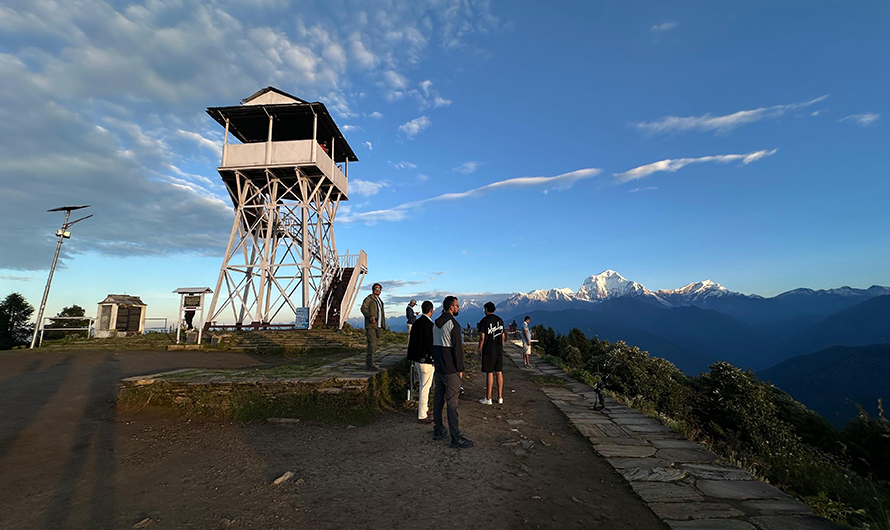
Poonhill, perched at an altitude of 3,210 meters, offers breathtaking panoramic views of the Dhaulagiri and Annapurna mountain ranges, especially at sunrise. The site is one of the most photographed sunrise spots in Nepal and continues to be a major draw for nature lovers, photographers, and adventure enthusiasts from around the globe.
Tourists typically reach Ghodepani either by trekking through the lush forests and traditional Gurung villages or by limited vehicular access, followed by hiking. The combination of natural beauty and cultural immersion has helped Ghodepani maintain its position as a favored destination on the Annapurna Circuit.
Gender Breakdown and Tourist Flow Statistics
Providing a breakdown of the visitor demographics, Police Inspector Sagar Paudel of the District Police Office shared that 23,868 tourists entered Ghodepani, among which 12,396 were male and 11,472 were female. Meanwhile, 6,997 tourists exited after visiting the area, comprising 3,621 men and 3,376 women.
The Tourist Police Post has been maintaining detailed records of the incoming and outgoing tourists, helping local authorities monitor tourism trends and respond to safety needs effectively.
Seasonal Trends: Kartik Sees Peak, Asar Hits Lowest
Tourist arrivals vary considerably depending on the season. According to records, the highest number of visitors, 4,213 tourists, visited in the month of Kartik (October/November), which coincides with Nepal’s peak trekking season. In contrast, the lowest footfall was recorded in Ashadh (June/July), with only 449 tourists, largely due to the onset of monsoon rains and travel disruptions.
This seasonal variation aligns with broader trekking patterns in Nepal, where autumn (September to November) and spring (March to May) are favored for their clear skies, stable weather, and pleasant temperatures.
Road Conditions Affecting Domestic Tourism
While international tourist numbers remain relatively stable, the number of domestic tourists has declined, primarily due to poor road infrastructure leading to Ghodepani. Mina Pun, Chairperson of the Ghodepani Hotel Management Committee, highlighted that deteriorated roads have discouraged local travelers.
“Many Nepali families prefer short and accessible travel, but due to landslides, broken road segments, and unsafe conditions, internal tourism has suffered,” Pun explained. She believes that repairing and improving the road network could significantly increase the number of domestic visitors.
One of the most affected routes is the Pokharebagar–Ghara–Khivang–Shik–Chitre road, which falls under the Annapurna-5 constituency. Sections like Luliya and Hallekhark bends, which are part of the Pokharebagar–Chitre–Ghodepani road, have experienced road collapse and landslides, making it difficult for passenger buses to operate. As a result, many potential visitors have either canceled their trips or shifted to alternate destinations.
Lack of Tourist Data Outside Ghodepani
Interestingly, while Ghodepani maintains proper tourist data through its dedicated Tourist Police Post, other popular tourist sites in Myagdi do not have such systematic records. Local police and government authorities have not been collecting comprehensive data on tourists visiting areas outside Ghodepani, creating a data gap in assessing the district’s full tourism potential.
Better coordination between local units and tourism offices, along with expanded data tracking mechanisms, could help in strategic planning, marketing, and improving facilities across Myagdi’s numerous lesser-known but equally attractive destinations.
Path Ahead: Infrastructure and Promotion Needed
Despite logistical challenges, the steady inflow of more than 30,000 tourists reflects Ghodepani-Poonhill’s unwavering appeal. The region not only showcases natural grandeur but also highlights the hospitality of local communities, traditional lifestyles, and eco-friendly trekking experiences.
Local stakeholders are hopeful that with improved transport infrastructure, reliable electricity, and communication facilities, tourism in Ghodepani and surrounding areas can flourish even more. The need for government investment and public-private partnerships to enhance road safety and promote sustainable tourism is more urgent than ever.
As Nepal positions itself as a global trekking and cultural destination, Ghodepani-Poonhill stands as a symbol of both potential and resilience, welcoming thousands each year to witness the magic of the Himalayas, despite the odds.