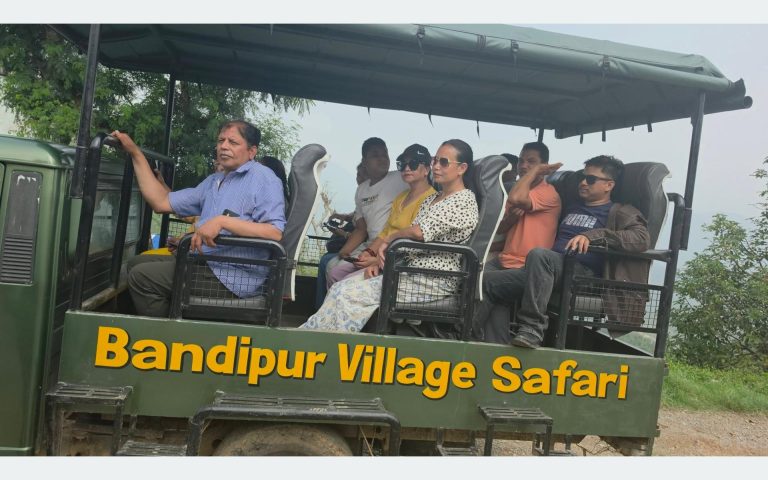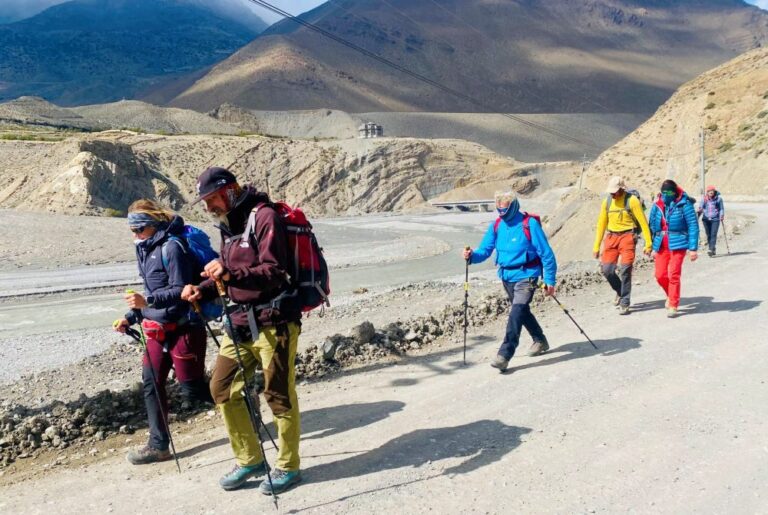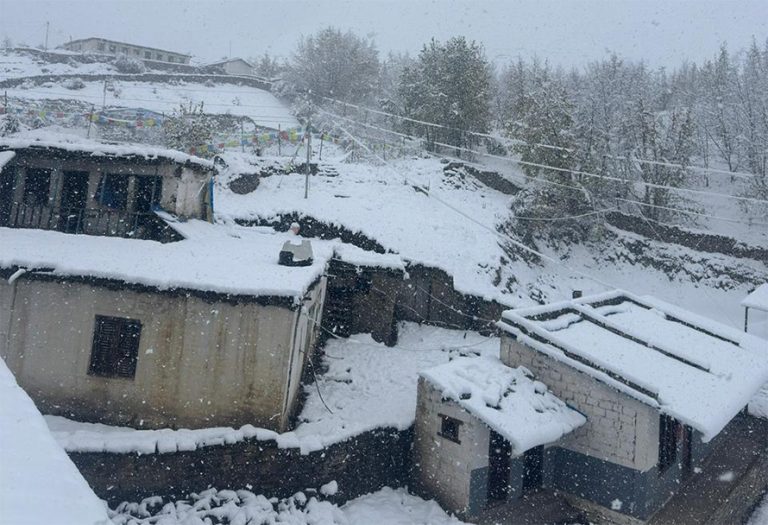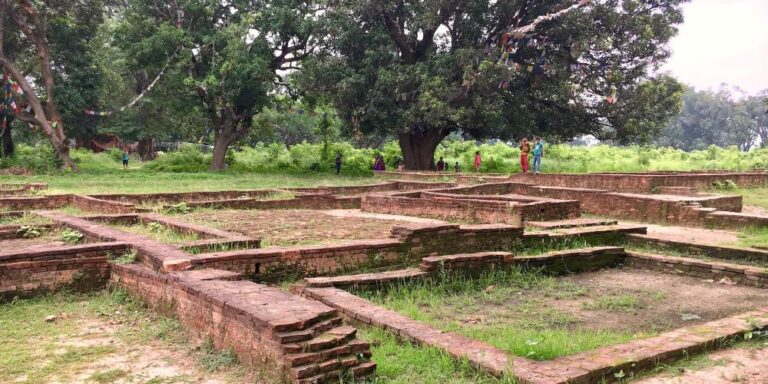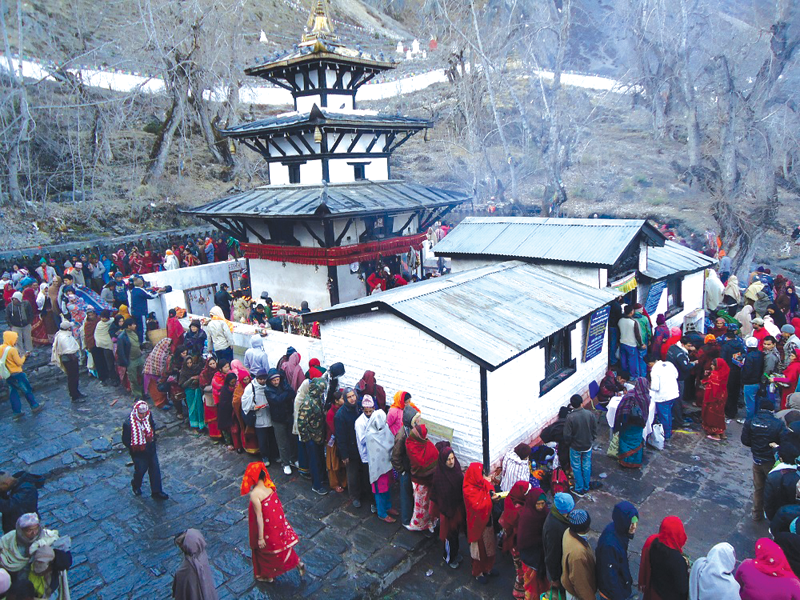
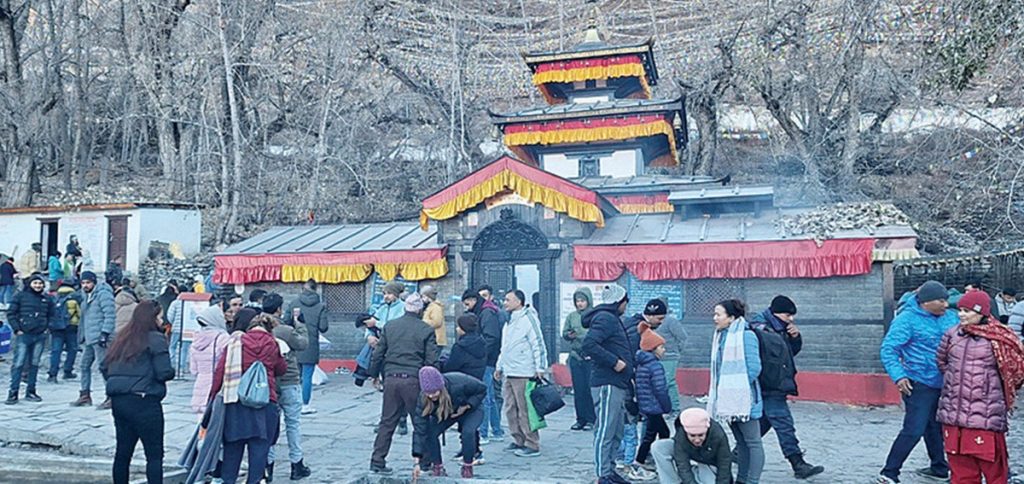
With the gradual decline in winter cold, the sacred Muktinath Temple in Mustang has begun witnessing a sharp rise in the number of pilgrims and tourists. The harsh winter months had significantly reduced visitor arrivals, but since the beginning of the Nepali month of Falgun, the flow of devotees has steadily increased, signaling the start of the temple’s busy season.
Daily Visitors Reach 4,000–5,000
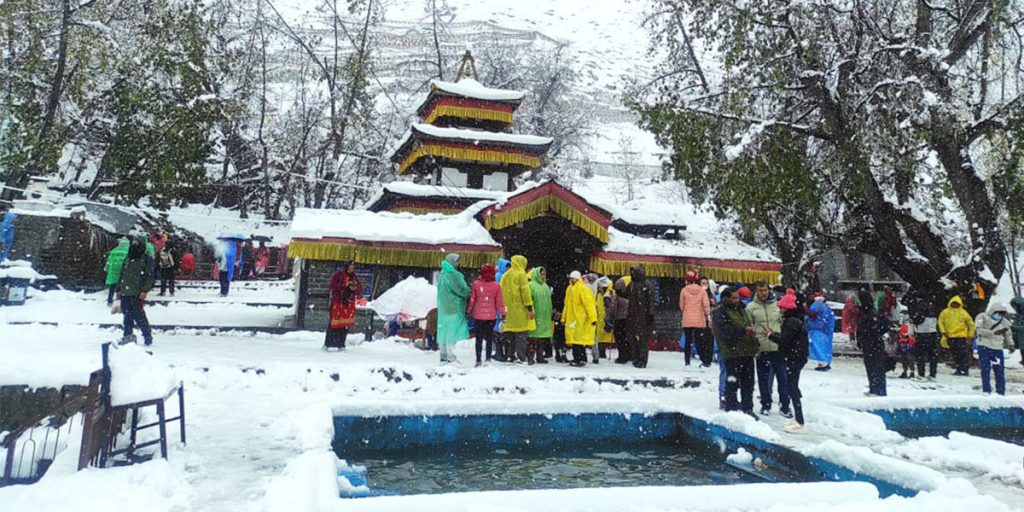
According to Dinesh Bhusal, manager of the Muktinath Development Committee, the number of visitors has risen to approximately 4,000 to 5,000 per day since Falgun began. During the peak winter months of Poush and Magh, only a limited number of religious tourists made the journey due to freezing temperatures and snowfall. As temperatures have become milder, travel conditions have improved, encouraging more devotees to visit the revered shrine.
Bhusal expressed confidence that the arrival of pilgrims and religious tourists will continue to grow as Mustang transitions fully into the warmer season. Authorities expect an even greater surge in the coming months when weather conditions become more favorable for travel and worship.
Preparations Intensified to Manage Growing Crowds
Temple authorities have stepped up efforts to ensure proper management of visitors. Arrangements have been made to maintain cleanliness, manage queues, and provide essential services such as food and drinking water. Special attention is being given to ensure that pilgrims can perform rituals comfortably and safely despite the increasing crowds.
To facilitate smooth darshan (worship), devotees are guided in an orderly queue system. Health and safety measures are also in place, including medical personnel, oxygen support, and a health clinic to address altitude-related illnesses, which are common in the high-altitude region. For pilgrims bathing in the temple’s sacred 108 water spouts and ponds in the cold climate, fire-heating arrangements have been made to help them stay warm afterward.
A Sacred Destination for Hindus and Buddhists
Muktinath holds immense spiritual significance for both Hindus and Buddhists. Devotees believe that visiting this holy site absolves them of sins committed knowingly or unknowingly. Considered the abode of Lord Vishnu, the temple attracts thousands of faithful every year seeking spiritual liberation and blessings. Religious faith, combined with the temple’s unique natural setting in the Himalayan landscape, makes it one of Nepal’s most important pilgrimage destinations.
Infrastructure Challenges Persist
Despite the increasing number of visitors, local stakeholders say the lack of adequate pilgrim-friendly infrastructure continues to pose difficulties. The main entrance to the temple is a single-lane pathway, causing congestion and inconvenience, especially during peak hours when large numbers of pilgrims must walk on foot.
Additionally, there is a shortage of sufficient toilets and changing rooms for visitors, creating discomfort for those performing ritual baths. Bhusal noted that improving these facilities is essential to enhance the overall pilgrimage experience.
Development Plans Await Approval
To address these issues, the Muktinath Development Committee has proposed eight infrastructure development projects and submitted them to the Department of Archaeology for approval. However, construction has not yet begun because the proposals are still awaiting authorization. Authorities hope the projects will be approved soon so that long-planned improvements can move forward.
Visitors Drawn by Spiritual and Natural Beauty
Pilgrims and tourists alike continue to be captivated by the region’s spiritual aura and stunning Himalayan scenery. Angel Adhikari, who visited Muktinath on an educational tour from Jhapa with 62 fellow students, described the snow-clad mountain ranges as deeply आकर्षक (captivating). She expressed pride and joy at being able to visit such a sacred and historically significant site.
Similarly, Sunil Pathak from Nawalpur shared his belief that bathing under the temple’s 108 water spouts and offering prayers helps cleanse one’s sins, reinforcing the longstanding religious faith associated with the shrine.
Improved Road Access Boosting Tourism
The improved condition of the Beni–Jomsom road corridor, a key section of the Beni–Jomsom Road, has also contributed to the rise in visitors. Easier road connectivity has made travel to Mustang and Muktinath more accessible, leading to growth in religious tourism and energizing local businesses dependent on visitors. Indian pilgrims, in particular, continue to form a significant portion of the visiting population, highlighting the temple’s cross-border religious importance.
Tourist Arrival Figures Show Strong Momentum
Data from the District Police Office Mustang show that 322,558 tourists entered Mustang during the first seven months of the current fiscal year. In the previous fiscal year, the district welcomed 454,326 visitors, while records indicate a total of 705,779 tourists in the year before that, reflecting a strong long-term upward trend.
Peak Seasons Yet to Come
The Development Committee noted that the largest influx of pilgrims typically occurs during major religious periods such as the Sohra Shraddha observances leading up to Chaite Dashain and again from Sohra Shraddha before Bada Dashain until the festival itself. Authorities anticipate even higher visitor numbers during these spiritually significant times.
As temperatures continue to rise and travel conditions improve, Muktinath is poised to enter another vibrant pilgrimage season, reinforcing its status as one of the Himalayas’ most revered spiritual destinations while underscoring the urgent need for upgraded infrastructure to support its growing popularity.