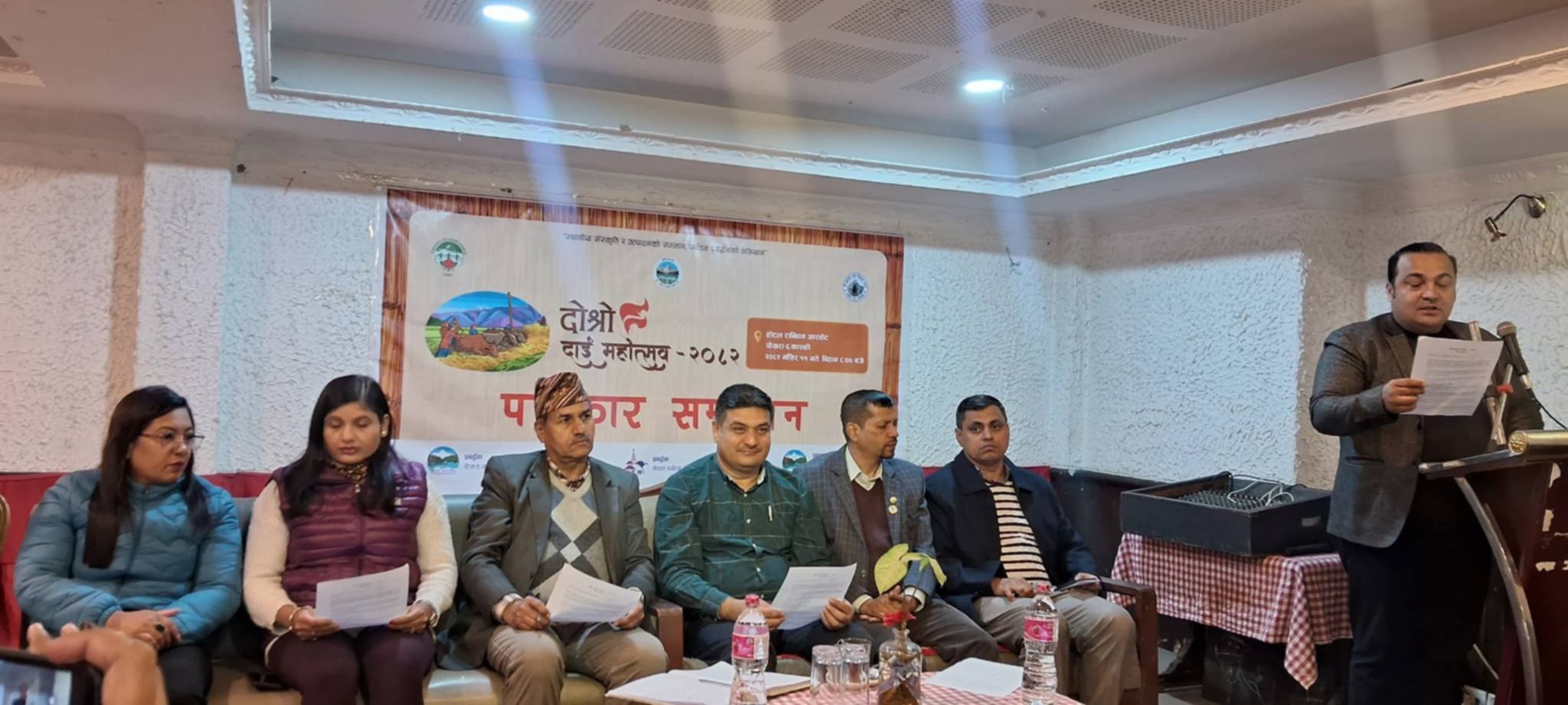
With the aim of integrating agriculture into tourism development, the second edition of the Daai Festival is set to take place tomorrow at Churunga, Puranchaur, in Pokhara Metropolitan City–19. The event seeks to highlight traditional farming practices while boosting domestic and international tourism through agro-based attractions.
The festival is being organized by the Pokhara Tourism Council, in collaboration with the Churunga Tole Development Institution, with promotional support from Pokhara Metropolitan City and the Nepal Tourism Board.

Promoting Traditional Agriculture and Expanding Tourism
Pokhara Tourism Council Chair Taranath Pahari said the festival aims to broaden Nepal’s tourism sector by incorporating agricultural experiences and educating the younger generation about traditional farming systems. He stated that agro-tourism offers vast potential to diversify tourism activities and attract visitors seeking authentic rural experiences.
Festival Coordinator Hari Bhujel added that the event is designed to promote tourism through agriculture, encourage farmers, and preserve traditional agricultural knowledge for future generations. He said the festival showcases the unique connection between farming culture and Nepal’s tourism identity.
Competitions and Cultural Activities Scheduled
The Daai Festival will feature a wide range of competitive and cultural activities rooted in local agricultural traditions. Highlights include:
- Best Ox Keeper Competition
- Best Paddy Producer Competition
- Rice-Threshing Competition
- Straw-Bundle Tying Competition
- Gundri Weaving Competition
Organizers expect these events to draw significant community participation while offering tourists an opportunity to experience rural life and agricultural heritage firsthand.

Agro-Tourism as a Key Component of Tourism Growth
Maniraj Lamichhane, Head of the Nepal Tourism Board’s Gandaki Province Office, said every sector is linked to tourism in some way, and agriculture plays a vital role in enhancing tourism experiences. He emphasized that agro-tourism can contribute meaningfully to the region’s tourism promotion by showcasing local lifestyles, farming practices, and cultural identities.
Lamichhane noted that festivals like Daai Festival help strengthen local economies, uplift farmers, and create new tourism offerings that align with Nepal’s diverse natural and cultural landscape.