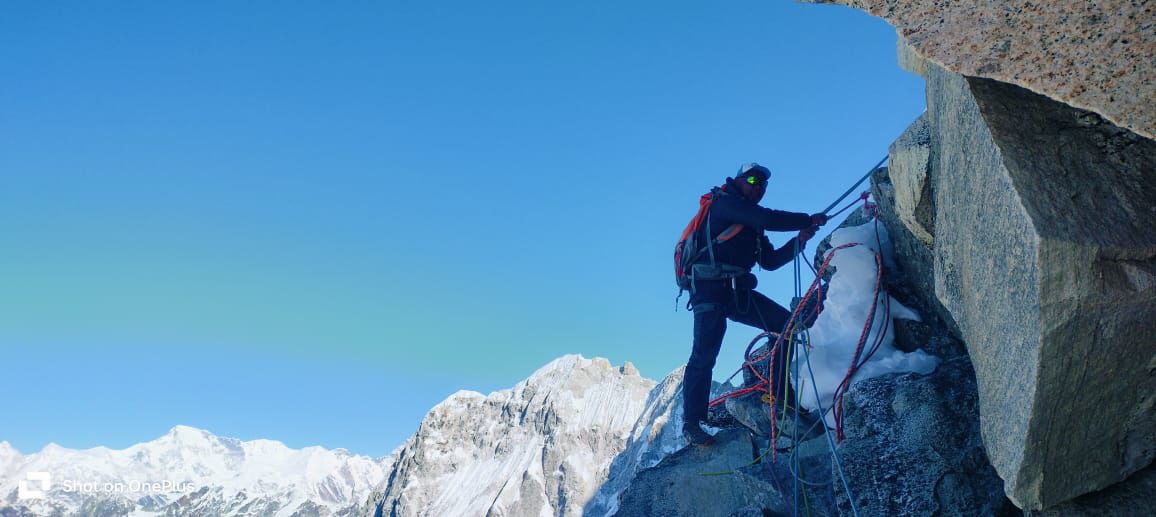
Following a historic autumn climbing season on Ama Dablam, the Expedition Operators Association Nepal (EOA) has completed a large-scale cleanup and safety maintenance operation on the iconic 6,814-meter peak. The initiative focused on removing outdated ropes, collecting accumulated garbage, and installing fresh route-fixing infrastructure ahead of the next climbing season.
This year, Ama Dablam witnessed a record surge in mountaineering activity, with 494 foreign climbers from 39 expedition teams successfully summiting or attempting the mountain. The high footfall significantly increased the need for immediate route renewal and waste management.

Old Ropes Removed, New Route Infrastructure Installed
The dedicated EOA cleanup team carried out extensive rope removal, clearing equipment that had deteriorated over multiple climbing seasons due to continuous exposure to harsh mountain conditions. The team also collected waste left behind during the season, ensuring the iconic mountain remains safe and environmentally clean.
“Removing old ropes and cleaning garbage ensures climbers encounter reliable, well-maintained routes rather than unsafe, deteriorated gear,” said Rishi Bhandari, General Secretary of EOA. “This work is essential to maintaining the safety and integrity of the climbing route on Ama Dablam.”
Long-Term Systematic Maintenance Across Nepal’s Peaks
Since 2011, EOA has been independently funding and deploying its own rope-fixing and climbing personnel to handle route management on Nepal’s most popular mountains. These operations are carried out with the approval of the Ministry of Culture, Tourism and Civil Aviation. Over the years, the association has overseen rope-fixing and route maintenance on major peaks including Everest, Lhotse, Manaslu, and, beginning in 2024, Himlung Himal. This ongoing maintenance has become an essential support system for Nepal’s mountaineering tourism, which attracts thousands of climbers annually from around the world.

Critical Operation for Climber Safety
General Secretary Bhandari emphasized that rope-fixing is not just a technical requirement but a crucial safety infrastructure for the Himalayan climbing industry. “Rope-fixing operations are critical infrastructure for safe climbing in Nepal’s mountains. The teams’ work ensures safe, guided routes for hundreds of climbers during the lucrative autumn season,” he said. The newly installed ropes and cleaned routes will support the next wave of climbers expected during the spring 2026 season.
Supporting Tourism While Enhancing Safety Standards
The maintenance and cleanup initiative highlights the dual importance of mountaineering in Nepal, protecting climbers and safeguarding the long-term sustainability of the tourism economy. The multi-peak rope-fixing program demonstrates how industry collaboration and self-regulation can significantly enhance safety standards across Nepal’s most challenging climbing routes. As Nepal continues to strengthen its reputation as the world’s premier mountaineering destination, such coordinated efforts by EOA and expedition operators remain integral to preserving both the environment and the economic value of Himalayan adventure tourism.