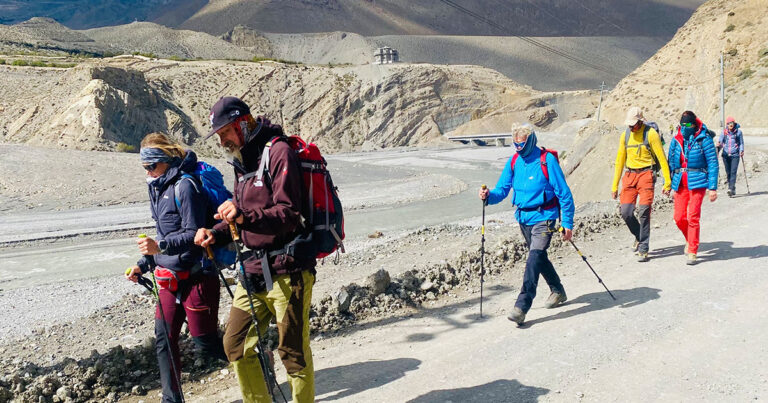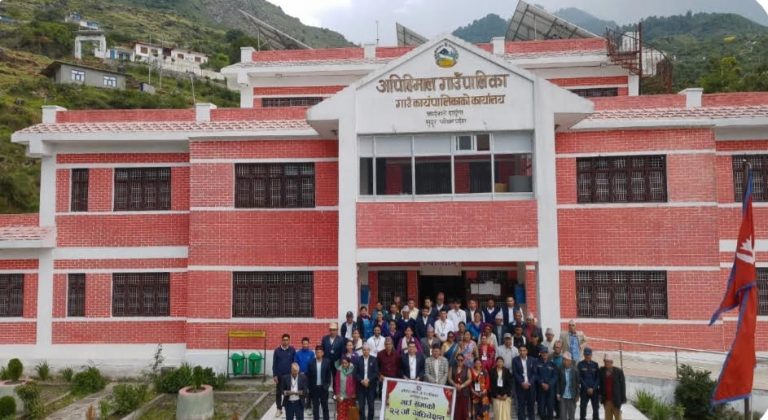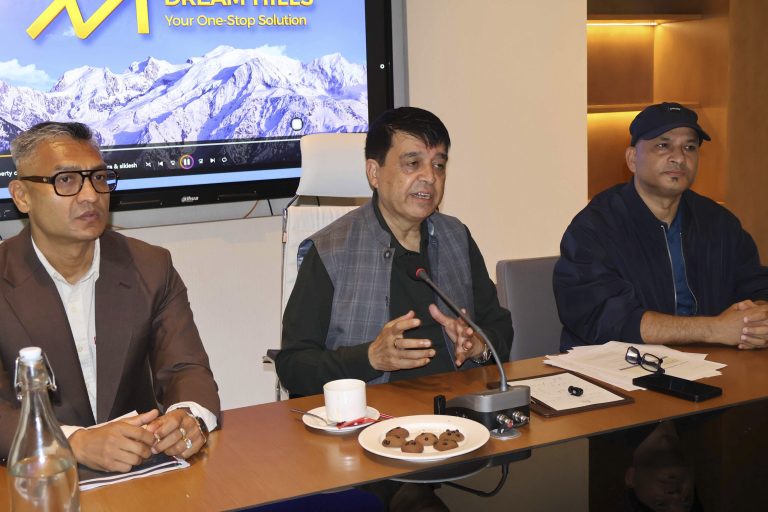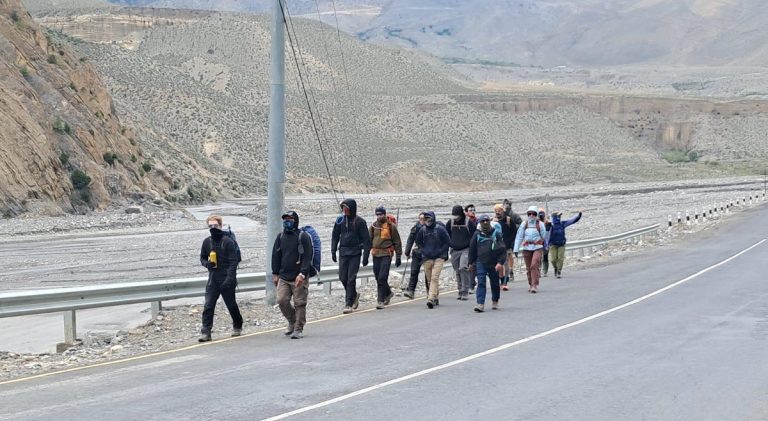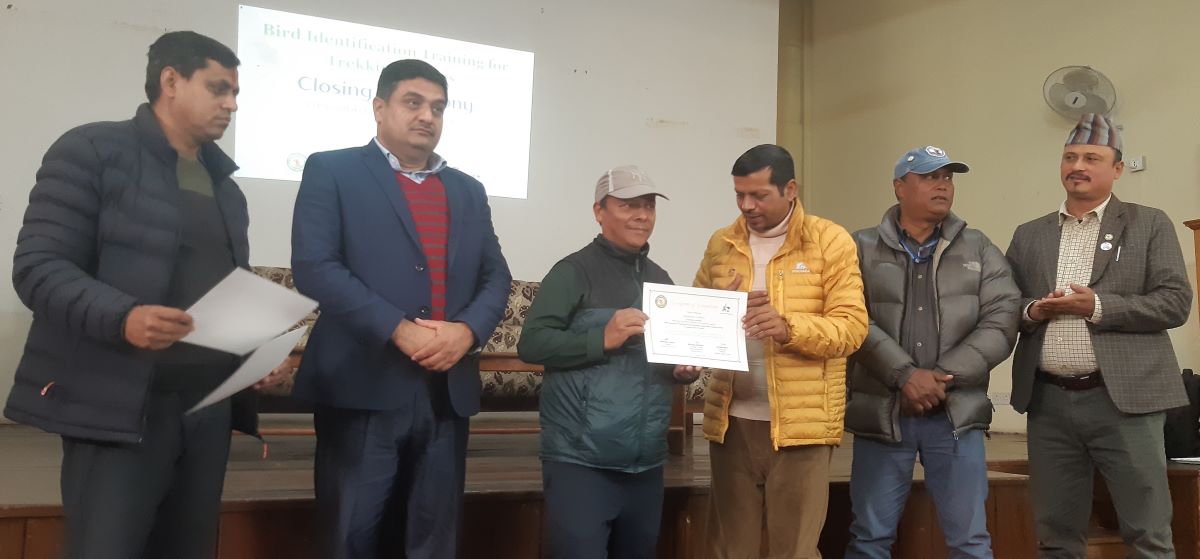
A three-day bird identification training program has been successfully conducted for trekking guides operating across Gandaki Province. In a strategic move to strengthen nature-based tourism, the Gandaki Province Office of the Nepal Tourism Board, in collaboration with the Pokhara Bird Society, has successfully conducted a three-day bird identification training program for trekking guides operating across popular trekking routes of the province.
The program was designed to equip trekking guides with essential knowledge and practical skills to help them provide richer and more informative experiences to tourists, particularly those interested in birdwatching and biodiversity tourism.

36 Trekking Guides Receive Specialized Training
A total of 36 trekking guides currently working in various trekking regions of Gandaki Province participated in the training. According to Pokhara Bird Society President Manshant Ghimire, the primary objective of the initiative was to enable guides to confidently identify bird species and share accurate information with tourists during treks.
He emphasized that bird tourism is rapidly emerging as a niche segment of eco-tourism, and skilled guides play a vital role in making Nepal an attractive destination for birdwatchers from around the world.
Practical and Theoretical Learning from Leading Experts
The training featured both classroom-based theoretical sessions and hands-on field exercises. Renowned ornithologists and conservation experts led the sessions, including:
- Hathan Ram Mahato, President of the Nepal Ornithologists’ Union
- Rabin Kadaria, Chief of the Annapurna Conservation Area Project (ACAP)
- Gopi Shrestha, Executive Member of the Kathmandu Environmental Education Project (KEEP)
Participants were trained on bird identification techniques, habitat recognition, ethical birdwatching practices, the use of field guides and mobile applications, and safe observation methods in protected areas.
Bird Tourism Recognized as a Growing Tourism Segment
Speaking at the closing ceremony on Sunday, Pokhara Tourism Council President Taranath Pahari highlighted bird tourism as one of the fastest-growing segments of Nepal’s tourism industry. He stated that many international visitors now travel to Nepal specifically for birdwatching, making it crucial for trekking guides to possess specialized knowledge in this field.
Similarly, Maniraj Lamichhane, Chief of the Gandaki Province Office of the Nepal Tourism Board, noted that a significant number of tourists visit Gandaki Province solely for bird observation. He stressed the importance of developing professional expertise among local guides to cater to this growing market segment effectively.
Promoting Skill Development and Sustainable Tourism
Nepal Ornithologists’ Union President Hathan Ram Mahato emphasized that individuals interested in pursuing careers in bird tourism must develop both technical skills and a deep passion for nature conservation. He also encouraged the use of digital tools and modern technology for bird identification and data recording, ensuring that guides remain updated and credible in their services.

Supporting Sustainable Eco-Tourism Growth
Organizers believe the training will not only enhance the professional capacity of trekking guides but also contribute to sustainable tourism development in Gandaki Province. By integrating birdwatching knowledge into trekking experiences, Nepal aims to diversify tourism offerings, promote conservation awareness, and attract high-value nature tourists.
With Nepal being home to more than 890 bird species, Gandaki Province stands as one of the country’s prime birdwatching destinations. Programs like this training initiative are expected to further position Pokhara and surrounding trekking routes as leading hubs for eco-tourism and biodiversity-focused travel.
With rich biodiversity and a wide variety of bird species, Gandaki Province is considered one of Nepal’s most promising regions for bird tourism. The successful completion of this training program marks a significant step toward developing skilled human resources capable of supporting sustainable, specialized tourism growth. The Nepal Tourism Board and Pokhara Bird Society have indicated that similar capacity-building programs will be continued in the future to further strengthen Nepal’s position in eco-tourism and birdwatching tourism.