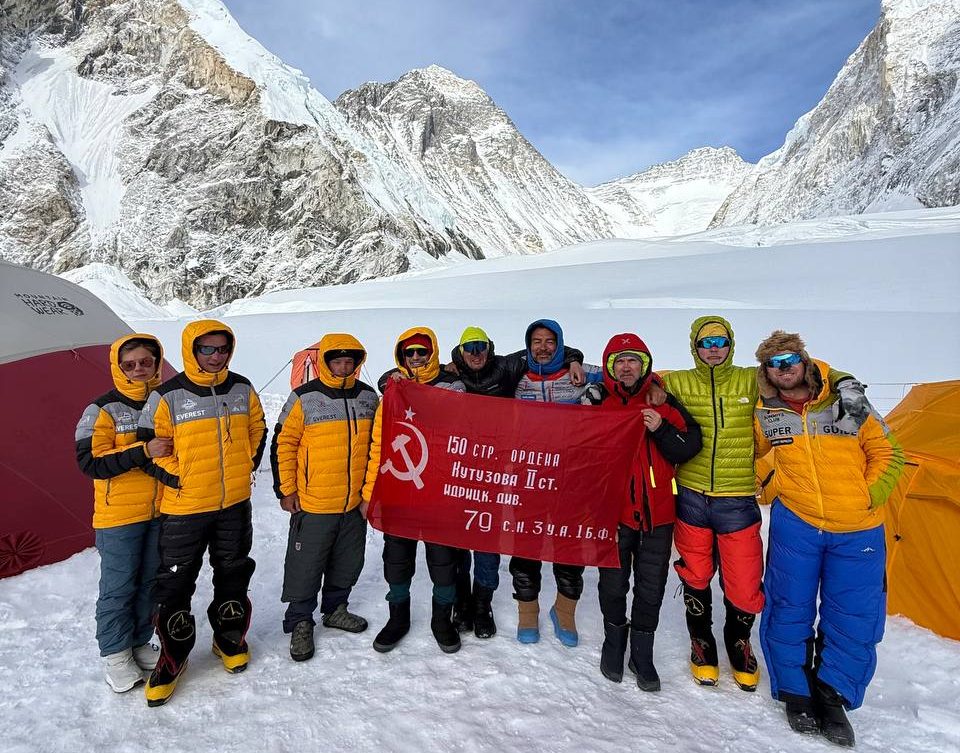
A team from Russia’s renowned Russian 7 Summits Club has marked Victory Day at the summit of Mount Everest during the 2026 spring climbing season, carrying symbolic flags celebrating both World War II victory and 70 years of Russia–Nepal diplomatic relations.

The expedition team carried the Victory Banner commemorating the Soviet Union’s triumph over Nazi Germany on May 9, 1945, along with a special diplomatic anniversary flag marking seven decades of formal relations between Russia and Nepal, established in 1956. The flags were officially handed over by the Russian Embassy in Kathmandu to the expedition team in April before their departure to Everest Base Camp.
Expedition Led by Veteran Mountaineer Alexander Abramov
The Everest expedition was led by Alexander Abramov, founder and president of the 7 Summits Club and one of Russia’s most experienced high-altitude climbers. Abramov, a Master of Sports of the USSR in mountaineering, has summited Everest 12 times, making him one of the most successful Russian climbers in history.
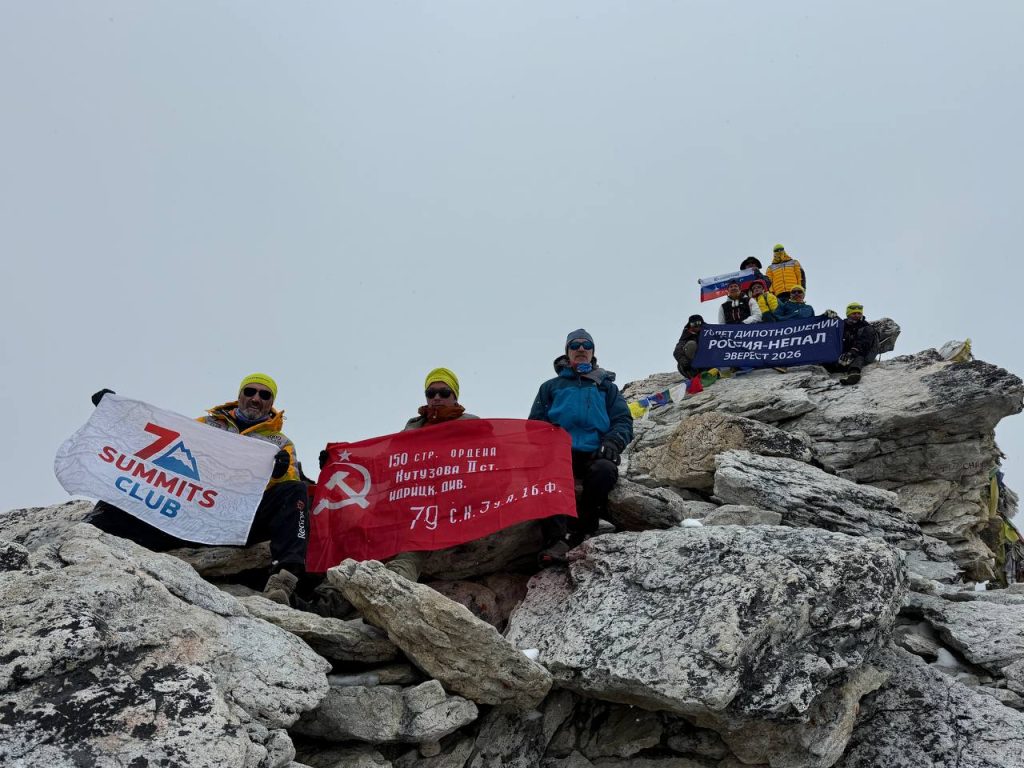
Over the past three decades, he has led more than 15 Everest expeditions and played a key role in organizing international high-altitude climbs through the club, which he founded in 2001. He is also widely recognized for spearheading the “Seven Volcanoes” project, which involves climbing the highest volcano on each continent.
Symbolic Diplomacy at the Top of the World
The summit celebration carries significant diplomatic symbolism this year as Russia and Nepal mark 70 years of bilateral relations in 2026. Both countries have recently reaffirmed cooperation across multiple sectors, including infrastructure development, hydropower projects, healthcare, education, and tourism. Officials from both sides have also highlighted growing interest in improving direct air connectivity and strengthening tourism exchanges.
Victory Day, observed annually on May 9 in Russia, commemorates the Soviet Union’s victory over Nazi Germany in the Second World War. The presence of the Victory Banner at the world’s highest peak was described by expedition members as a symbolic gesture of national pride and historical remembrance.

Everest Remains a Platform for International Collaboration
Mount Everest, located on the border of Nepal and China, continues to serve as a global platform for both adventure tourism and international cooperation. Each spring, climbers from around the world attempt the summit, contributing to Nepal’s position as a leading destination for high-altitude mountaineering. The 2026 expedition adds another chapter to Everest’s long history of combining mountaineering achievement with cultural and diplomatic significance.