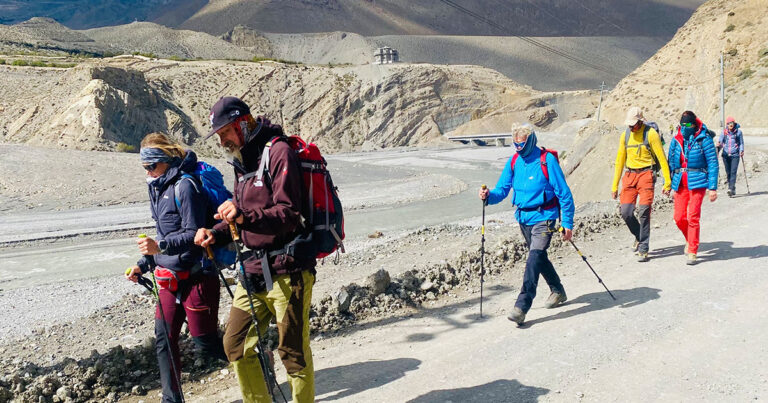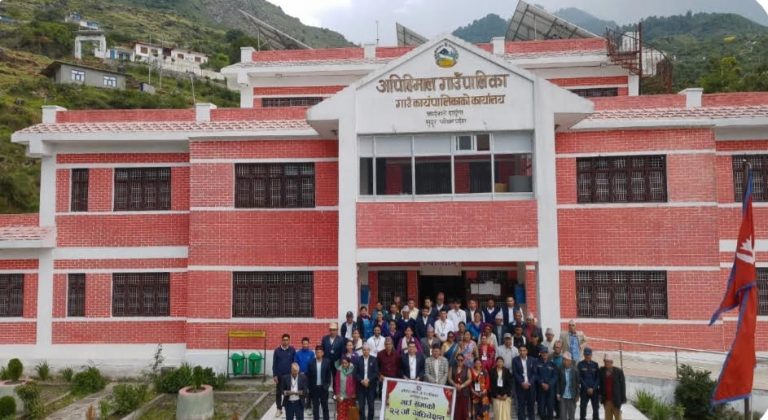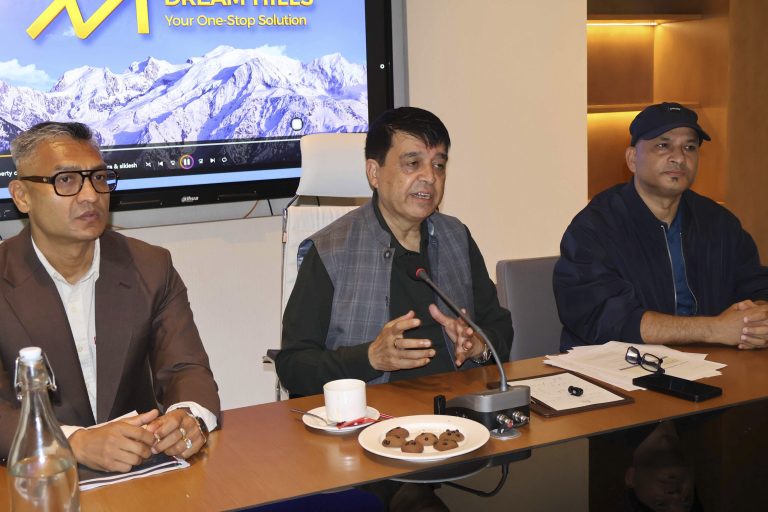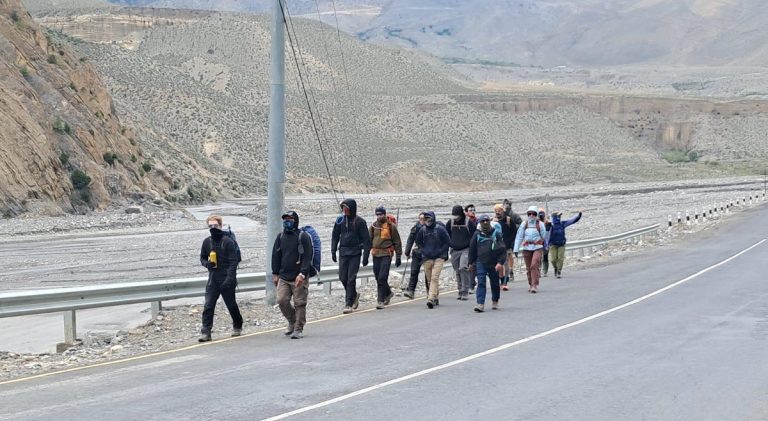
The construction of the Beni–Jomsom–Korala road, a national pride project connecting north to south, has brought transformative change to Mustang, a region known for its dramatic landscapes, ancient heritage, and spiritual significance. With improved road infrastructure and easier air access, Mustang has experienced a significant rise in both domestic and international tourist arrivals, signaling a positive shift in the district’s tourism economy.
Over 7 Lakh Tourists Visited Mustang in Fiscal Year 2081/82
According to Bishal Adhikari, Information Officer at the District Police Office, Mustang welcomed a total of 7,05,779 tourists in the fiscal year 2081/82. This figure includes 5,55,326 domestic tourists and 1,50,453 foreign visitors, marking a remarkable 55.3% increase compared to the previous fiscal year 2080/81, when only 4,54,326 tourists visited the district. This surge translates to an additional 2,51,453 tourists in a single year, showcasing the growing popularity of Mustang as a year-round travel destination.
This growth reflects not only enhanced physical connectivity but also a heightened interest in exploring Nepal’s rich cultural and natural diversity. Mustang, once known as the remote kingdom beyond the Himalayas, is now becoming one of the most accessible and favored tourist districts in the country.
Mustang’s Unique Blend of Culture, Nature, and Spiritual Heritage
Mustang’s increasing appeal lies in its historical, religious, cultural, and ecological diversity. Nestled between the towering Annapurna and Dhaulagiri mountain ranges, the district boasts a rare blend of Tibetan-Buddhist and Hindu traditions, attracting pilgrims and cultural enthusiasts alike.
Muktinath Temple, a revered pilgrimage site for both Hindus and Buddhists, stands as the crown jewel of Mustang’s spiritual tourism. Thousands of devotees from Nepal, India, and across the world visit this sacred site annually, seeking blessings and spiritual fulfillment. Other important religious destinations include Kagbeni Dham, a site known for ancestral rituals, and the holy Damodar Kunda, situated at a high altitude and surrounded by mythological significance.
Mustang’s ancient monasteries, Buddhist stupas (chortens), manes, and rock caves carved into cliffs offer a glimpse into centuries-old traditions and lifestyles. The Mustangi King’s Palace, located in Lo Manthang, remains a symbol of the region’s royal heritage and cultural pride. These unique assets not only attract spiritual seekers but also history lovers, researchers, and adventure travelers.
The Kaligandaki Corridor and Road Connectivity Revolution
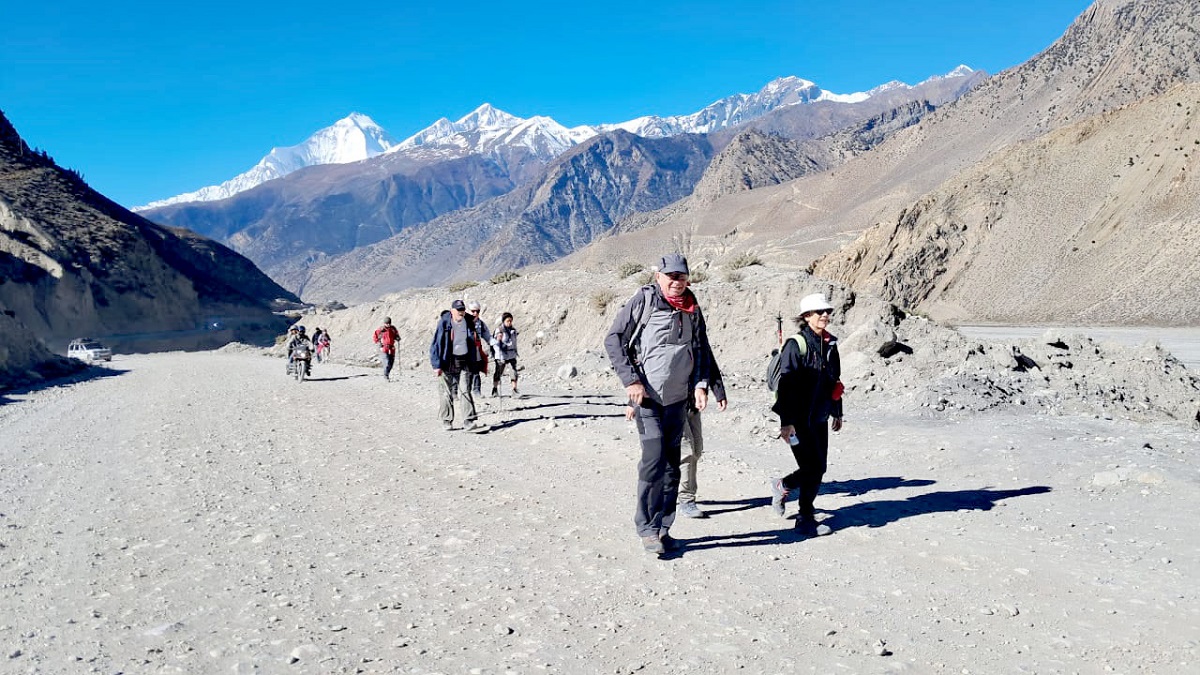
The strategic importance of the Kaligandaki Corridor, which runs through Mustang as part of the Beni–Jomsom–Korala route, cannot be overstated. This highway has become a lifeline for tourism, trade, and local development. Where once treacherous trails limited access to Mustang, today’s travelers can comfortably reach destinations like Jomsom, Kagbeni, Muktinath, and even the restricted Upper Mustang by road. The reduction in travel time and increase in safety have encouraged more Nepalis to visit Mustang with families and friends during festivals and holidays.
The road project, recognized as a national pride initiative, has significantly lowered the transportation cost and opened up year-round access, even to areas that were previously reachable only by charter flights or days of trekking. The ease of access has led to the development of hotels, lodges, homestays, and other tourist amenities along the route, boosting employment and income for the local population.
Air Travel Complements Ground Accessibility
In addition to road development, air connectivity has also improved, with regular flights from Pokhara to Jomsom Airport, which serves as a gateway to Upper Mustang. This dual-mode connectivity, by road and by air, has not only enhanced convenience but has also made Mustang accessible to a wider range of tourists, including elderly pilgrims, time-bound travelers, and international visitors with tight itineraries.
Jomsom Airport, despite challenges due to weather fluctuations, remains one of the busiest mountain airports during peak tourist seasons. The complementary nature of air and road transport ensures that even when flights are grounded due to weather, tourists have the option of continuing their journey by road.
Boost to Local Economy and Community Development
The influx of tourists has had a ripple effect on Mustang’s local economy. Restaurants, handicraft shops, guides, porters, jeep operators, and guesthouses are witnessing increased demand. Local communities, once dependent primarily on subsistence agriculture and seasonal migration, are now actively engaging in tourism-based businesses.
Villages like Marpha, Kagbeni, and Lo Manthang have become model settlements for sustainable tourism development, combining traditional architecture with modern amenities. Locally-produced goods such as apple brandy, dried fruits, woolen crafts, and Buddhist artifacts are also gaining popularity among visitors, thereby preserving heritage while generating income.
Preserving Culture Amid Growing Popularity
While the growth in tourism is welcomed, experts and local leaders emphasize the need for sustainable tourism practices. Mustang is ecologically sensitive and culturally rich, and unregulated tourism could threaten its fragile balance. Local governments and tourism stakeholders are thus focusing on preserving traditional architecture, controlling pollution, and promoting eco-friendly travel.
There is also an effort to diversify tourism activities beyond religious pilgrimage, such as promoting trekking in the Upper Mustang, mountain biking, cultural festivals, and geological tourism around the world’s deepest gorge, the Kaligandaki.
A Promising Future for Mustang’s Tourism
With the successful implementation of the Beni–Jomsom–Korala road, Mustang has not only reduced its geographic isolation but has also become a symbol of Nepal’s efforts to connect heritage with development. The district is fast emerging as a four-season destination, catering to pilgrims, adventure lovers, scholars, and casual travelers alike.
If current trends continue, and infrastructure development goes hand in hand with cultural and environmental preservation, Mustang has the potential to become one of South Asia’s most iconic high-altitude tourism regions. The journey that once took days through rugged terrain is now a comfortable drive, but the mystery, majesty, and spiritual aura of Mustang remain as powerful as ever.