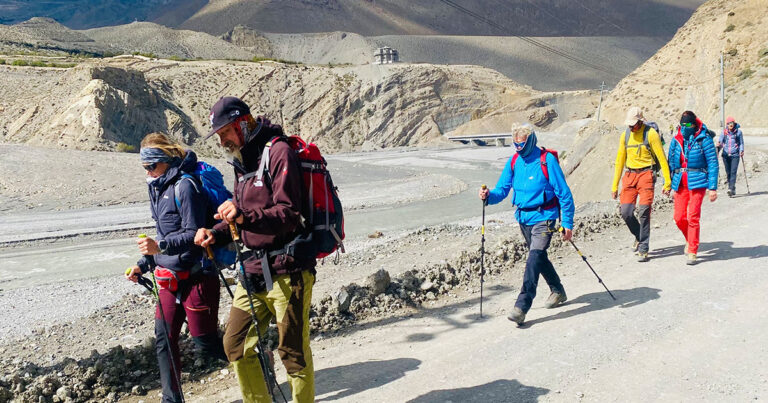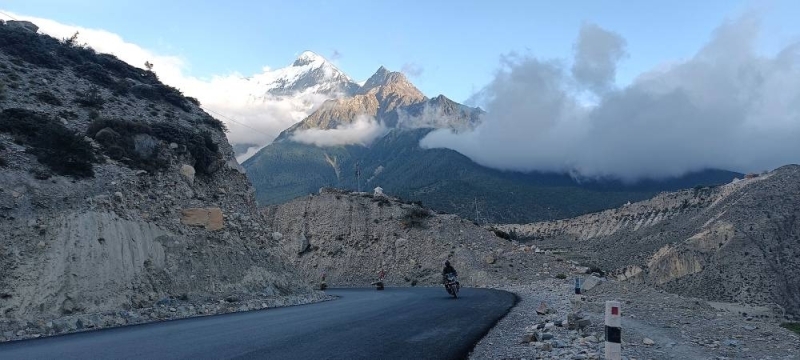
Mustang, a district in Nepal rich with rugged landscapes, spiritual heritage, and majestic Himalayan views, has taken a significant step toward enhancing its adventure tourism offerings. A newly constructed 8-kilometre cycling trail from Jomsom (Gharapjhong-4) to Dharkajung (Baragung Muktikshetra-5) has been officially opened, promising to elevate the region’s appeal among adventure enthusiasts and nature lovers. Built with an investment of Rs 2 million, the trail includes two iron bridges and winds through high-altitude terrain, offering breathtaking views of the region’s natural and cultural landscapes.
Trail Designed for Tourism Diversification and Adventure Enthusiasts
According to Prem Paudel, chief of the Tourism and Industry Office Mustang, this newly developed trail is designed not only to cater to local and international cycling enthusiasts but also to diversify Mustang’s growing tourism profile. The route traverses through Dhalkedanda, located at an altitude of over 4,000 metres, making it a high-altitude adventure path that promises panoramic sights and physical challenges.
The trail offers cyclists a new alternative route towards Dolpa, bypassing the more trafficked Jomsom-Kagbeni road, which has long been the main artery for travel within Lower Mustang. Unlike the motorable roads, this new trail is tailored for cyclists seeking solitude, natural immersion, and minimal vehicular disruption. Its strategic design also ensures minimal environmental damage while maximizing interaction with the landscape.
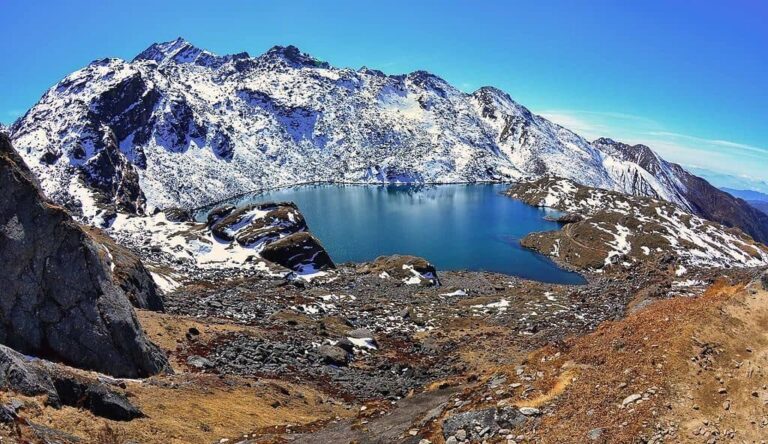
Moreover, cyclists on this route are treated to unobstructed views of both Upper and Lower Mustang, the Nepal-China border, and towering Himalayan giants like Dhaulagiri and Nilgiri. The trail also offers a sweeping view of the Kali Gandaki corridor, one of the deepest gorges in the world, along with glimpses of isolated local settlements that highlight the unique culture and lifestyle of Mustang’s residents.
Infrastructure Investment Supports Growing Visitor Numbers
The inauguration of the new cycling trail comes at a time when Mustang is experiencing a tourism surge. Bishal Adhikari, Information Officer at the District Police Office, reported that the district received 705,000 visitors in the fiscal year 2081/82, reflecting a remarkable 55 percent increase from the previous fiscal year. This increase is viewed as a positive indicator of Mustang’s rising appeal as a diverse tourist destination.
Several factors have contributed to this growth. First, improved road connectivity, particularly the expansion and maintenance of the Beni-Jomsom-Korala route, has made Mustang more accessible to domestic and international travelers. The strategic road infrastructure allows smoother passage through the district, opening doors for tourism businesses and facilitating transport of goods and services, thereby strengthening the local economy.
Second, there is a noticeable rise in interest in Mustang’s natural, religious, and cultural treasures. Mustang is home to numerous sacred pilgrimage sites such as Muktinath, and is equally celebrated for its dramatic landscapes that blend desert-like topography with snow-capped mountains. Travelers are increasingly drawn to its combination of high-altitude mystique and Tibetan-influenced cultural heritage.
The newly constructed cycling trail adds another dimension to this appeal by offering a physically immersive way to explore Mustang’s terrain. While previously visitors might have limited their explorations to trekking or off-road jeep tours, this trail opens the door to a more sustainable and health-conscious form of tourism.
Local Engagement and Economic Opportunities
In addition to attracting tourists, the trail is expected to benefit local communities by creating new economic opportunities. Local entrepreneurs and homestay operators along the trail are preparing to serve the growing influx of adventure tourists. The route’s alignment through less-traveled settlements is expected to decentralize tourism revenue and foster more inclusive growth in the region.
With increased tourist traffic expected, the local government and tourism authorities are focusing on infrastructure support, safety measures, and capacity building to ensure the trail is well-maintained and secure for cyclists of varying skill levels. Training programs for local guides and emergency response teams are being considered to support this initiative.
Environmental and Cultural Considerations
While development projects often raise concerns about ecological and cultural disruption, the Mustang trail project has received praise for its low-impact construction and emphasis on sustainable tourism. The use of iron bridges over potentially disruptive terrains reduces the need for road excavation, preserving local flora and fauna. Trail signage and information boards are being installed to educate travelers about local culture, conservation practices, and respectful tourism behaviors.
Furthermore, the trail is expected to encourage slow travel, prompting visitors to spend more time in the district, engage meaningfully with locals, and learn about traditional practices, festivals, and the region’s spiritual legacy.
A New Era for Mustang’s Tourism Future
As Nepal continues to position itself as a leading adventure tourism destination in South Asia, efforts like the Jomsom to Dharkajung cycling trail serve as exemplary models of sustainable development. With its unique blend of adventure, altitude, and cultural depth, the trail is expected to draw attention from international cyclists, travel bloggers, and nature lovers looking for off-the-beaten-path experiences.
The project stands as a testament to how modest investments, when strategically planned, can have lasting impacts on a region’s tourism ecosystem. With visitor numbers on the rise and infrastructure continually improving, Mustang is not just preserving its ancient allure, it is actively evolving to meet the aspirations of a new generation of travelers.