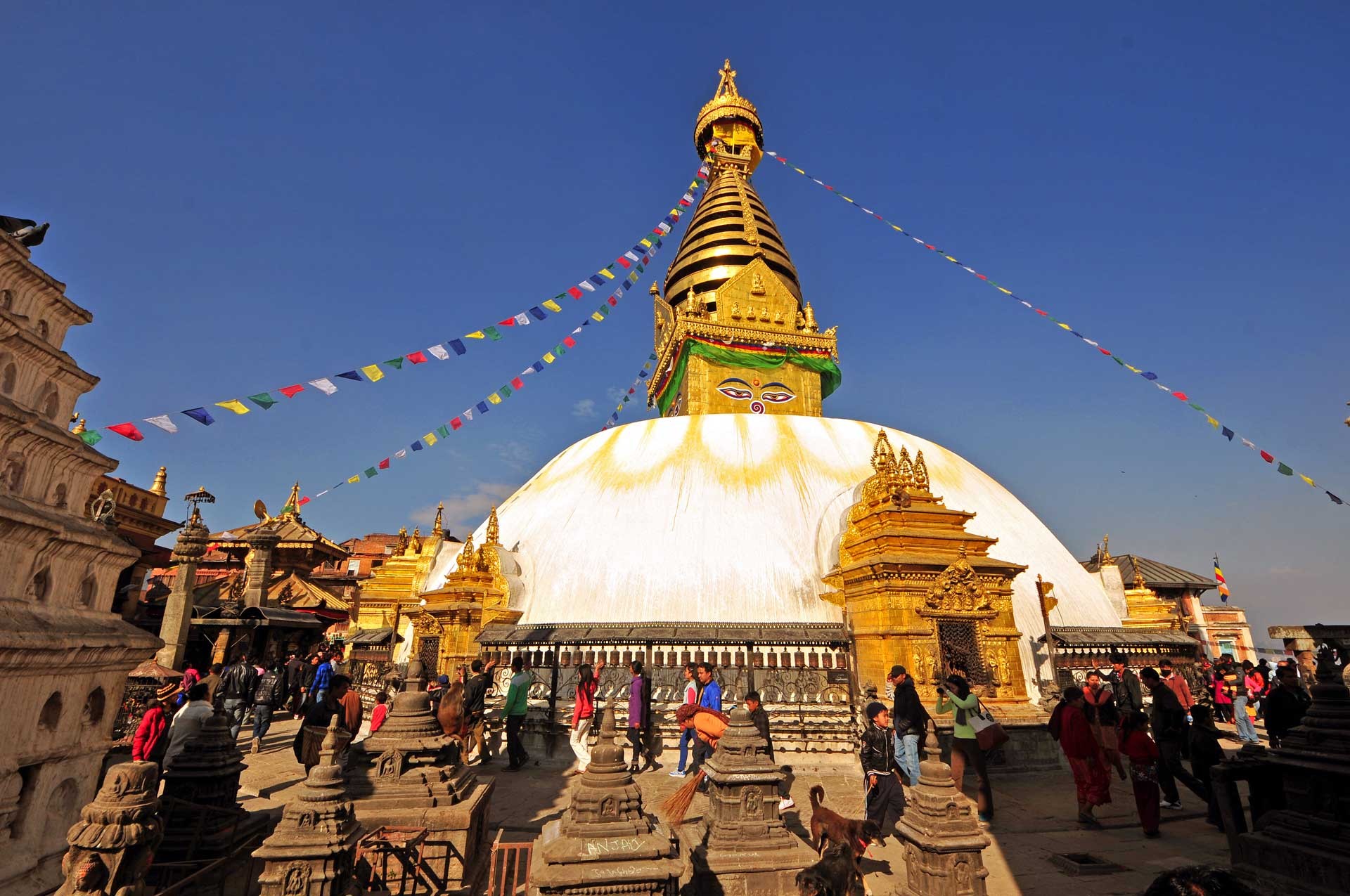
The Swayambhunath, popularly known as the Monkey Temple, is one of the most important and ancient religious sites in Nepal. Situated atop a hill in the western part of Kathmandu, it is a powerful symbol of harmony between Buddhism and Hinduism and one of the most visited landmarks in the Kathmandu Valley.
The name “Monkey Temple” comes from the large population of monkeys that inhabit the area. These monkeys are considered sacred, and they roam freely across the temple complex, adding a unique character to this spiritual destination.
Historical Background of Swayambhunath
The origins of Swayambhunath are deeply rooted in legend and ancient history, making it one of the oldest religious sites in Nepal.
According to Buddhist mythology, the Kathmandu Valley was once a vast lake. It is believed that the hill where Swayambhunath now stands emerged naturally from this lake. The word Swayambhu means “self-created” or “self-existent,” indicating that the stupa was not built in a single moment but is believed to have naturally manifested over time.
One of the most popular legends is associated with the Bodhisattva Manjushri, who is said to have drained the ancient lake by cutting a gorge at Chovar. After the water receded, the self-arisen lotus flower that floated on the lake settled on the hill, which later became Swayambhunath.
Historically, the stupa is believed to date back more than 2,000 years, making it one of the oldest stupas in Nepal. Over centuries, it has been expanded and renovated by various kings, particularly during the Licchavi period and later Malla dynasty, who contributed significantly to its present architectural form.

Religious Significance
Swayambhunath holds immense spiritual importance for both Buddhists and Hindus. It is regarded as one of the most sacred Buddhist pilgrimage sites in Nepal. For Buddhists, the stupa represents enlightenment and the path toward liberation. The painted eyes of Buddha on the four sides of the stupa symbolize awareness and compassion, constantly watching over the world.
Hindus also revere the site and consider it a powerful spiritual center. This shared reverence reflects Nepal’s unique tradition of religious harmony. Monks, pilgrims, and visitors often perform kora, a ritual of walking clockwise around the stupa while spinning prayer wheels and chanting mantras, which is believed to accumulate spiritual merit.
Architecture and Symbolism
The architecture of Swayambhunath is rich in symbolism and spiritual meaning.
The main stupa consists of:
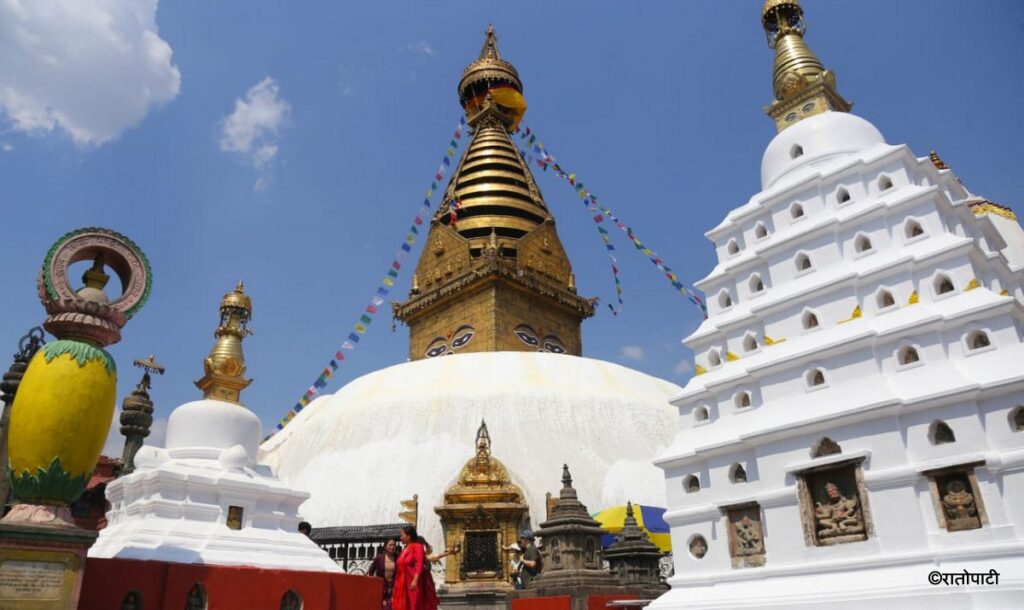
- A massive white dome representing the earth
- A golden spire at the top symbolizing enlightenment
- The iconic “all-seeing eyes” of Buddha painted on all four sides
- A spiral of prayer flags that represent blessings carried by the wind
Around the main stupa are numerous smaller shrines, statues, and temples dedicated to both Buddhist and Hindu deities. The site also includes Tibetan monasteries and meditation centers, making it a hub for spiritual learning and practice. The 365 stone steps leading to the hilltop are another symbolic feature, often interpreted as a representation of daily spiritual progress.
The Monkeys of Monkey Temple
One of the most distinctive features of Swayambhunath is its population of monkeys. These monkeys are considered sacred and are believed to be descendants of the ancient past linked to mythological stories. They roam freely across the complex, interacting with visitors and monks. While they add charm and liveliness to the site, they are also known for being mischievous, often snatching food or shiny objects from tourists. Despite this behavior, the monkeys are protected and respected as part of the temple’s spiritual ecosystem. They contribute to the unique identity of the Monkey Temple, distinguishing it from other religious sites in Nepal.
Cultural Importance
Swayambhunath is not just a religious site but also a cultural symbol of Kathmandu. It represents the blending of ancient traditions, architectural brilliance, and spiritual diversity. Festivals such as Buddha Jayanti and Losar (Tibetan New Year) are celebrated here with great devotion. During these times, the stupa becomes vibrant with prayer ceremonies, butter lamps, chanting monks, and thousands of pilgrims. The site is also recognized as a UNESCO World Heritage Site, highlighting its global cultural and historical significance.
Visitor Experience
Visiting Swayambhunath is both a spiritual and physical journey. Most visitors climb the long staircase from the base of the hill, passing prayer flags and small shrines along the way. The climb is steep but rewarding, offering panoramic views of Kathmandu Valley.
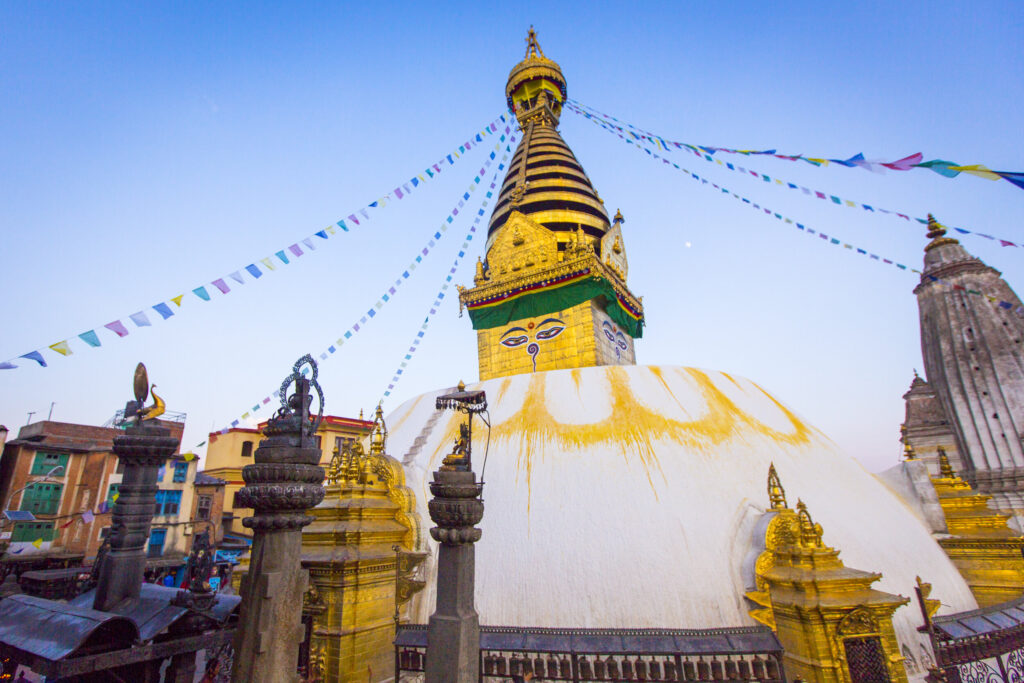
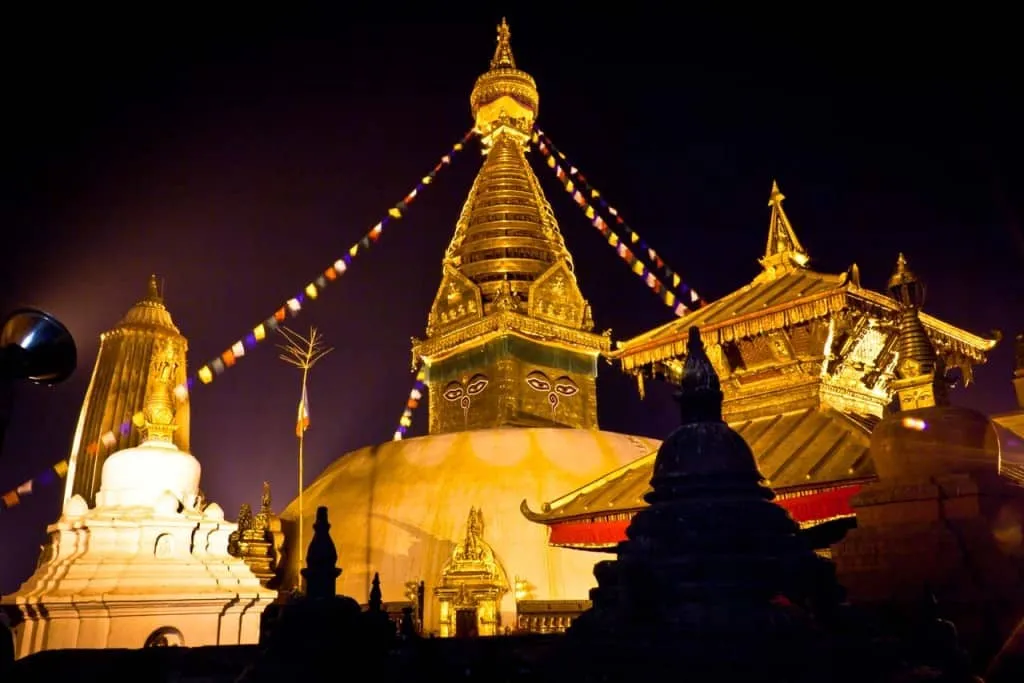
At the top, visitors are greeted by the golden stupa, fluttering flags, chanting monks, and playful monkeys. The peaceful yet energetic atmosphere makes it one of the most memorable experiences in Nepal. Sunrise and sunset are particularly popular times to visit, as the golden light enhances the beauty of the stupa and the surrounding valley.
Preservation and Modern Challenges
As one of Nepal’s most visited heritage sites, Swayambhunath faces challenges such as overcrowding, pollution, and preservation of ancient structures. Efforts by local authorities and international organizations focus on maintaining its historical integrity while managing tourism sustainably. Despite modernization around Kathmandu, the Monkey Temple continues to preserve its ancient spiritual essence.
The Monkey Temple, or Swayambhunath, stands as a timeless symbol of faith, history, and cultural unity in Nepal. Its ancient origins, deep religious significance, unique architecture, and the presence of sacred monkeys make it one of the most extraordinary heritage sites in the world. Whether visited for spiritual reflection, historical interest, or panoramic views of Kathmandu, Swayambhunath offers a powerful experience that connects the past with the present in a deeply meaningful way.