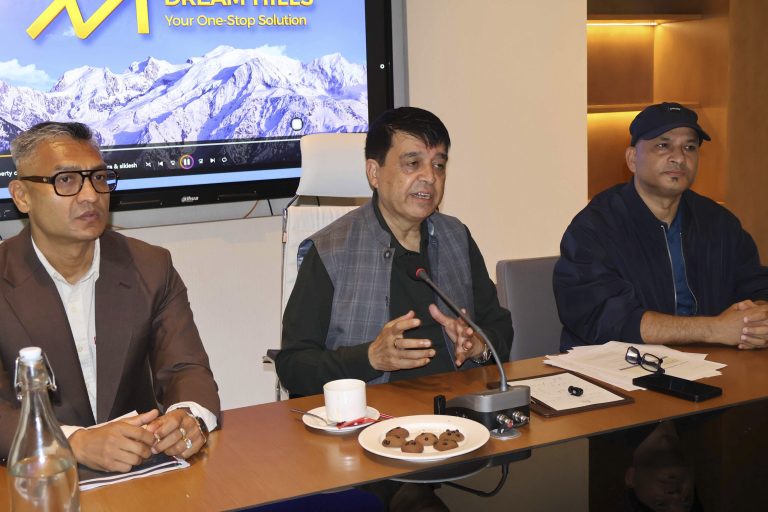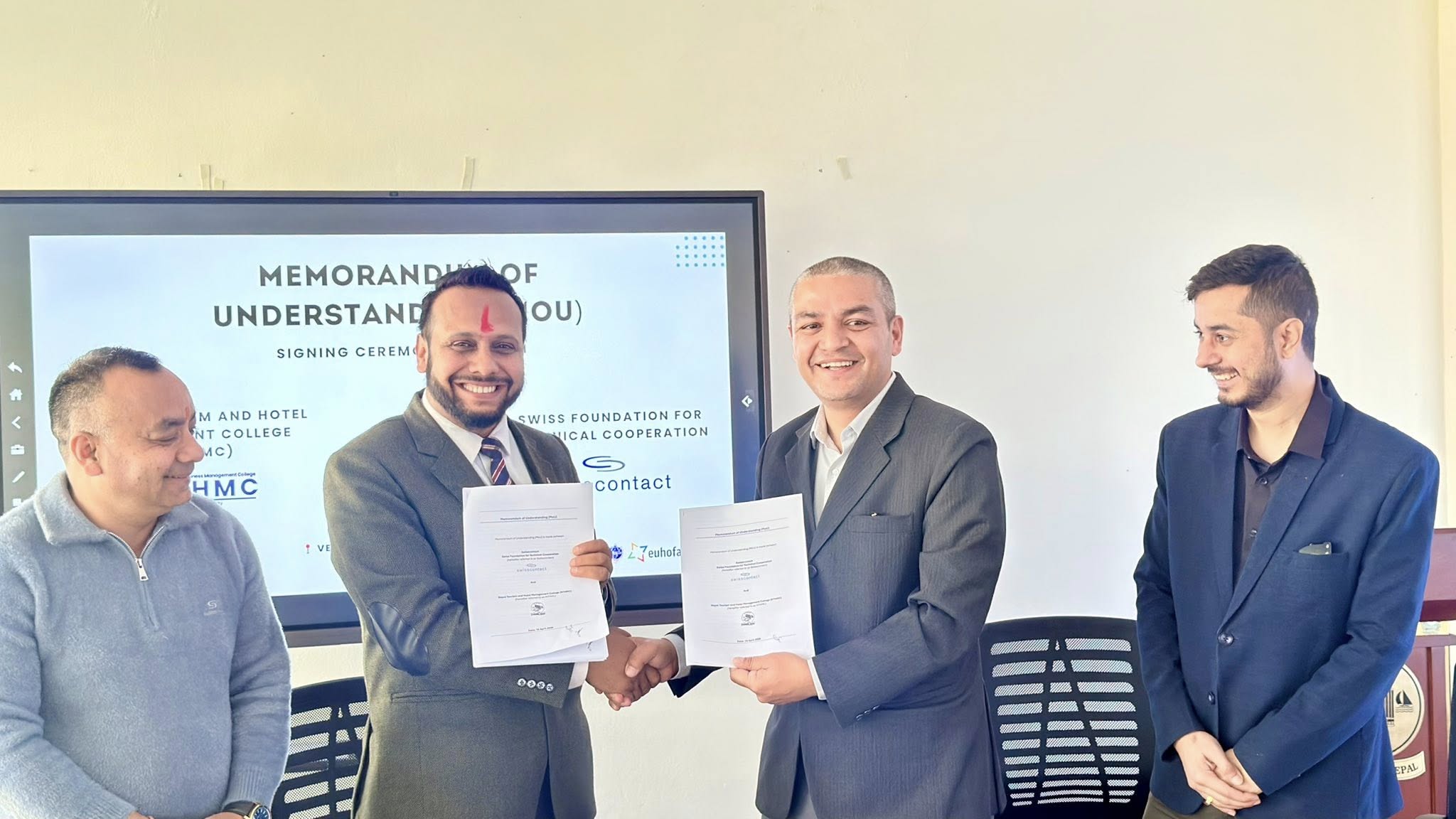
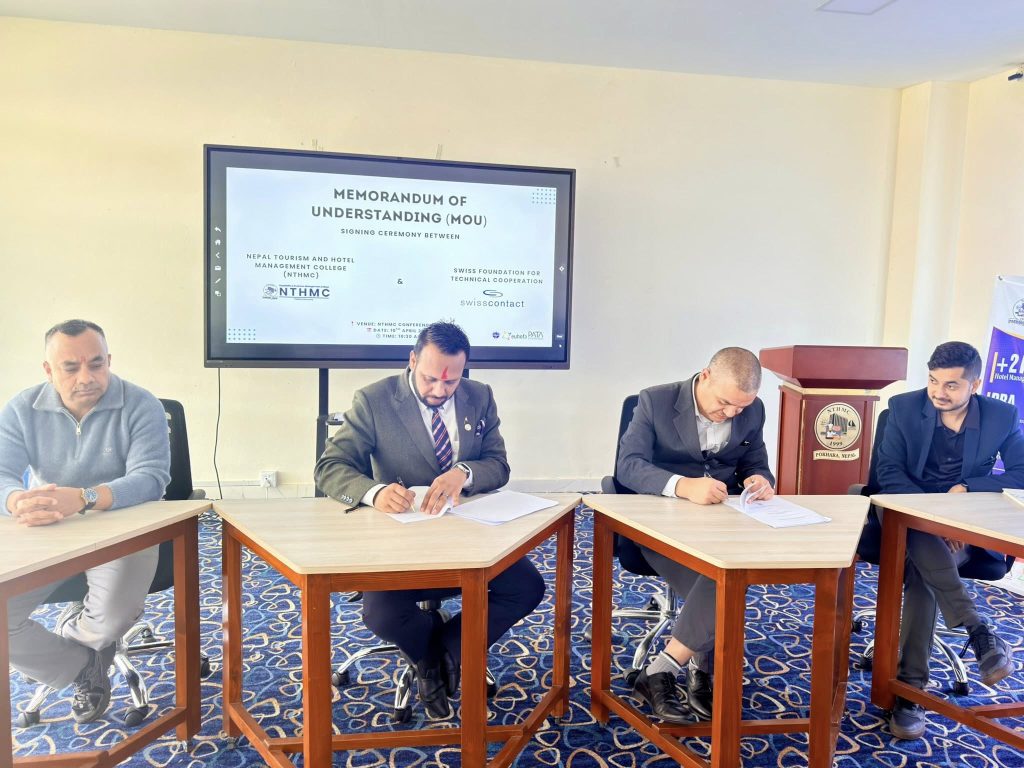
Swisscontact in Nepal has signed a Memorandum of Understanding (MoU) with the Nepal Tourism and Hotel Management College (NTHMC), marking a significant step toward enhancing tourism and hospitality education in the country.
Strategic Partnership for Sector Development
The collaboration brings together Swisscontact’s global expertise, technical tools, and international networks with NTHMC’s established academic foundation, infrastructure, and strong industry connections. The partnership aims to contribute to the overall growth of Nepal’s tourism and hospitality ecosystem by improving education quality, training systems, and innovation capacity. Officials from both institutions highlighted that the initiative is expected to bridge skill gaps in the sector while aligning training programs with evolving industry demands.

Vision to Build a Centre of Excellence
One of the key objectives of the partnership is to position NTHMC as a leading centre of excellence in tourism and hospitality education in Nepal. The institutions plan to enhance teaching methodologies, introduce modern training approaches, and promote innovation in hospitality services. By strengthening institutional capacity, the collaboration seeks to produce highly skilled professionals capable of meeting both domestic and international standards in the tourism industry.
Focus on Sustainable Skills Development
As part of the initial phase, Swisscontact will work with NTHMC under the Developing Inclusive and Green Opportunities (DIGO) in tourism project. This initiative will deliver Sustainable Hospitality Skills and Leadership Training aimed at preparing a more competent, inclusive, and environmentally responsible workforce.
The program will focus on building practical skills, leadership capabilities, and awareness of sustainable practices, ensuring that graduates are better equipped to adapt to the changing needs of the tourism and hospitality sector.

Supporting Inclusive and Green Tourism Growth
The DIGO project is part of Swisscontact’s broader development programme, co-financed by the Swiss Agency for Development and Cooperation (SDC) under the Federal Department of Foreign Affairs (FDFA), with additional support from the Happel Foundation. Through this initiative, the partnership aims to promote inclusive and environmentally sustainable tourism practices in Nepal, aligning with global trends toward responsible tourism development.
Stakeholders expressed optimism that the collaboration will create a lasting impact on Nepal’s tourism and hospitality landscape by improving workforce readiness and institutional capacity. By combining international expertise with local knowledge, the partnership is expected to contribute significantly to the long-term development of Nepal’s tourism sector. The MoU signals a forward-looking approach to education and training, reinforcing Nepal’s ambition to build a competitive and sustainable tourism industry.