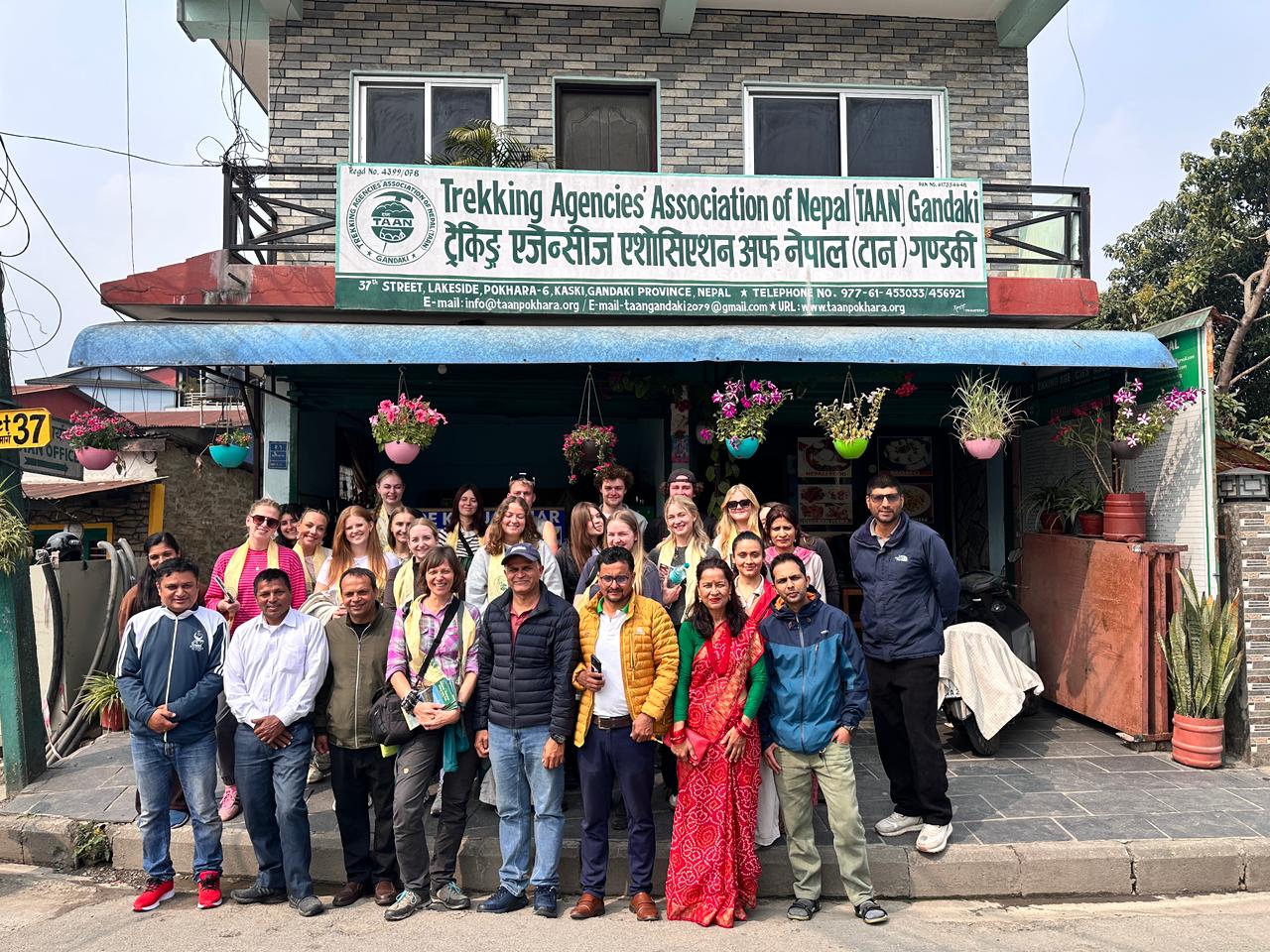
In a meaningful initiative aimed at strengthening global academic and tourism partnerships, Trekking Agencies’ Association of Nepal (TAAN) Gandaki hosted a delegation of 21 students from Salzburg University of Applied Sciences for an interactive learning visit focused on Nepal’s trekking and tourism sector.
The program, held in Pokhara, was organized as part of an international cultural exchange designed to give students from the Department of Business and Tourism first-hand exposure to Nepal’s adventure tourism model, sustainable travel practices, and the operational dynamics of trekking management.
A Platform for Academic and Industry Dialogue held by TAAN Gandaki
The visit created a platform where theoretical knowledge met practical experience. The Austrian students engaged directly with tourism entrepreneurs, gaining insights into how Nepal’s trekking industry functions as a major pillar of the national economy.
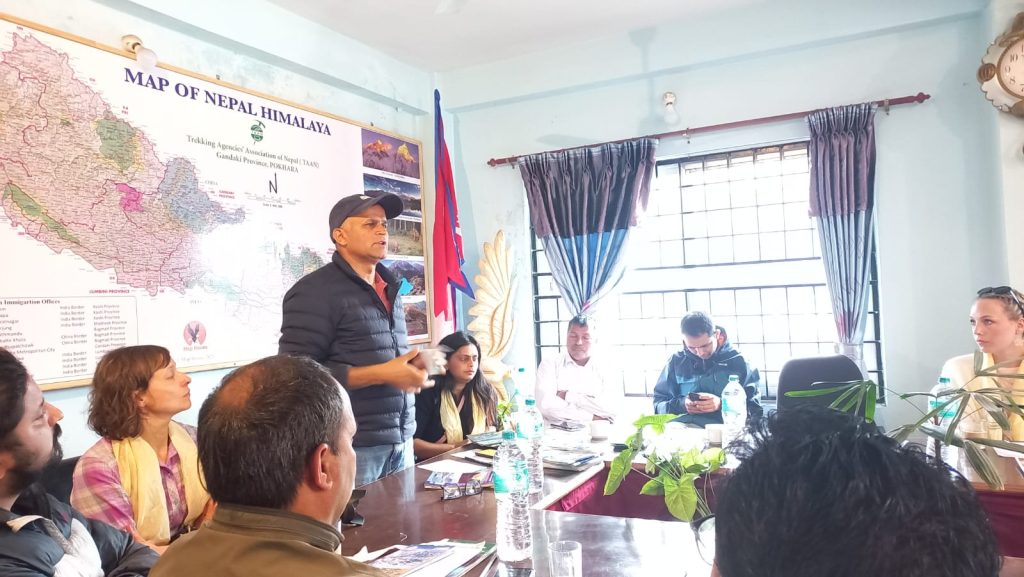
During the interactive session, TAAN Gandaki President Krishna Prasad Acharya welcomed the delegation and highlighted the importance of global collaboration in promoting responsible tourism.
“Nepal’s mountains are not only natural assets; they are living cultural landscapes,” TAAN Gandaki President said. “By sharing knowledge with international students and future tourism leaders, we are building partnerships that encourage sustainable travel, cultural respect, and long-term cooperation between nations.”
He explained that Nepal’s tourism sector has evolved significantly in recent years, focusing on safety standards, environmental conservation, and community-based tourism to ensure that trekking benefits both visitors and local populations.
Understanding Nepal’s Unique Tourism Landscape
The discussion covered a wide range of topics, including the structure of Nepal’s tourism industry, the role of trekking agencies, and the challenges of managing high-altitude destinations. Students were particularly interested in how Nepal balances increasing global demand for adventure travel with the need to protect fragile mountain ecosystems.
Acharya emphasized that sustainability is now central to Nepal’s tourism vision, noting that trekking agencies are adopting eco-friendly practices, waste management systems, and community engagement programs to preserve trails for future generations.
He also shared insights into how tourism contributes to employment, entrepreneurship, and cultural preservation in remote Himalayan regions, making it not just an economic activity but also a driver of social development.
Technical Overview of Trekking Operations
Adding practical depth to the exchange, TAAN Gandaki Executive Member Chandra Bhujel delivered a detailed presentation on the region’s diverse trekking routes and their management. He explained how route planning, permit systems, logistics coordination, and safety measures are handled to ensure a smooth experience for international trekkers.
Bhujel highlighted that trekking trails are the backbone of Nepal’s adventure tourism, connecting visitors to landscapes, heritage villages, and traditional lifestyles that cannot be experienced elsewhere. He also outlined how collaboration between government bodies, local communities, and trekking agencies helps maintain trail infrastructure while ensuring that tourism revenue reaches grassroots levels.
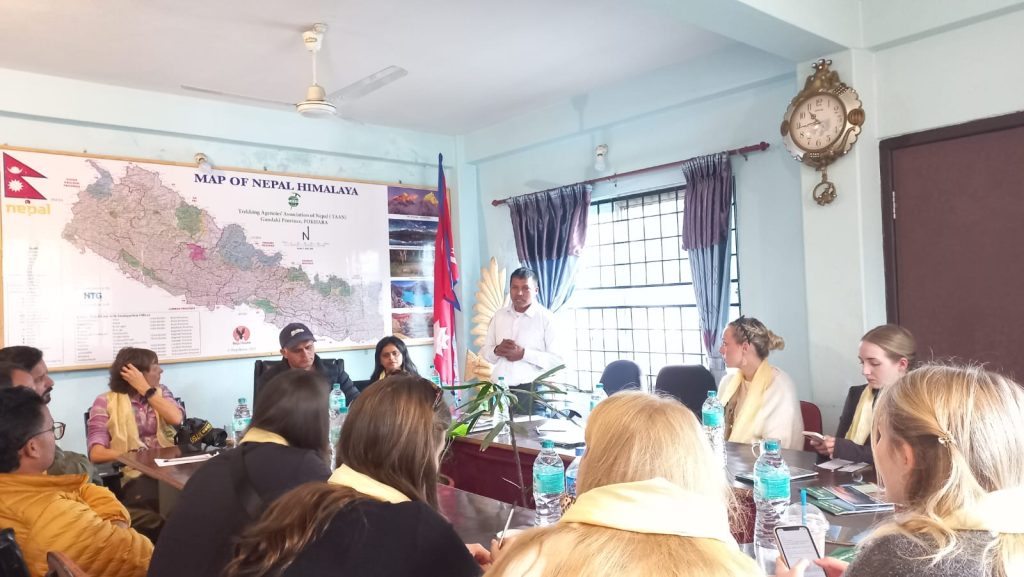
Strengthening Global Tourism Education by TAAN Gandaki
The exchange program allowed students to observe how Nepal’s tourism model differs from European destinations, particularly in its integration of culture, nature, and community participation. Faculty members accompanying the group noted that such field-based learning experiences are invaluable in preparing students for careers in global tourism management. For TAAN Gandaki, the visit represented an opportunity to showcase Nepal’s expertise while building long-term academic partnerships with international institutions.
Building Bridges Through Sustainable Travel
The interaction concluded with discussions on future cooperation, including student research opportunities, knowledge-sharing programs, and potential collaborations in sustainable tourism development. Tourism leaders believe that exchanges like this foster mutual understanding and encourage young professionals to view travel not merely as a commercial activity but as a bridge between cultures.
As Nepal continues to position itself as one of the world’s premier adventure destinations, initiatives connecting academia with industry are expected to play a vital role in shaping a more responsible and globally connected tourism future.