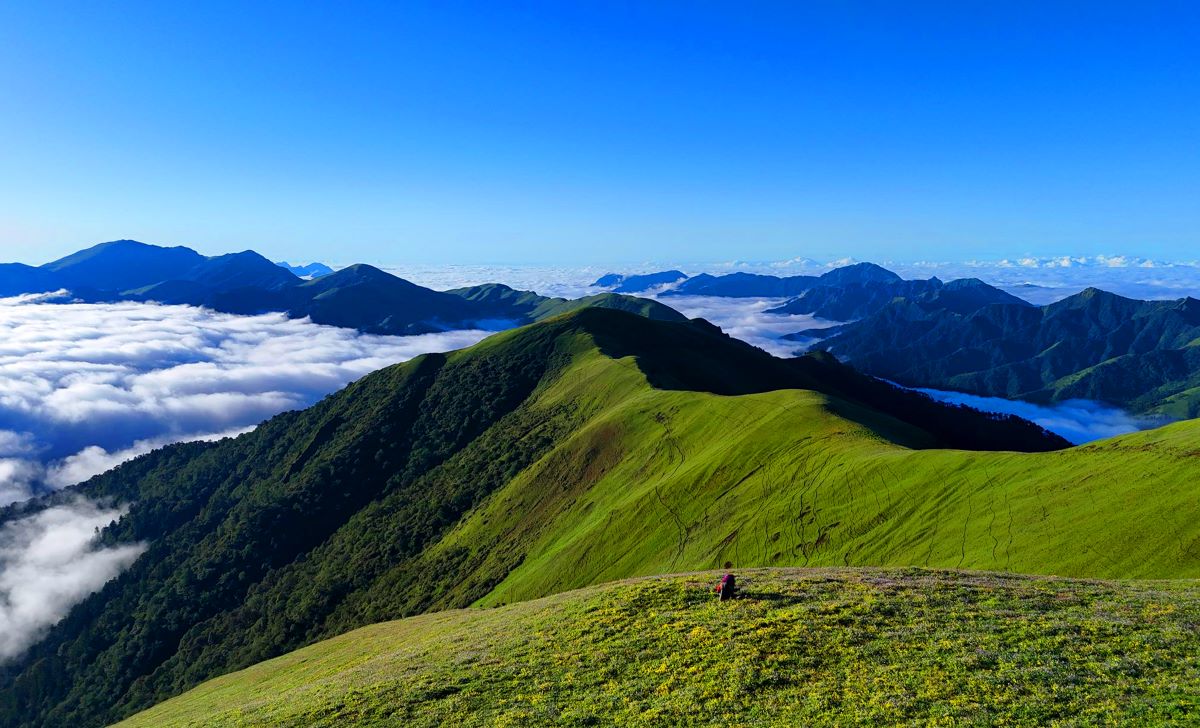
Nestled at an altitude of nearly 4,000 meters along the border of Baglung and Eastern Rukum, Chaukhikharka Lek, affectionately called Chungri by locals, is quickly emerging as a must-visit destination for nature lovers. Adorned with colorful wildflowers, veiled by ever-shifting clouds, and caressed by gentle breezes, the area offers a serene yet majestic setting that effortlessly captivates visitors.
From Secluded Pastureland to Tourist Destination
Once an almost unknown expanse, Chaukhikharka has recently gained widespread recognition through media exposure and social media buzz. Previously frequented only by shepherds from Baglung, Eastern Rukum, Rolpa, and Myagdi, who brought their herds during the monsoon season due to its lush pastures and alpine weather, the area now draws daily streams of nature seekers and trekkers.
Mesmerizing Views and Authentic Experiences
The sight of the snow-capped Himalayas to the north, combined with herds of sheep grazing along green slopes, creates an irresistible draw for visitors. Travelers can reach Chaukhikharka by a short half-hour drive from Patihaalne, followed by a scenic two-and-a-half-hour trek. For those craving a blend of tranquility and immersion in nature, the destination offers a picture-perfect escape.
According to Bhagbir Gharti Magar, a local shepherd from Nisikhola Rural Municipality-6 of Baglung, the area has seen a significant increase in tourist activity over the past year. “I remember a group of 12 to 15 visitors came around Bhadra last year,” he recalled. “Since then, the number has been rising steadily.”
A Shepherd’s Paradise Turned Tourist Hotspot
Gharti Magar, who arrived in the Lek with his herds in late May (Jestha), noted that hundreds of visitors have already made their way to the area this monsoon season alone. “What used to be a haven only for shepherds has now turned into a popular hiking and camping spot. Some visitors stay just for the day, while others pitch tents and enjoy an overnight experience,” he shared.
“On average, about a hundred people visit daily. On holidays, the entire hillside is dotted with tourists. Many enjoy taking photos with the sheep, the flowers, and even with us shepherds,” he added, with a smile.
Infrastructure Development Boosting Accessibility
To accommodate the growing interest, a trekking trail was constructed last year, linking the area through Raniwas–Paipa in Eastern Rukum. Namsingh Gurung, a shepherd from Bhume Rural Municipality-1 of Eastern Rukum, observed that tourists particularly favor the site during the monsoon due to its verdant landscapes and abundant wildflowers.
Tankanath Khanal, Head of the Tourism Division Office in Banke, confirmed that Lumbini Province allocated NPR 1 million last year for the construction of a 5-kilometer foot trail connecting Chaukhikharka. An additional NPR 2.5 million has been earmarked this year for further infrastructure development, including trails and tourism-friendly amenities.
“Tourist numbers have increased since last year, and the province government has taken serious initiatives to promote the area,” Khanal stated. “A water feature was constructed in Koipaa last year, and more infrastructure is underway to make Chaukhikharka an exceptional destination.”
Tourist Impressions and Suggestions for Improvement
Paras Neupane, a visitor from Tulsipur, Dang, described the experience as enchanting. Traveling through Butwal, Gulmi, Burtibang, and Nisikhola to reach the Lek, he expressed delight at the cool and refreshing environment, especially compared to the intense summer heat back home.
Neupane suggested that the government install signboards and resting spots along the route from Patihaalne to Chaukhikharka. “If basic infrastructure like directional boards and shelters were added, it would greatly enhance the experience for tourists,” he remarked.
A Destination Poised for Sustainable Tourism Growth
As more people discover this once-hidden alpine treasure, Chaukhikharka stands on the brink of becoming one of Nepal’s most sought-after eco-tourism destinations. With its breathtaking landscapes, cultural authenticity, and increasing accessibility, it has all the ingredients to captivate both domestic and international travelers, offering not just a journey into nature, but also a deep connection with traditional Himalayan pastoral life.