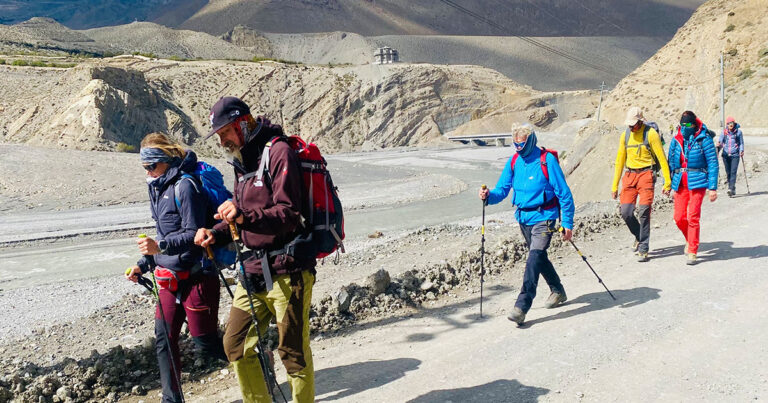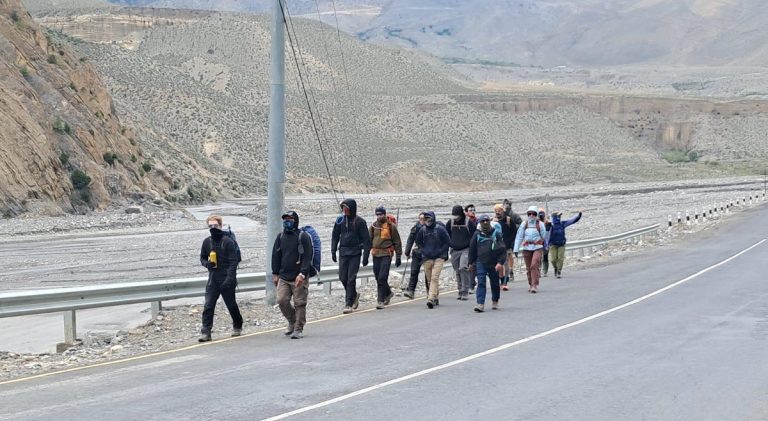
The tourism sector of Myagdi district, once a thriving hub for both domestic and international visitors, is yet to regain its pre-pandemic rhythm. Before the outbreak of COVID-19, Myagdi used to welcome more than 75,000 foreign tourists annually, making it one of the most popular trekking and cultural destinations in western Nepal. However, according to the latest data, the number has now dropped drastically to around 30,000 tourists per year, showing how the pandemic has left a lasting impact on the region’s tourism-dependent economy.
Statistical Overview of Tourist Arrivals
According to records maintained by the District Police Office and its branches in Ghodepani and Darbang, 30,865 tourists visited Myagdi during the fiscal year 2081/82. The previous year, 2080/81, saw slightly higher arrivals with 31,334 tourists. Similarly, 29,328 tourists were recorded in 2079/80, while only 7,926 arrivals were documented in 2078/79, when pandemic restrictions were still in place. The figures highlight a fluctuating but overall stagnant recovery, as the number of visitors remains significantly below the pre-COVID average of over 70,000 annual arrivals.
In contrast, during the peak tourism years, Myagdi had welcomed 75,191 foreign visitors in 2075/76, 74,733 in 2074/75, 69,537 in 2073/74, and 43,632 in 2072/73. These statistics show that while the district is slowly regaining tourists, it is still far behind its earlier golden years. Notably, records from neighboring Mustang are not included, as tourist data for Mustang is collected separately even though many travelers pass through Myagdi’s road networks.
Attractions Drawing Tourists to Myagdi
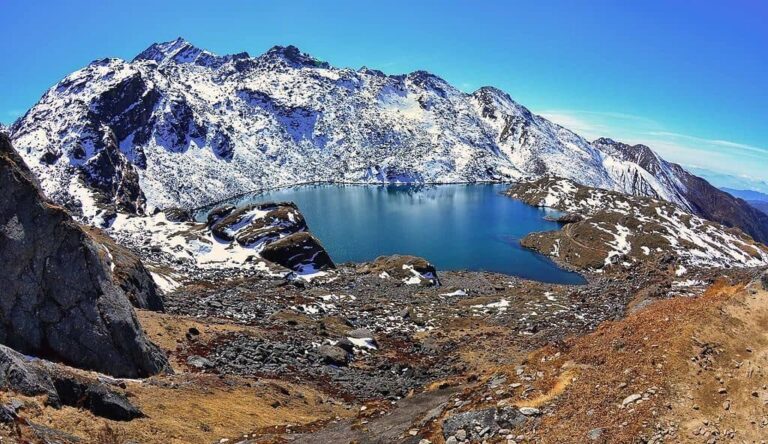
Despite the downturn, Myagdi remains an attractive destination for adventure and culture enthusiasts. The district is home to some of Nepal’s most iconic natural and cultural sites, including the majestic Dhaulagiri and Annapurna mountains, the natural hot springs at Tatopani, and trekking routes such as Khopra Ridge, Dhaulagiri Sanctuary, Dhaulagiri Circuit, and Dhaulagiri Icefall. Scenic spots like Todke Hill, Rupse Waterfall, Andhagalchi, and historic temples such as Galeshwar continue to lure visitors. The bustling Beni Bazaar also adds cultural vibrancy to the region.
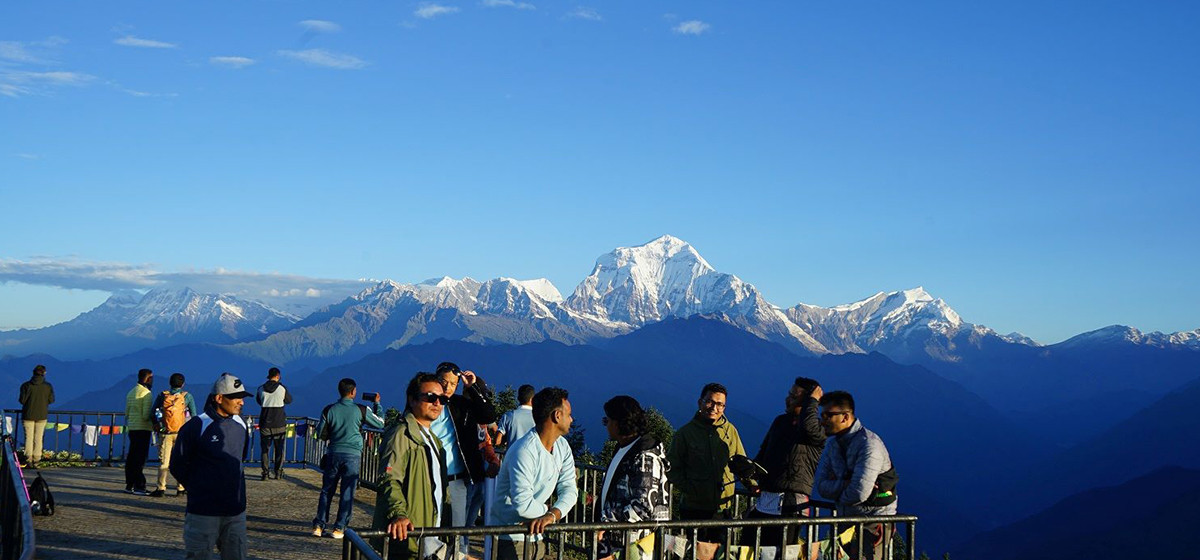
Among these, Ghodepani and Poon Hill in Annapurna Rural Municipality–6 remain the most popular choices. More than 90 percent of tourists who come to Myagdi visit this area, particularly for the breathtaking sunrise views over the Himalayan range.
Concerns from the Tourism Sector
Local tourism entrepreneurs have expressed concerns that visitor numbers have not met expectations despite the global tourism revival. Mina Pun, chairperson of the Hotel Management Sub-Committee in Ghodepani, noted that the lack of significant growth has been discouraging for local businesses. She highlighted that the absence of new destination promotion, limited infrastructure development in existing sites, and road expansion projects shortening traditional trekking trails have all contributed to the slow pace of tourism revival in Myagdi.
These challenges have limited Myagdi’s ability to compete with other districts in Nepal, such as Mustang, which continues to attract larger numbers of tourists due to better promotion and infrastructure readiness.
Economic and Cultural Implications
Tourism has long been a lifeline for the people of Myagdi, providing employment and business opportunities in hotels, trekking services, handicraft sales, and local transport. The decline in tourist arrivals has had a direct impact on household incomes, forcing many workers in the sector to either migrate for employment or seek alternative livelihoods.
Culturally, tourism has also played an important role in promoting local heritage, traditions, and festivals to international audiences. Reduced tourist engagement has affected cultural exposure and opportunities for local communities to showcase their identity.
Road Ahead: Opportunities and Challenges
Despite current setbacks, experts believe that Myagdi still holds immense potential for tourism revival. Its proximity to major trekking destinations, rich biodiversity, cultural heritage, and diverse landscapes provide a strong foundation for growth. However, success will depend on strategic planning, investment, and coordinated efforts among government, local bodies, and the private sector.
Key areas of focus should include identifying and promoting new trekking routes, upgrading tourism infrastructure, and developing eco-friendly facilities to enhance visitor experiences. Strengthening digital marketing and international promotions could also play a pivotal role in reintroducing Myagdi to the global tourism market.
At the same time, challenges such as environmental preservation, waste management, and ensuring sustainable tourism practices must be addressed. The growing accessibility brought by roads has shortened trekking days, reducing income for local businesses that depend on long-stay trekkers. Balancing infrastructure development with the preservation of trekking culture will be crucial in maintaining the district’s tourism charm
The tourism industry in Myagdi district continues to struggle in the aftermath of the COVID-19 pandemic. Although visitor numbers have gradually improved since the crisis years, they remain far below the pre-pandemic peak. The breathtaking landscapes, cultural richness, and adventure opportunities still hold the potential to draw large numbers of travelers. However, without stronger promotion, infrastructure development, and sustainable tourism policies, Myagdi may find it difficult to return to its earlier glory. The coming years will be decisive in determining whether Myagdi can once again reclaim its status as one of Nepal’s premier tourist destinations.