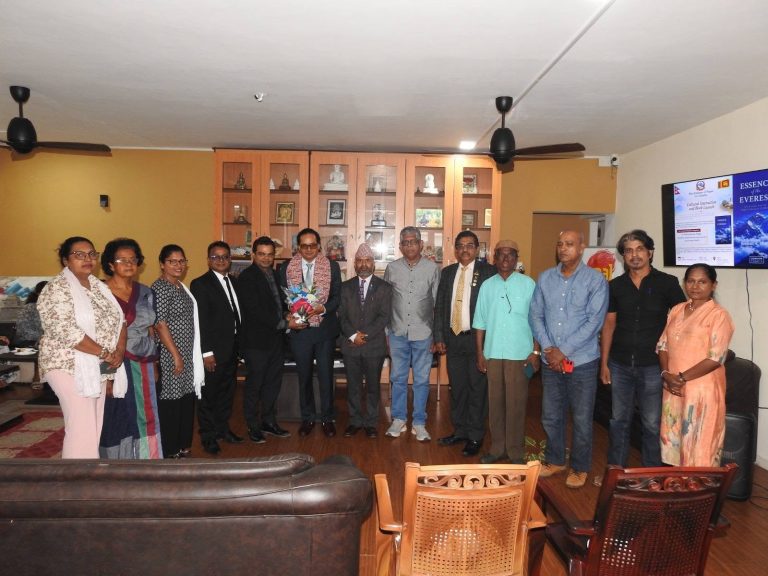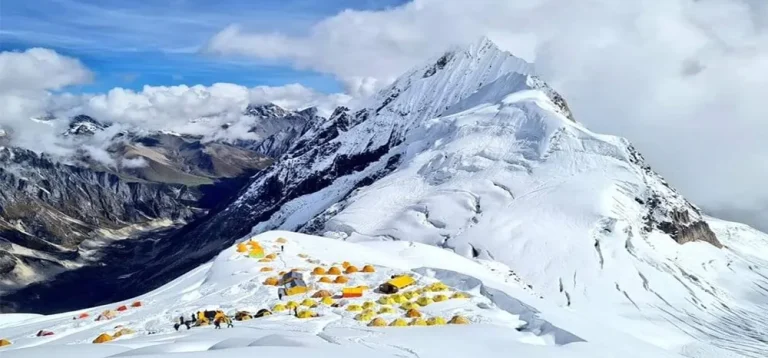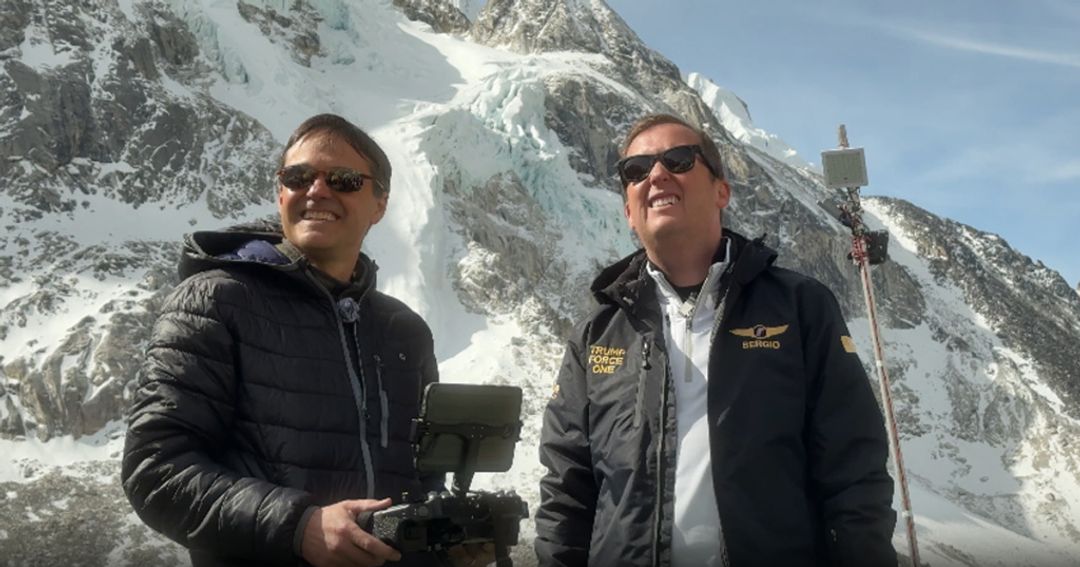
The U.S. President Donald Trump’s Special Envoy for South and Central Asian Affairs, Sergio Gor, has officially inaugurated the American cargo drone “Ultra X Gen 2” at the Everest Base Camp, marking a significant demonstration of advanced drone technology in high-altitude operations. The inauguration ceremony was also attended by Scott Charge, a representative from the U.S. Embassy in Nepal, highlighting diplomatic and technological collaboration between the two countries.
Showcasing U.S. Innovation in the Himalayas
Speaking at the event, Special Envoy Sergio Gor described the drone unveiling as a strong example of American technological innovation. “We are in beautiful Nepal, and we are at Everest Base Camp presenting an excellent example of American technology,” he said, emphasizing that the drone reflects cutting-edge engineering designed for challenging environments like the Himalayas.

He expressed confidence that cooperation between U.S. innovation and Nepal’s mountain operations could open new possibilities in the region, particularly in logistics, emergency response, and rescue operations.
Drone Designed for Rescue, Supply Delivery, and Filming
According to Gor, the Ultra X Gen 2 cargo drone has multiple practical applications in the Everest region, including environmental cleanup, emergency supply delivery, and rescue support for climbers. “The drone can transport oxygen cylinders, essential rescue materials, and supplies required for climbers during emergencies,” he said. He further noted that the drone is also capable of lifting heavy cameras used for high-altitude cinematography, making it valuable for professional filming in extreme conditions.
Technical Capabilities and Manufacturing Details
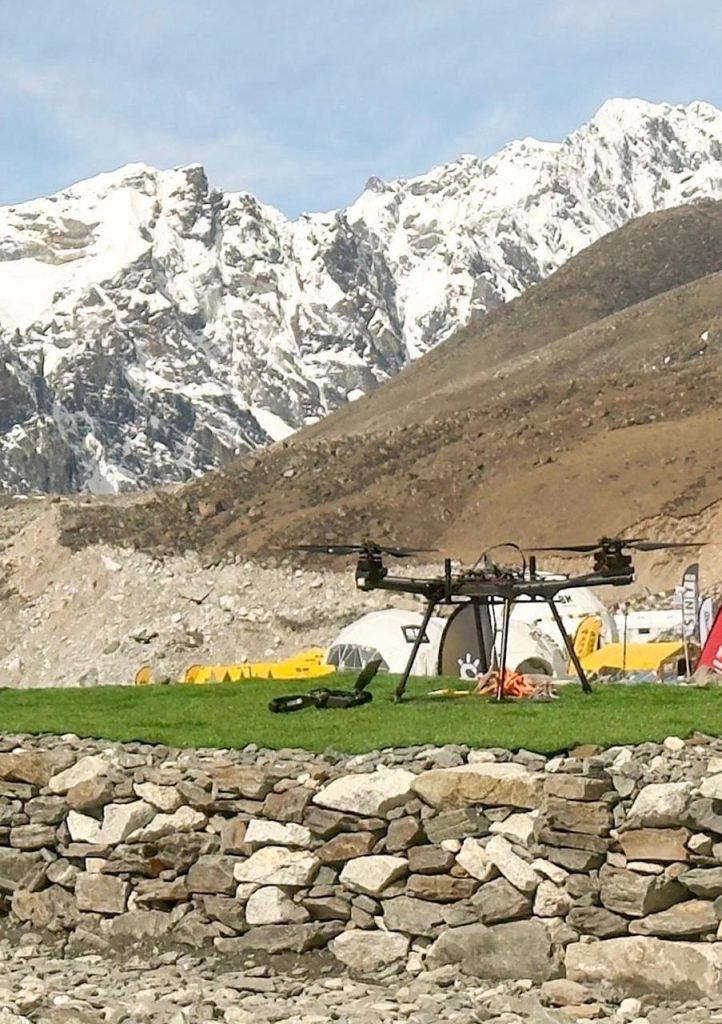
The Ultra X Gen 2, manufactured by the American company Freefly Systems, has a payload capacity of up to 5 kilograms. Officials described it as a strong example of U.S. technological advancement combined with practical field application in extreme terrains. The drone is designed for precision operations, particularly in high-altitude regions where traditional logistics and transport systems are difficult to operate.
Existing Drone Use in Everest Region
Earlier, a Nepal-based company named Air Lift had already demonstrated drone operations in the Everest region, successfully transporting loads of up to 40 kilograms to Base Camp and Camp II. This indicates a growing interest and expansion of drone-based logistics in Himalayan mountaineering support systems.

Regulatory Approval Still Pending
Despite the formal inauguration, authorities confirmed that the drone has not yet been cleared for operational flight testing. The necessary regulatory approvals are still under process, and full-scale operation will only begin once permissions are granted by the concerned agencies. Officials stated that safety and compliance procedures remain a priority before allowing commercial or rescue deployment of the technology in the Everest region.
Future Potential in Himalayan Operations
Stakeholders believe that once fully operational, cargo drones like the Ultra X Gen 2 could revolutionize high-altitude logistics in Nepal. Potential applications include faster emergency response, improved supply chains for climbers, and reduced risk for human porters in extreme terrain. The introduction of such technology is expected to strengthen Nepal–U.S. cooperation in innovation and expand the role of modern aviation tools in mountain tourism and safety operations.