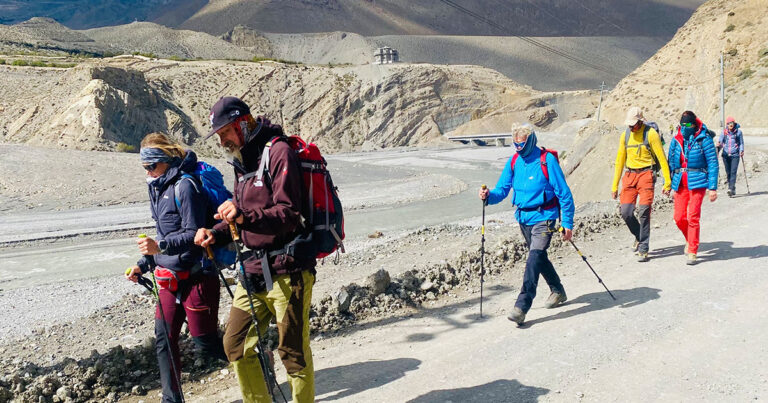
Upper Mustang, renowned for its mesmerizing trans-Himalayan beauty, rich ancient culture, dramatic landscapes, climate-resilient lifestyle, and rare Himalayan biodiversity, continues to remain one of Nepal’s most fascinating high-altitude destinations for both national and international travelers.

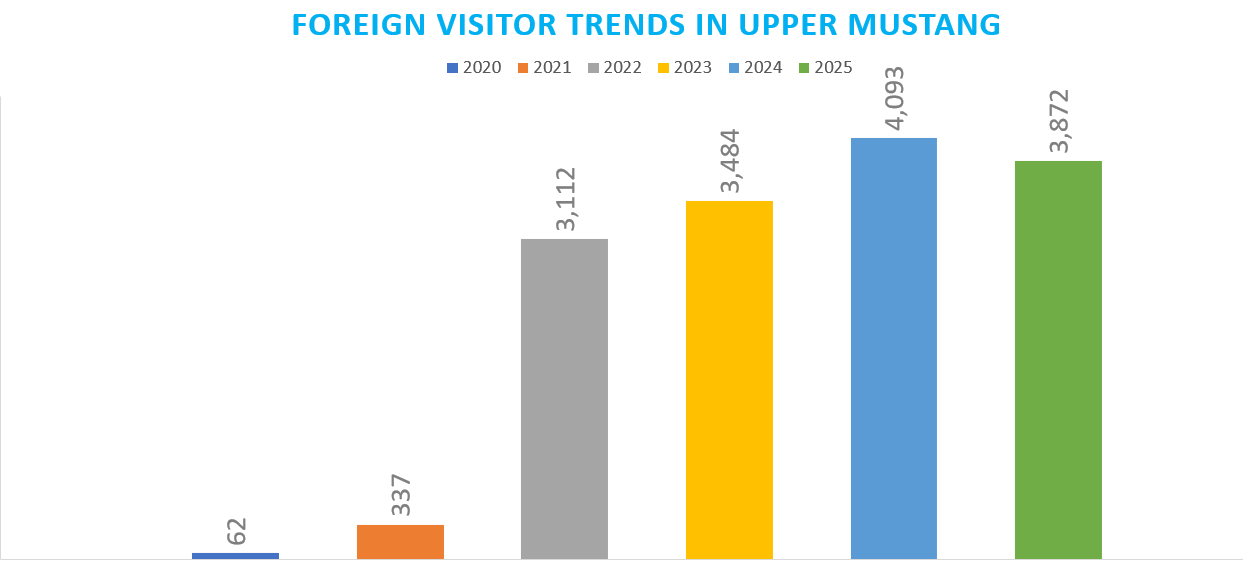
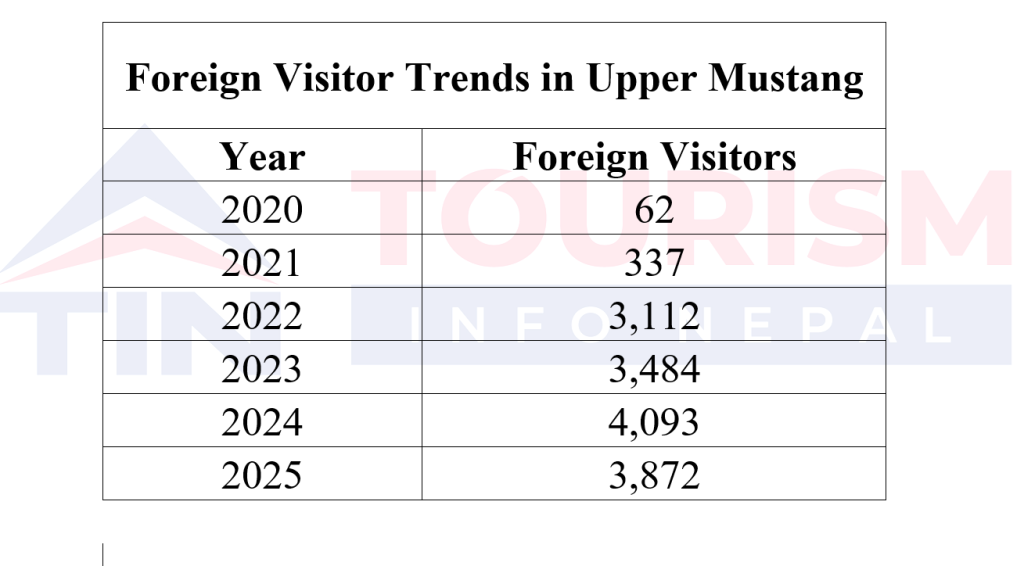
According to recent tourism records, foreign tourist arrivals in Upper Mustang reached 3,872 in 2025, marking a 5.4 percent decline compared to 4,093 visitors in 2024. Although this reflects a modest year-on-year decrease of 221 visitors, the overall trend still highlights a strong long-term recovery and growing global interest in the region.
Tourist numbers have risen remarkably over the past five years, climbing from just 62 visitors in 2020 during the pandemic period to 337 in 2021, 3,112 in 2022, 3,484 in 2023, and peaking at 4,093 in 2024 before the slight dip in 2025. Tourism stakeholders say the minor decline in 2025 is largely influenced by global travel cost pressures and selective destination choices, but confidence remains high due to the destination’s unique appeal.
Upper Mustang and the Broader Himalayan Trail Appeal
From the iconic Annapurna Base Camp (ABC) trail, one of Nepal’s most popular trekking routes, to the culturally preserved landscapes of Upper Mustang, Nepal’s Himalayan tourism circuit continues to attract adventure seekers, spiritual travelers, and nature lovers from around the world.
While ABC continues to record strong trekking inflows due to its accessibility and scenic grandeur, Upper Mustang offers a rarer, more mystical experience with its cave monasteries, Lo-Manthang heritage city, and untouched trans-Himalayan lifestyle, positioning it as a premium, high-value destination within Nepal’s mountain tourism portfolio.

Tourism experts believe that with focused promotion, improved access, and sustainable tourism practices, Upper Mustang is poised to regain momentum and continue its long-term upward trajectory as one of Nepal’s most exclusive and culturally significant travel destinations.