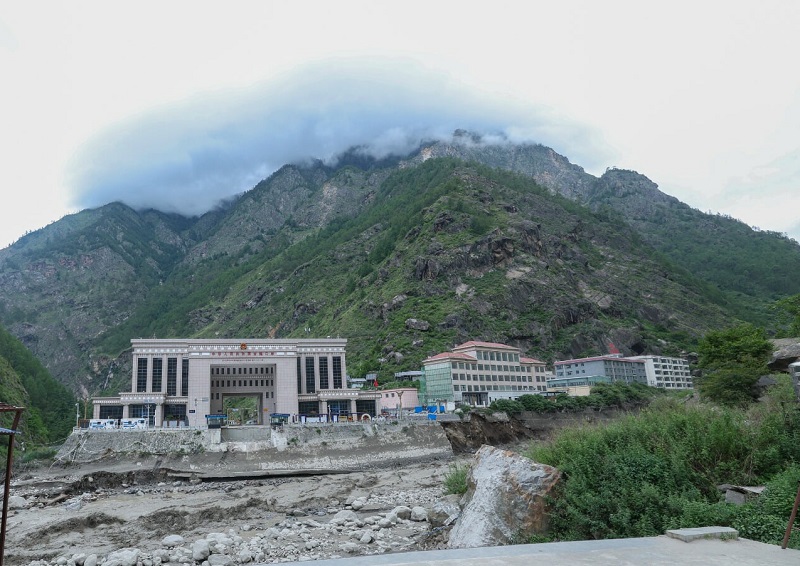
The Trekking Agencies’ Association of Nepal (TAAN), the umbrella organization of mountain tourism entrepreneurs, has raised serious concerns after the collapse of the Nepal-China Friendship Bridge due to a recent flood. The bridge, which connects Rasuwagadhi in Nepal to Tibet, China, is a major route for pilgrims traveling to the sacred Kailash Mansarovar. Its destruction has left many pilgrims stranded and disrupted an important religious tourism route.
TAAN General Secretary Sonam Gyalzen Sherpa issued a formal statement this week, confirming that the collapse occurred on Tuesday morning when a flash flood in the Lehende River swept away the bridge. This natural disaster has not only hindered the mobility of pilgrims but has also posed logistical and diplomatic challenges, especially for those already waiting in Nepal for their onward journey.
Call for Immediate Diplomatic Action and Alternate Routes
TAAN has urged the Nepalese government to engage in urgent diplomatic discussions with China to address the disruption. Specifically, the organization has called for alternate routes to be opened for the Kailash Mansarovar pilgrimage. These include the Tatopani, Korala, and Hilsa border points, which, if operationalized swiftly, could ensure the continuation of the annual pilgrimage season.
Sherpa emphasized that the collapse has affected both Nepali and international pilgrims who were planning to travel by road from Rasuwagadhi to Tibet. Without immediate action, thousands of religious and spiritual travelers may be forced to cancel or delay their pilgrimage, a once-in-a-lifetime journey for many.
Visa Facilitation for Stranded Pilgrims Urged
TAAN President Sagar Pandey has appealed to the government to facilitate the visa process for the pilgrims, especially given that the pilgrimage season is now at its peak. He urged that visa issuance be expedited for travelers already waiting in Kathmandu, many of whom have invested significant time and financial resources for this journey.
President Pandey also called on the Ministry of Foreign Affairs to initiate talks with the Chinese Embassy in Nepal. The goal, he said, should be to make the visa process faster, smoother, and more traveler-friendly. “Many pilgrims have been staying in Kathmandu for weeks, preparing for this sacred journey. Delays at this stage can lead to cancellations and disillusionment,” he added.
Safety and Humanitarian Appeal: TAAN Responds to Flood Crisis
TAAN expressed deep condolences to those who lost their lives in the recent flood and conveyed solidarity with the affected families. The organization has also drawn the attention of the Nepalese government to the urgent need for rescue and recovery operations to find those who are missing due to the disaster.
TAAN further urged the government to conduct a thorough risk assessment of travel routes and infrastructure used by pilgrims and tourists, highlighting that natural disasters are increasingly affecting Nepal’s mountain and high-altitude travel corridors. The organization also recommended that contingency plans and early warning systems be established, especially along major religious and trekking routes like Rasuwagadhi.
Cultural and Economic Impact of the Disruption
The Kailash Mansarovar pilgrimage is one of the most significant spiritual journeys for Hindus, Buddhists, Jains, and followers of the Bon religion. Each year, hundreds of pilgrims from Nepal, India, and various parts of the world undertake the journey, contributing substantially to Nepal’s religious tourism economy.
TAAN estimates that the current disruption could affect not only tour operators and trekking agencies but also local businesses and border communities that benefit from the pilgrimage season. “This is more than a tourism issue, it’s a matter of preserving cultural heritage, ensuring religious freedom, and safeguarding local livelihoods,” said Sherpa.
Way Forward: Urging Long-Term Solutions and Regional Coordination
In its statement, TAAN stressed the need for long-term solutions, including:
- Strengthening and diversifying cross-border infrastructure to avoid dependence on a single access point like Rasuwagadhi.
- Establishing a permanent intergovernmental task force to manage religious tourism between Nepal and China.
- Enhancing cooperation with Chinese authorities for quick repair and reconstruction of critical infrastructure like the Friendship Bridge.
TAAN also highlighted the importance of regional coordination to promote trans-Himalayan tourism and cultural exchange, especially between Nepal, India, and China. “Kailash Mansarovar is a symbol of shared spiritual heritage. Ensuring its access is a shared responsibility,” Pandey emphasized.
Urgent Call for Government Response
TAAN’s statement has brought into sharp focus the urgency of restoring access to Kailash Mansarovar and protecting the rights of pilgrims. With the pilgrimage season in full swing and dozens of travelers waiting in Kathmandu, the association has called upon the Nepalese government and diplomatic channels to act swiftly.
The unfolding situation is a reminder of the fragile nature of mountain infrastructure in Nepal and the need for robust disaster preparedness, especially in areas vital to cultural and religious tourism. Only with coordinated national and international efforts can this sacred pilgrimage route be safeguarded for future generations.