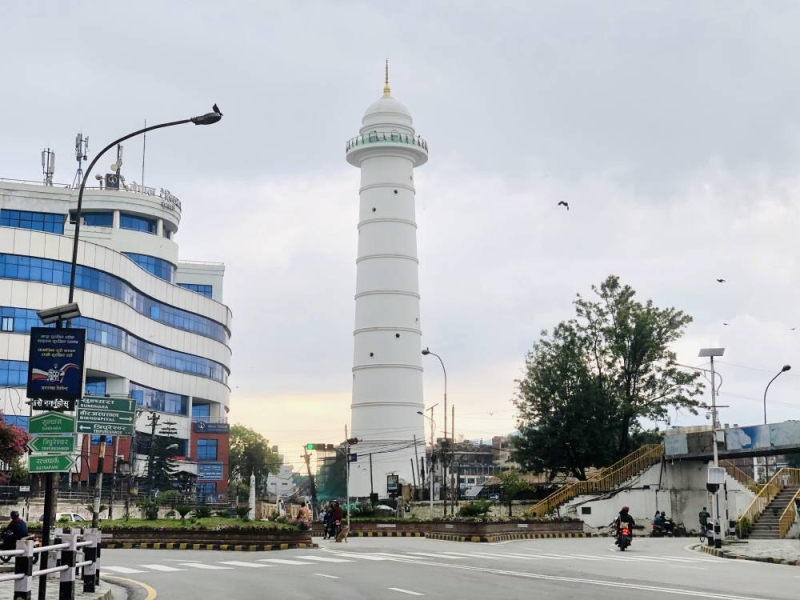
The iconic Dharahara tower, a prominent cultural and historical landmark in Kathmandu, has seen a dramatic surge in visitors after its opening hours were extended. Since Shrawan 1 (mid-July), the tower has been open from 8:00 AM to 8:00 PM, compared to its previous schedule of 10:00 AM to 4:00 PM. The extension has led to more than a twofold increase in visitor numbers, according to officials.
New Schedule Attracts Larger Crowds
The change in operating hours has significantly improved public access to Dharahara, allowing both locals and tourists more flexibility to visit the site. Mahesh Rai, Chief of the Dharahara Operation and Management Unit in Sundhara, confirmed the rise in footfall.
“The ticket counter is open from 8:00 AM to 7:00 PM,” he said. “The extension of opening hours has had a very positive impact, and the number of visitors has noticeably increased compared to before.” Rai emphasized that the extended hours now accommodate people who previously could not make it due to work or school schedules.
Visitor Numbers See Sharp Increase
Previously, under the shorter schedule, an average of 1,200 people visited Dharahara daily. But within just three days of the schedule change, 8,638 visitors were recorded, a remarkable leap in numbers.
According to Rai, on:
- Shrawan 1 (first day of new schedule): 2,500 visitors
- Shrawan 2: 2,631 visitors
- Shrawan 3: 3,507 visitors
This sudden increase in footfall not only underscores the public’s enthusiasm for exploring cultural landmarks but also proves the potential of minor policy changes to boost domestic tourism.
Impressive Revenue Growth in Just Three Days
Along with the increased number of visitors, revenue collection has also seen a substantial rise. Within the same three-day window (Shrawan 1 to 3), the tower generated Rs. 15,56,650 in ticket sales. This suggests that extended opening hours can play a critical role in boosting financial sustainability of cultural sites.
The Operation Unit further reported that from Mangsir 2081 to Ashadh end 2082, Dharahara collected a total revenue of Rs. 5 crore 12 lakh 62 thousand 995, a testament to its increasing popularity as a heritage site.
A Cultural Revival Through Accessibility
Extending the hours of a major monument like Dharahara is part of a broader initiative to enhance access to Nepal’s historical and cultural heritage. Dharahara, which was originally constructed in 1832 and reconstructed after the 2015 earthquake, has become a symbol of resilience and renewal.
The nine-story white tower offers panoramic views of Kathmandu, attracting families, students, and tourists. The recent growth in visitor numbers illustrates how cultural appreciation is rising among the general public, particularly when supported by government facilitation.
Strategic Timing Benefits the Public
The new opening hours from early morning to evening are particularly well-suited to Nepal’s working population. Many visitors, especially from Kathmandu and nearby districts, now take advantage of the early morning hours before work or visit during evening leisure hours with family and friends. By staying open till 8:00 PM, Dharahara also becomes a more appealing destination during summer evenings, when the weather is pleasant and people are more likely to go out.
Boost to Local Economy and Tourism
The growing popularity of Dharahara is not just a boost to cultural tourism but also benefits the local economy. Street vendors, cafes, souvenir shops, and nearby eateries have reported increased customer flow, especially during evenings and weekends. The foot traffic around the Sundhara area is revitalizing a part of Kathmandu that had seen a lull post-earthquake. Furthermore, the attraction is becoming a must-visit spot for domestic tourists from across the country, many of whom are visiting Kathmandu for education, work, or pilgrimage.
Continued Improvements on the Horizon
The Operation Unit has expressed interest in maintaining and further improving the visitor experience. This includes plans to enhance ticketing facilities, improve signage and accessibility, and potentially introduce guided tours and digital history displays to make the visit more informative and engaging. Security measures, maintenance routines, and hygiene protocols are also being enhanced to accommodate the increasing number of visitors without compromising safety or comfort.
A Model for Other Heritage Sites
The success story of Dharahara’s extended hours serves as a model for other heritage sites across Nepal. Making small but strategic changes, like timing extensions, can dramatically increase public engagement and generate sustainable revenue without requiring large investments.
Cultural experts and tourism stakeholders suggest that other popular sites such as Swayambhunath, Patan Durbar Square, and Lumbini could consider similar initiatives to make historical sites more accessible and attractive to a wider range of visitors.
Dharahara Shines as Symbol of Heritage and Renewal
With more than double the daily footfall and over Rs. 15 lakh collected in just three days, the extension of Dharahara’s opening hours is a resounding success. It demonstrates that strategic accessibility improvements can reignite public interest in national heritage and promote sustainable tourism.
As Kathmandu’s skyline lights up each evening with the presence of this historic tower, Dharahara continues to stand tall not just as a monument, but as a beacon of Nepal’s enduring legacy, now made more reachable and relevant to all.