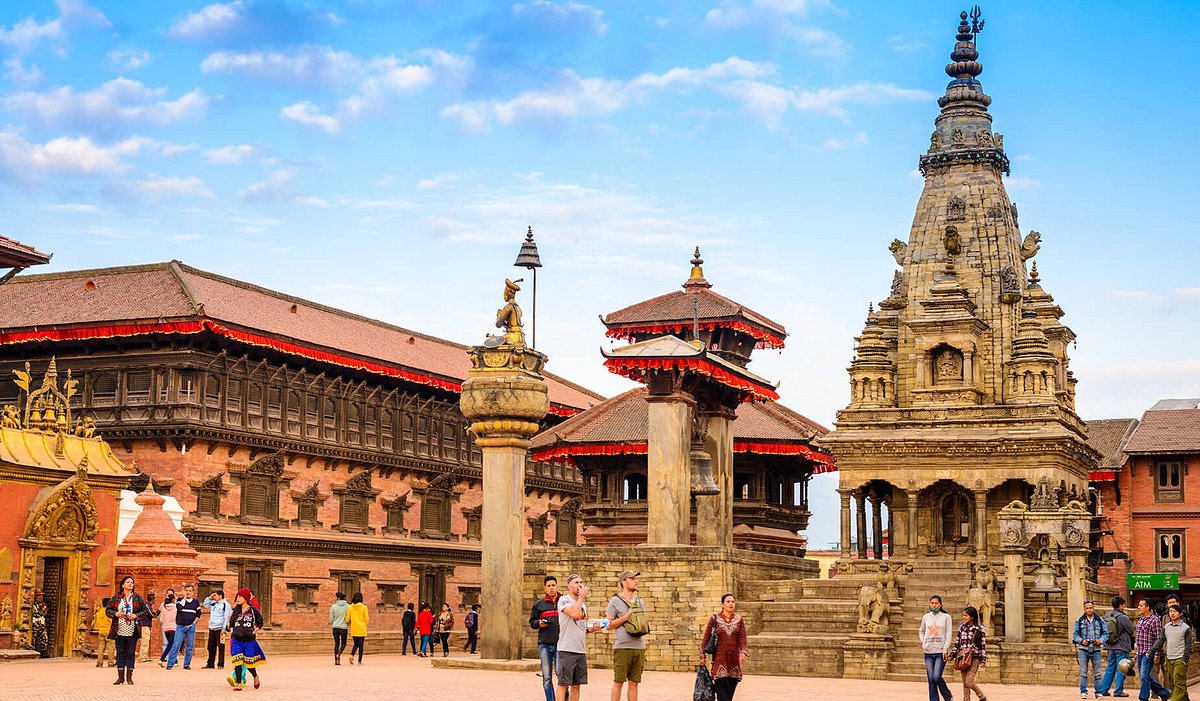
Bhaktapur Municipality has reported the arrival of 244,868 foreign tourists during the last fiscal year 2081/82 (2024–2025). According to the Tourist Information and Service Center under the municipality, 115,487 visitors were from SAARC countries and China, while 129,381 tourists came from other nations outside the SAARC region. Compared to the fiscal year 2080/81, which recorded 245,593 international visitors, there is a slight drop of approximately 725 tourists. However, despite the marginal decline in tourist arrivals, revenue from tourism fees significantly increased, indicating improved income-generation efficiency.
Increase in Entry Fee Revenue
The municipality collected over NPR 291.1 million in tourist entry fees during the fiscal year 2081/82. Of this, NPR 233.3 million came from non-SAARC tourists and NPR 57.7 million from SAARC and Chinese visitors. In contrast, the previous fiscal year’s income from entry fees was NPR 274.5 million, with NPR 209.9 million collected from third-country tourists and NPR 64.5 million from SAARC and China. This marks an increase of NPR 18.3 million in total tourism income for the municipality, showcasing the positive impact of strategic pricing and improved services.
India and China Lead in Tourist Numbers
Among all nationalities, Indian tourists topped the list, with 79,132 visitors recorded last year. Chinese tourists followed in second, numbering 36,135, reaffirming their significant contribution to Bhaktapur’s tourism economy. Other major source countries included the United States (16,558 visitors), Germany (11,788), France (11,754), Italy (7,228), Spain (7,098), and Japan (6,733). The United Kingdom contributed 6,502 visitors, while Australia (4,968), Taiwan (4,660), and the Netherlands (4,165) also featured prominently.
Smaller but notable numbers of tourists came from Poland (3,093), Russia (2,882), Thailand (2,595), South Korea (2,543), Israel (2,519), Canada (2,360), and Malaysia (2,099). Additionally, 29,056 visitors came from various other countries. These diverse figures reflect Bhaktapur’s growing global appeal as a heritage and cultural destination.
Revised Entry Fees and Collection Points
To adjust with the prevailing foreign exchange rates, Bhaktapur Municipality has revised its tourist entry fee structure starting the current fiscal year 2082/83. Non-SAARC tourists are now required to pay NPR 2,000, while SAARC and Chinese tourists pay NPR 500. The municipality collects these fees through 14 designated entry counters, including Khau Ma, Sano Byasi, Thulo Byasi, Mahakali, Bekhal, Muldhoka, Kamalbinayak, Chyamhasingh, Jagati, Bhelukhel, Ram Mandir, Barahi, Banshagopal, and Bharbacho.
Enhanced Services and Infrastructure for Tourists
To provide a seamless experience for both domestic and international tourists, the municipality has developed several tourist-friendly facilities. These include a well-equipped Tourist Information Center, a dedicated tourist bus park, and clean and accessible tourist restrooms. The Tourist Information Center offers multilingual brochures with maps in six languages, free internet, computer access, wheelchairs for physically disabled tourists, luggage storage, mobile charging stations, and a comfortable resting area with newspapers and magazines.
Focus on Heritage Preservation and Cultural Promotion
Bhaktapur Municipality has taken significant steps to enhance the city’s cultural appeal. It has formed a Local Tour Guide Management Committee to mobilize and professionally train local guides through refresher courses. The municipality has also emphasized heritage reconstruction efforts following the 2015 earthquake (2072 B.S.). So far, it has completed the restoration of 69 patis (traditional rest houses), 47 temples, 15 Dyochhens (religious community buildings), 22 ponds, 9 sattals (pilgrimage shelters), 9 wells, 5 monasteries, and 9 stone water spouts. An additional 14 heritage structures are currently under reconstruction.
Support for Traditional Architecture and Cultural Education
To preserve Bhaktapur’s distinct architectural identity, the municipality continues to provide subsidies for bricks, timber, and traditional roof tiles (jhingati) to homeowners building traditional-style houses. In a move to educate the younger generation on cultural values and traditional skills, cultural mentors have been placed in schools to impart practical, hands-on training. This initiative is part of a broader strategy to ensure the intergenerational transmission of cultural heritage.
Future Plans for Sustainable Tourism Mobility
Understanding the growing need for sustainable transportation solutions, the municipality plans to introduce small-sized electric vehicles to improve accessibility across key tourist sites within Bhaktapur. This initiative aims to enhance mobility for both domestic and international tourists while minimizing environmental impact.
Despite a minor decline in tourist arrivals, Bhaktapur’s success in boosting revenue, expanding services, and prioritizing cultural preservation reflects a resilient and adaptive tourism strategy. With ongoing heritage reconstruction, better infrastructure, and visionary plans for sustainable growth, Bhaktapur continues to strengthen its position as one of Nepal’s most culturally rich and visitor-friendly destinations.