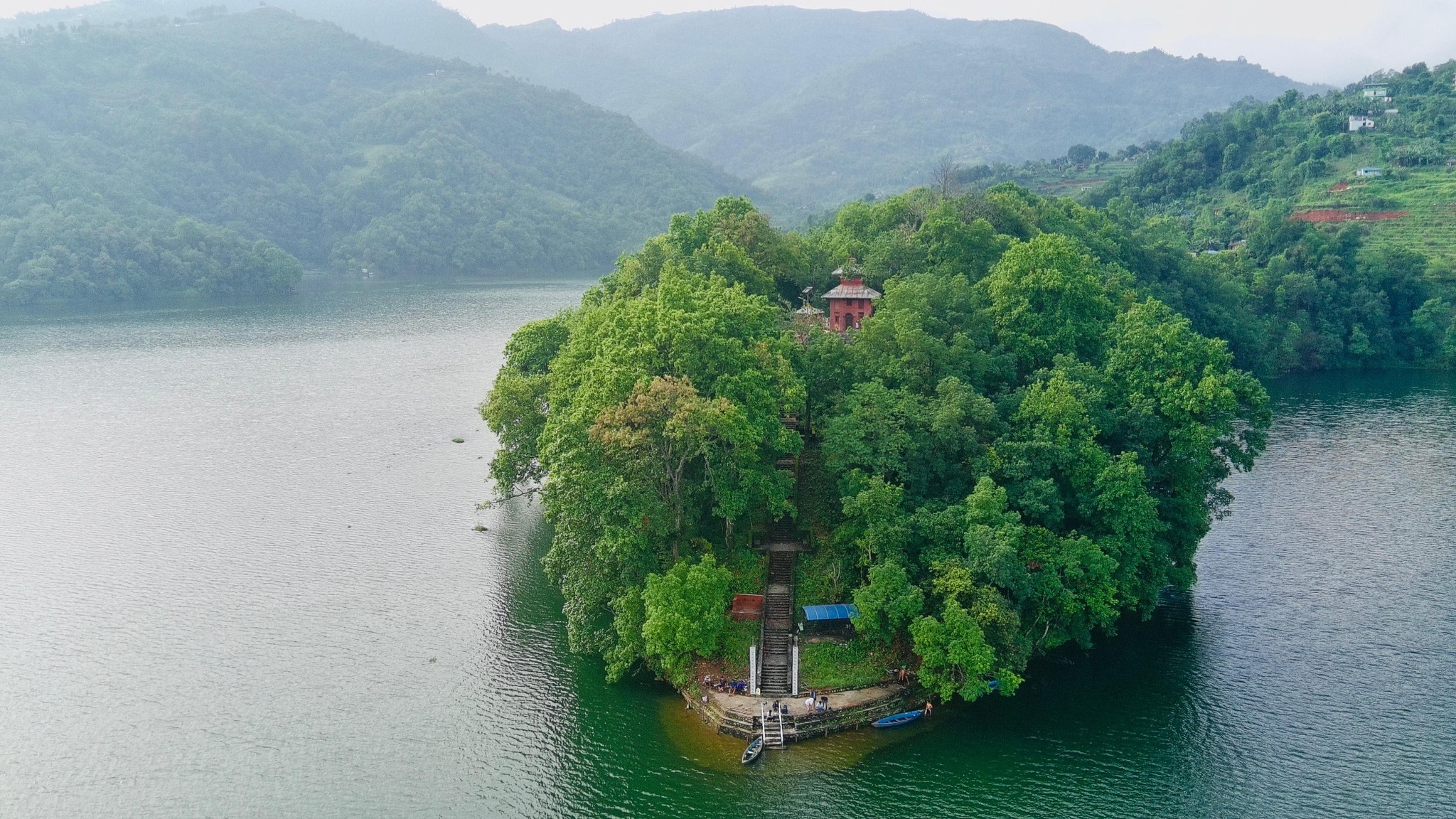
Nestled on the serene shores of Begnas Lake in Lekhnath, Kaski, lies Begnas Barah, a sacred site of immense religious and archaeological significance. Revered for centuries by locals, this holy site remains largely underpromoted, even as it holds the potential to become a major destination for religious tourism. Despite being located in one of Nepal’s most naturally gifted regions, the “Garden City of Seven Lakes” Begnas Barah has yet to receive the national and international recognition it deserves.
Religious Significance Meets Archaeological Heritage
The Begnas Lake Religious and Tourism Development Organization, under the leadership of Chairman Dhruvanath Adhikari, has been working actively to change that. According to Adhikari, Begnas Barah is not only a place of deep spiritual value, with its intricately carved stone idols and ancient temples, but also a site of archaeological importance, as confirmed by research from the Department of Archaeology. These stone carvings, preserved in their original form, offer a rare glimpse into the region’s early religious practices and artistic heritage.
Infrastructure Development Through Local and International Collaboration
To support the vision of developing Begnas Barah into a full-fledged religious tourism destination, Rs 11.7 million was allocated by the World Bank in collaboration with the former Lekhnath Municipality. This funding has facilitated a variety of infrastructure upgrades, including trekking trails, seating areas, and picnic spots. Recent improvements include the construction of the Barah Temple, Lakshmi Narayan Temple, and the Panchayan Deity Temple, providing pilgrims and tourists alike with spaces for peaceful worship and reflection.
Boating Access for Pilgrims and Tourists
To further improve accessibility, a dedicated boat dock, tourist waiting lounge, and railing installations have been added. These enhancements make it easier for visitors to safely reach the temple area. According to Adhikari, the goal is to draw those visiting Begnas Lake into a spiritually enriching experience at the Barah site.
Boating services to the temple are managed by the Begnas Boat Entrepreneurs’ Association, led by Chairman Raviraj Kandel. Despite being a two-hour round trip, the association charges only Rs 700 per group of four people, a price that has remained unchanged for five years. “We want to encourage religious tourism,” says Kandel, who ensures that boats are limited to four passengers per trip for safety. The association operates 280 wooden boats, nine paddle boats, three motorboats, and a 26-foot dock, all supported by a network of over 300 members.
Cultural Integration and Government Support
The local government is equally invested in promoting Begnas Barah as a cultural and spiritual destination. Dhaknath Kandel, Ward Chairman of Pokhara Metropolitan City–31, confirms that the site is now officially open to the public. He highlighted plans to blend culture, nature, and technology to boost its profile, noting that such efforts will contribute to both religious reverence and economic development in the region.
As part of the annual tradition, a ritual is performed on the first full moon each year to bless the lake, pray for safe boat travel, and ensure the well-being of both locals and visitors. This practice reinforces the deep connection between the community and the lake, highlighting the balance between spiritual and ecological harmony.
Community Fundraising for Sustainable Development
A major milestone in community-led development came in 2018, when a Mahayagya ceremony held at the site raised Rs 10.4 million. Of this amount, Rs 7.6 million has been set aside for social welfare projects, including the construction of rest houses, clean drinking water systems, a memorial room for drowning victims, and a symbolic cow-and-calf statue at Gaighat. A rescue room has also been added to address potential lake-related emergencies, especially during the monsoon season.
Calls for National Promotion and Broader Connectivity
Despite these improvements, local leaders believe that stronger promotional efforts are needed. Chhatradhar Atreya, former Chairman of the Lekhnath Chamber of Commerce and Industry, emphasizes that while the infrastructure is in place, the area needs national-level attention and marketing. Efforts such as the installation of a “Begnas Lake” signboard and participation in the 2022 Lekhnath Festival have raised some awareness, but more consistent and coordinated promotion is necessary to draw both domestic and international visitors.
Expanding the Vision Beyond Begnas Barah
The promotion of Begnas Barah is also seen as a catalyst for broader regional development. Locals are hopeful that increased tourism will bring prosperity to surrounding communities like Syang Khudi, Kapase, Kusunde, Jimire Kuna, Piple Jalari Basti, Damsite, Mandhre Park, Alaiche, Bans Kuna, Deurali Temple, Kahere, Rupa Begnas View Tower, Kaure, and Majhikuna. Additionally, religious heritage sites such as Gorkhanath, Arghau Maula Thulakot, Begnas Kot, Pachbhaiya Kot, Rupakot, Syaklungkot, and Pachbhaiya Deurali could be integrated into a larger spiritual and cultural tourism circuit.
Unlocking Potential Through Faith and Community
The story of Begnas Barah is one of untapped potential, where sacred tradition, natural beauty, and community dedication converge. With continued collaboration between local organizations, government bodies, and international partners, this spiritual gem on the shores of Begnas Lake may soon rise to the prominence it rightfully deserves, becoming a symbol of faith-based tourism rooted in Nepal’s cultural soul.