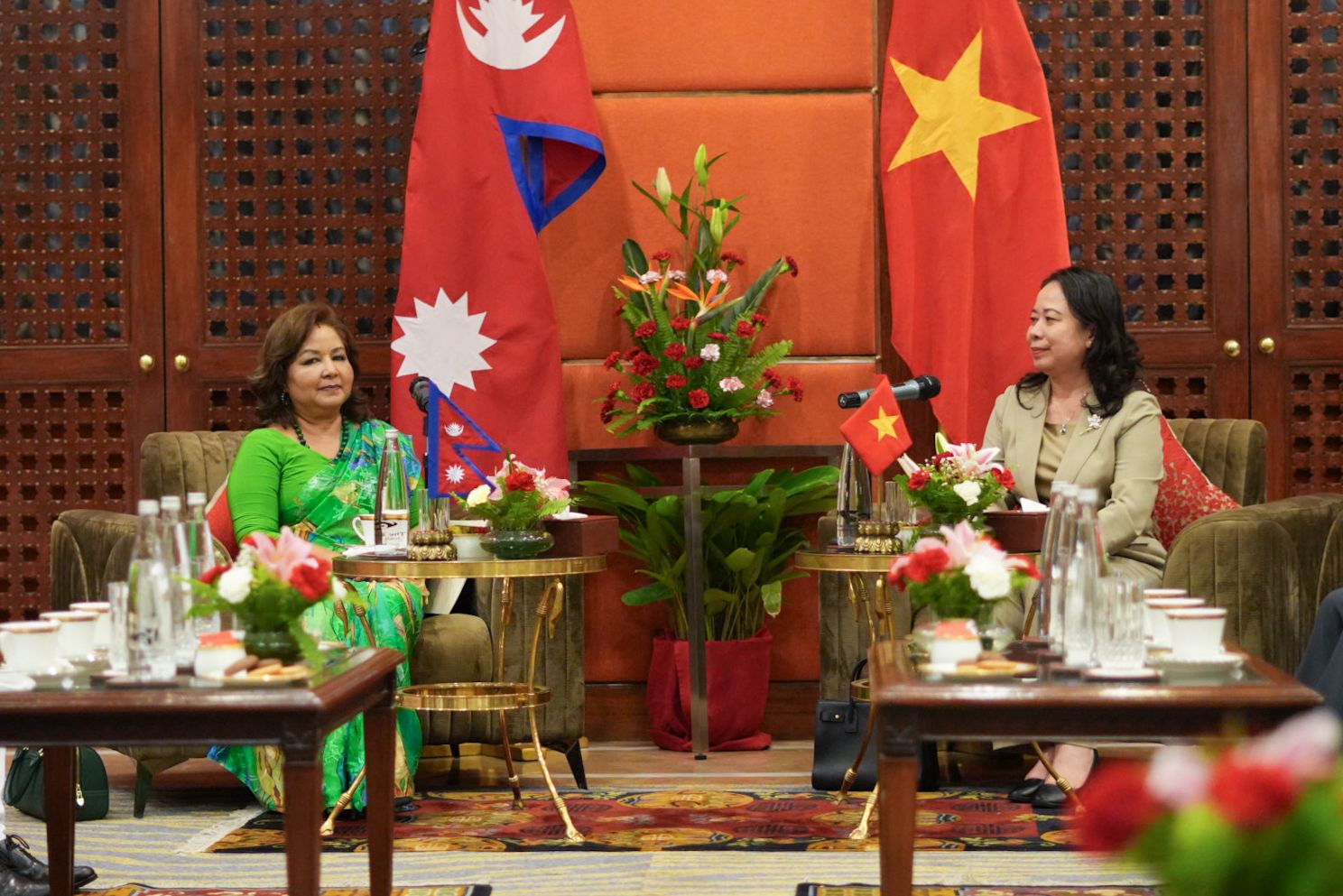
Nepal and Vietnam are taking significant steps toward strengthening tourism and cultural relations, as Foreign Minister Dr. Arzu Rana Deuba called upon the Vice President of Vietnam, Vo Thị Anh Xuan, to initiate direct flights from Vietnam to Nepal. In a significant diplomatic engagement aimed at enhancing bilateral ties and boosting tourism, Nepal’s Minister for Foreign Affairs, Dr. Arzu Rana Deuba, has called on the Vice President of Vietnam, Vo Thị Anh Xuan, to initiate direct flights from Vietnam to Nepal’s Gautam Buddha International Airport in Bhairahawa and Pokhara International Airport.
The request was made during a courtesy meeting held in Kathmandu on Saturday, as Vice President Xuan arrived in Nepal for an official visit. Minister Rana underscored that establishing direct air connectivity between the two countries could be a transformative step in deepening cultural, economic, and tourism relations.
Vietnamese Tourists as a Growing Market
Minister Rana highlighted that a considerable number of Vietnamese citizens visit Lumbini, the birthplace of Lord Buddha, every year. She noted that Vietnam remains one of the key Buddhist-majority nations with deep reverence for Buddhist heritage sites, making it a natural partner in religious and cultural tourism.
According to her, direct flights to Gautam Buddha International Airport, which lies close to Lumbini, would significantly reduce travel time for Vietnamese pilgrims and tourists, making Nepal a more accessible and attractive destination. Similarly, connecting flights to Pokhara International Airport would open opportunities for adventure and leisure tourism in Nepal’s scenic Himalayan city, famous for its lakes and trekking routes.
Buddhism as a Cultural Bridge
Minister Rana placed special emphasis on the role of Buddhism as a cultural bridge between Nepal and Vietnam. She noted that this shared heritage is not only a spiritual connection but also a potential driver for stronger bilateral relations in the 21st century.
“Buddhism serves as a vital cultural link between our two peoples. By highlighting our shared heritage, we can promote deeper understanding, more meaningful exchanges, and greater collaboration in various fields,” Minister Rana told Vice President Xuan.
She added that such cooperation could extend beyond tourism into areas such as education, culture, and heritage preservation, allowing both nations to benefit from the exchange of ideas, traditions, and expertise.
Boosting Tourism Through Collaboration
The Foreign Minister expressed optimism that the growing number of Vietnamese tourists visiting Nepal in recent years presents a unique opportunity for joint promotional campaigns. She suggested that tourism authorities in both countries could organize cultural festivals, roadshows, and heritage tours to showcase Nepal’s Buddhist sites, natural beauty, and adventure activities.
“Both countries can work together to create an attractive tourism package combining Lumbini, Pokhara, and Kathmandu with Vietnamese cultural and religious heritage destinations,” she proposed. By aligning tourism promotion strategies, Nepal and Vietnam could tap into a larger segment of travelers interested in spiritual journeys, eco-tourism, and cultural immersion experiences.
Infrastructure Ready for Direct Flights
Minister Rana reiterated that Nepal’s international airports outside the capital are fully equipped to handle direct international flights. The Gautam Buddha International Airport in Bhairahawa, inaugurated in 2022, was designed specifically to cater to pilgrims visiting Lumbini, while Pokhara International Airport, inaugurated in early 2023, was built to promote tourism in western Nepal.
Direct connectivity, she argued, would not only benefit tourism but also boost trade, business exchanges, and people-to-people ties. The proposed routes could help position Nepal as a convenient gateway for Vietnamese travelers to explore the Himalayas, while also enabling Nepalese travelers to access Vietnam’s cultural and economic hubs more easily.
A Step Towards Stronger Bilateral Relations
The meeting between Minister Rana and Vice President Xuan was part of broader efforts to enhance Nepal-Vietnam relations, which have seen steady growth in recent years. Both sides have expressed interest in expanding cooperation in trade, tourism, education, and cultural exchange.
Vice President Xuan’s visit is expected to open new avenues for collaboration, particularly in sectors where the two countries have complementary strengths. Nepal’s rich cultural heritage, natural landscapes, and adventure tourism potential align well with Vietnam’s growing outbound travel market and cultural diplomacy initiatives.
Regional Significance
The proposal for direct flights also holds regional significance. Nepal and Vietnam, as members of various regional and international forums, have the potential to collaborate in promoting South and Southeast Asia as interconnected tourism destinations. Direct connectivity could encourage multi-country travel itineraries, with Vietnam serving as a hub for travelers from East Asia, and Nepal as a gateway to the Himalayas.
Such a strategy could also help revive the tourism industry in the post-pandemic era by attracting new visitor segments and strengthening air travel links within Asia.
Future Prospects
If implemented, the direct flight initiative could set a precedent for Nepal’s broader aviation diplomacy strategy. Encouraging more Asian nations to establish direct air links with Nepal could diversify the country’s tourism markets, reduce dependency on a few source countries, and promote sustainable tourism growth.
Minister Rana’s proposal reflects a proactive approach to leveraging cultural diplomacy and infrastructure investments to generate tangible economic benefits. By aligning tourism promotion with aviation connectivity, Nepal aims to position itself more competitively in the global tourism market.
With Vice President Xuan’s visit marking a new chapter in Nepal-Vietnam ties, the coming months will reveal whether the proposal for direct flights materializes into concrete action. If successful, it could bring Nepal and Vietnam closer than ever, linked not only by history and heritage but also by modern air routes facilitating exchanges of people, culture, and commerce.