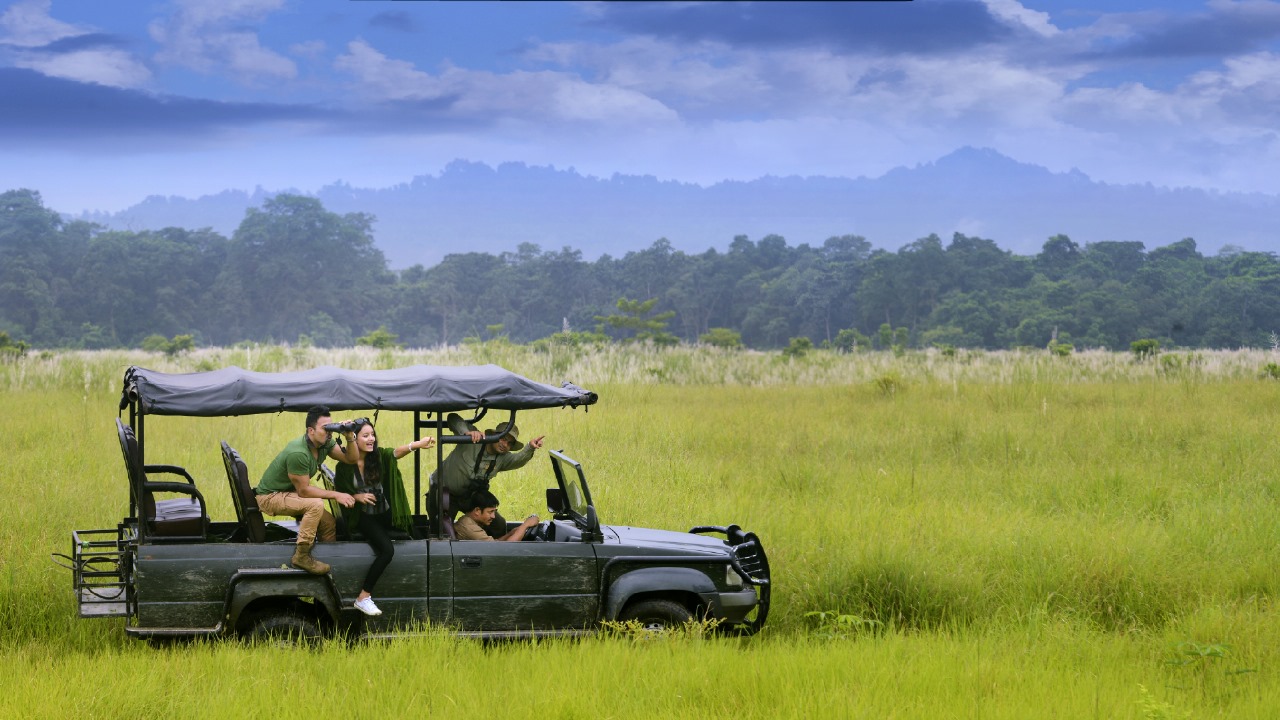
Chitwan National Park (CNP), one of Nepal’s most popular tourist destinations, has announced plans to resume jeep safari services ahead of the Dashain festival. The park had suspended jungle safari operations during the monsoon season due to safety concerns and damage to internal forest tracks.
The annual closure is a precautionary measure, as heavy rainfall often leaves dirt roads muddy and impassable. Flash floods in small streams, fallen trees blocking trails, and risks of accidents to both visitors and wildlife are common during this period. According to park officials, safari operations are expected to begin just before the Fulpati festival day, marking an exciting return of one of the region’s key tourism activities.

Preparations for Resumption Underway
Chief Conservation Officer Dr. Ganesh Pant confirmed that preparations are nearly complete to allow safaris again. “We are working to issue permits for commercial jeep safaris by Ashwin 12 or 13 (September 28 or 29),” Dr. Pant said. He added that registration of safari jeeps has already begun.
Only those jeeps that were in operation last year will be renewed for service this season. Vehicles found in poor condition have been instructed to undergo maintenance and repair before being allowed on safari routes.
Repairs and Maintenance of Routes
In anticipation of reopening, the park authorities began road repairs and vegetation clearing in August. The effort included fixing damaged forest tracks, removing debris, and cutting back overgrown bushes along safari trails. These measures are critical to ensuring smooth movement of jeeps and safe wildlife viewing for tourists.
The jeep safari had been suspended since Ashadh 16 (early July) due to heavy monsoon rains. The reopening just before Dashain is expected to draw large numbers of domestic and international tourists who flock to Chitwan during the festival season.
Distribution of Safari Jeeps
Chitwan National Park’s safari system involves jeeps operating from multiple entry points around the buffer zone. The distribution is as follows:
- Sauraha: 32 jeeps
- Kasara: 16 jeeps
- Meghauli: 9 jeeps
- Ujjoli: 2 jeeps
- Amaltari: 5 jeeps
- Madi: 1 jeep
These vehicles provide guided tours inside the park, giving visitors the opportunity to observe Chitwan’s rich biodiversity, including royal Bengal tigers, one-horned rhinoceroses, wild elephants, gharials, and a variety of bird species.
Boost for Tourism During Dashain
The timing of the safari resumption is significant for tourism in Chitwan. Dashain is one of the busiest travel periods in Nepal, with thousands of domestic tourists traveling to popular destinations. For Chitwan, jeep safaris are one of the major attractions alongside elephant safaris, canoe rides, and cultural performances by the Tharu community.
Tourism entrepreneurs believe that restarting safaris before Dashain will provide a much-needed boost to local businesses, including hotels, homestays, restaurants, and tour operators.

Ensuring Safety and Sustainability
While jeep safaris are a vital part of Chitwan’s tourism economy, officials stress that conservation and visitor safety remain the park’s top priorities. By restricting permits to only registered and well-maintained jeeps, the park aims to minimize environmental impact and reduce risks. Dr. Pant emphasized that eco-tourism in Chitwan is carefully regulated to strike a balance between income generation for local communities and long-term wildlife protection.
The reopening of jeep safaris in Chitwan National Park ahead of Dashain signals the return of one of Nepal’s most iconic wildlife experiences. With road repairs completed, vehicles registered, and safety protocols in place, tourists can once again look forward to exploring the park’s forests and spotting its legendary wildlife. For the people of Chitwan and the wider tourism sector, this move is expected to rejuvenate business during the festive season, offering both cultural celebration and a chance to connect with nature.