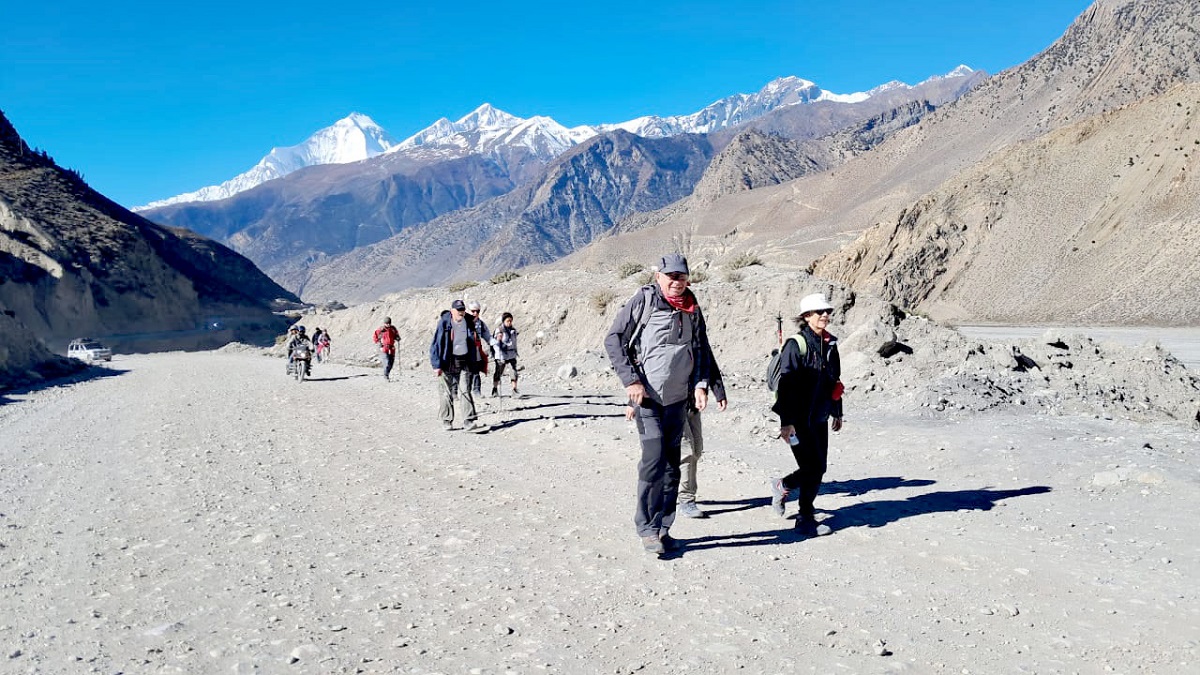
Mustang, a district renowned for its religious and cultural heritage as well as breathtaking landscapes, has witnessed a notable increase in foreign tourist arrivals this year. According to the Annapurna Conservation Area Project (ACAP), from January to September 28, 2025, a total of 108,686 international visitors explored Mustang.
In comparison, during the same period in 2024, Mustang had received 102,894 foreign tourists, marking a 5.32 percent growth year-on-year. The increase highlights the district’s rising popularity as a prime destination for adventure seekers, cultural enthusiasts, and trekking aficionados.

Yearly Trends and Projections
ACAP reports indicate that in the full year of 2024, Mustang welcomed 135,719 foreign tourists. To maintain a similar growth trajectory in 2025, the district would need to attract an additional 27,033 visitors, which would represent a 19.91 percent increase over the previous year’s total. These figures suggest that while the district is seeing growth, seasonal fluctuations, weather conditions, and local socio-political dynamics can significantly influence tourist numbers.
Seasonal Challenges Impacting Tourism
Rajesh Gupta, head of ACAP’s Jomsom office, noted that despite the favorable tourist season, several factors contributed to a lower than anticipated inflow of foreign visitors. Unpredictable weather patterns and the recent youth-led protests (Janjati movement) created conditions that discouraged some international travelers from visiting Mustang.
In September 2024 alone, 11,785 foreign tourists had entered Mustang. This number serves as a benchmark for the current year, suggesting that temporary disruptions can have an immediate effect on visitor arrivals, especially during the peak trekking and sightseeing months.
Attractions Drawing International Tourists
Mustang’s appeal to foreign visitors lies in its unique geography, ancient monasteries, and spiritual sites. ACAP notes that tourists are particularly drawn to the district’s traditional gompas (monasteries), chortens, historic temples, and ancient human-made monasteries, which offer a glimpse into the region’s rich cultural and religious heritage.
The Upper Mustang region, in particular, is famous for its historical landmarks such as Lomanthang Palace, Choser Cave, Muktinath Temple, and Dhumba Tal. These sites are not only spiritual and historical treasures but also provide panoramic views of the surrounding Himalayan mountain ranges, making Mustang a favorite destination for trekkers, photographers, and cultural tourists alike.
Annapurna Conservation Area Project’s Role
The Annapurna Conservation Area Project (ACAP) plays a pivotal role in managing Mustang’s tourism sustainably. By overseeing infrastructure, cultural preservation, and environmental protection, ACAP ensures that the region’s unique ecosystem and heritage sites remain intact while accommodating growing numbers of visitors.
ACAP’s initiatives include maintaining trekking trails, preserving historic monuments, promoting eco-tourism practices, and engaging local communities in tourism-related activities. These measures are essential for balancing the economic benefits of tourism with the need to protect Mustang’s natural and cultural resources.
Economic Significance of Tourism in Mustang
Tourism contributes significantly to the local economy, providing employment opportunities in hospitality, guiding services, transport, and local crafts. The influx of international visitors also benefits ancillary services, including restaurants, accommodation facilities, and souvenir businesses.
By attracting foreign tourists, Mustang not only generates revenue but also promotes cross-cultural understanding and global recognition of Nepal’s rich heritage. The steady growth in arrivals reflects the district’s successful positioning as a safe and culturally rich travel destination despite occasional challenges.

Future Outlook and Potential Growth
Experts believe that with improved infrastructure, stable local conditions, and continued promotion of Mustang’s cultural and natural attractions, the district could achieve the projected increase in tourist arrivals by the end of 2025. Enhancing trekking routes, providing better tourist facilities, and raising awareness about the region’s unique heritage are key strategies to sustain long-term growth. Moreover, fostering community-based tourism initiatives can ensure that local residents benefit directly from tourism, while preserving Mustang’s cultural identity and environmental integrity.
Mustang continues to charm foreign visitors with its stunning landscapes, ancient religious sites, and unique Tibetan-influenced culture. Despite seasonal and socio-political challenges, the district has seen a positive rise in international tourism this year. As the Annapurna Conservation Area Project continues to manage and promote tourism sustainably, Mustang is poised to remain a top destination for adventure, culture, and spirituality, ensuring that its natural beauty and heritage sites attract visitors for generations to come.