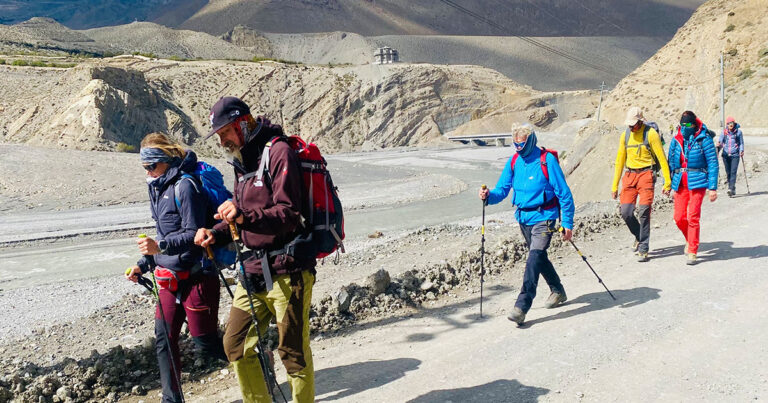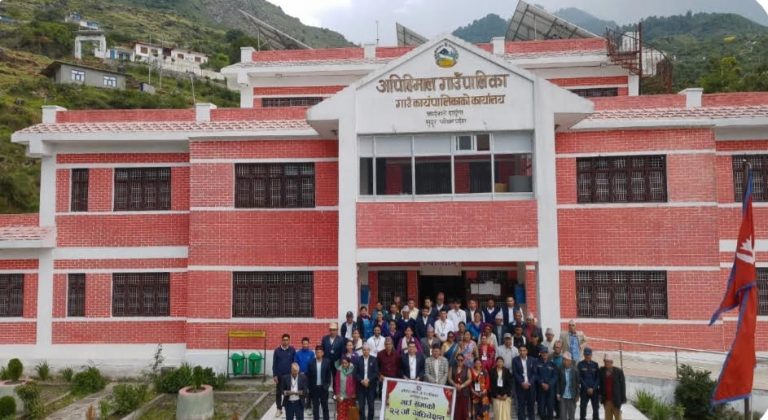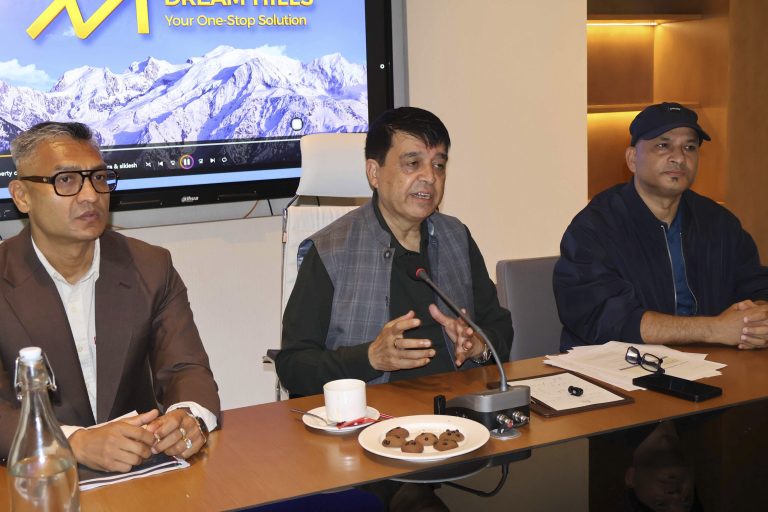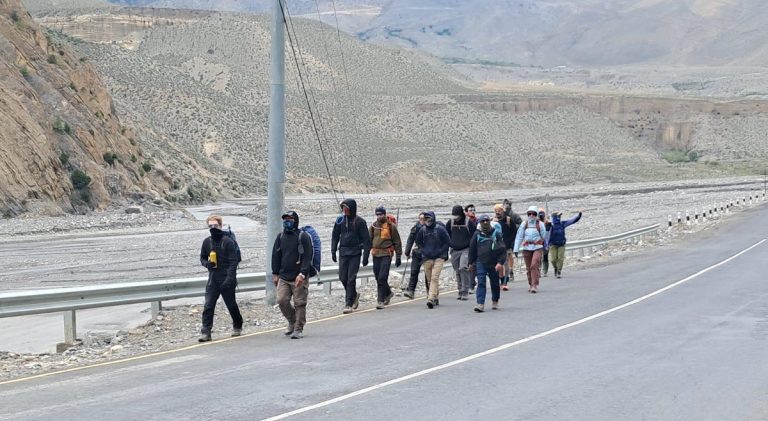
The religious and touristic district of Mustang marked the 46th World Tourism Day with colorful celebrations and heartfelt gestures of hospitality. Separate programs were organized by the Annapurna Conservation Area Project (ACAP) in Jomsom and Lo Manthang, where both domestic and international visitors were warmly welcomed.
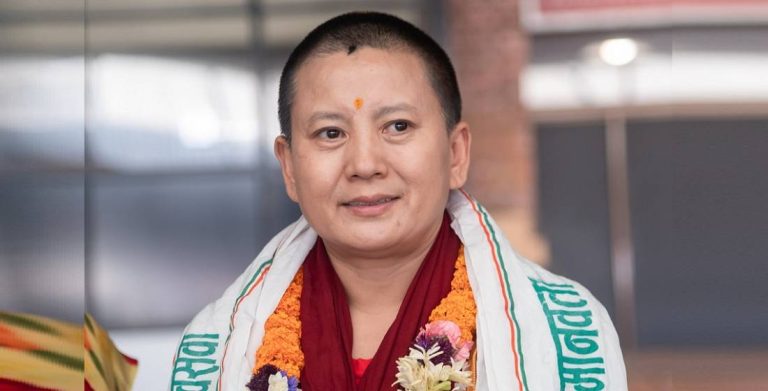
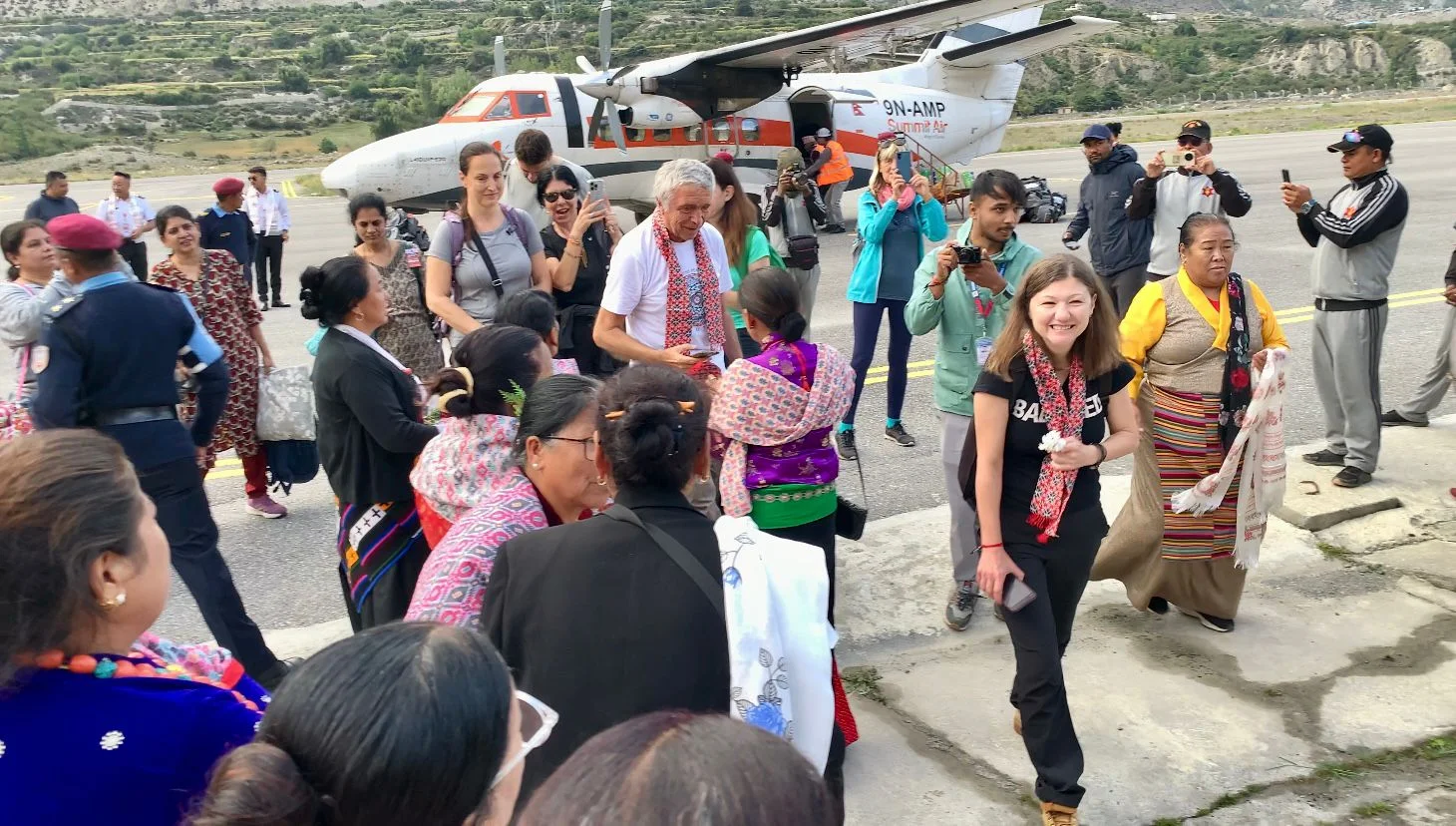
In Jomsom, Ghansa, and Lo Manthang, arriving tourists were greeted with traditional khada (ceremonial scarves) and flowers as symbols of Nepali hospitality. According to ACAP Jomsom Conservation Assistant Deepak Oli, foreign visitors arriving at Jomsom Airport were welcomed with traditional music, dances, and cultural displays.

Traditional Welcome at Jomsom Airport
At Jomsom Airport, located in Gharpajhong Rural Municipality–3, foreign tourists arriving by air were greeted with traditional musical performances by artists from the Indrabox Battalion. Members of the Puthang Mothers’ Group and Jomsom Women’s Group also participated, offering ceremonial scarves and flowers to each visitor.
“This was not just a welcome, but a way to express Mustang’s gratitude towards the tourists who continue to support the local economy and culture,” said Oli. He added that ACAP Jomsom, in coordination with the local women’s groups, ensured that the event reflected Mustang’s cultural pride.
Dialogue and Cultural Exchange
As part of the program, tourists were engaged in dialogue sessions where they were introduced to Mustang’s cultural, religious, and natural heritage. Information was shared about the district’s major attractions, ranging from sacred monasteries and traditional villages to trekking routes within the Annapurna and Upper Mustang regions.
Similarly, at the ACAP check post in Ghansa, located in Thasang Rural Municipality–4 at the border between Myagdi and Mustang, road travelers entering Mustang were welcomed with ceremonial honors. Representatives from ACAP, local mothers’ groups, elected officials, and community members joined hands to greet the visitors.
Celebration in Upper Mustang
In Upper Mustang, a special program was organized at Lo Manthang Rural Municipality–5. According to ACAP Lo Manthang Office Chief Umesh Paudel, the event included participation from local tourism entrepreneurs, security personnel, community leaders, and local residents. Tourists were welcomed with warmth and briefed about the unique cultural and religious sites of Upper Mustang, including centuries-old monasteries, caves, and the walled city of Lo Manthang.
Paudel noted that these activities were a way of showing Mustang’s signature hospitality while promoting its distinct tourism destinations. “The goal was not only to welcome our guests but also to introduce them to the hidden treasures of Upper Mustang, which make this region one of the most sought-after destinations in Nepal,” he said.
Revival of Tourism After Challenges
The celebrations carried added significance this year, as Mustang’s tourism sector had been deeply affected in recent months. The district faced setbacks due to adverse weather and the Genji demonstrations held earlier in Bhadra (early September), which led to disruptions in normal life and travel. As a result, tourism activities had slowed down considerably.
However, optimism has returned with the resumption of flights between Pokhara and Jomsom from Friday. On World Tourism Day, Summit Airlines operated three flights carrying foreign tourists to Jomsom, according to the airline’s station chief, Suman Thakali. “The arrival of tourists has reignited hope among local tourism entrepreneurs. The resumption of air services means life is returning to normal, and businesses can look forward to better days,” Thakali said.
Local Enthusiasm and Participation
Foreign visitors arriving on these flights were given a grand welcome at Jomsom Airport, complete with traditional music, cultural displays, and flower garlands. Local tourism entrepreneurs, community groups, and concerned stakeholders actively participated in the event, ensuring that each tourist experienced the renowned Nepali hospitality from the very first step.
The sight of cultural groups playing traditional instruments while tourists smiled and clicked photos created a festive atmosphere in Jomsom. For many visitors, the experience was not only heartwarming but also a memorable introduction to Mustang’s living traditions.
A District of Religious and Cultural Richness
Mustang, often referred to as the “hidden kingdom,” is one of Nepal’s most unique tourist destinations, famous for its dramatic landscapes, Buddhist monasteries, Tibetan-influenced culture, and the walled city of Lo Manthang. World Tourism Day celebrations in such a location underscored the district’s role in preserving both cultural and natural heritage.
The symbolic act of greeting tourists with flowers and khadas highlighted the spirit of the day’s theme: promoting tourism as a means of sustainable transformation. By focusing on hospitality and cultural preservation, Mustang’s stakeholders demonstrated their commitment to keeping tourism alive and vibrant despite past challenges.

Looking Ahead with Optimism
Tourism entrepreneurs in Mustang are hopeful that the revival of air services and the positive publicity from World Tourism Day celebrations will help restore confidence among travelers. Many expressed that, with collective efforts, Mustang can regain its position as a must-visit destination for both domestic and international tourists.
The ACAP offices in Jomsom and Lo Manthang have also pledged to continue working closely with local communities to enhance tourist experiences while safeguarding the environment and culture of Mustang.
The World Tourism Day celebrations in Mustang were not just symbolic events but a reaffirmation of the district’s deep connection with tourism. By welcoming tourists with warmth, music, and cultural pride, Mustang showcased its resilience and readiness to embrace sustainable tourism once again.
As the sound of traditional drums and flutes echoed through the air at Jomsom Airport and Lo Manthang’s narrow alleys, one message became clear: despite challenges, Mustang remains steadfast in its hospitality, heritage, and hope for a thriving tourism future.