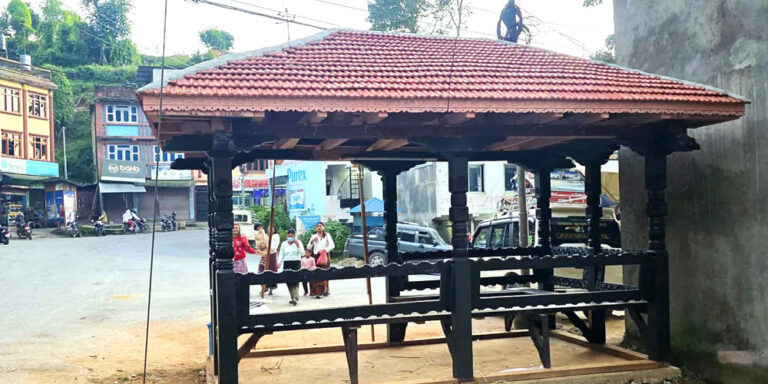
In Tamghas, the headquarters of Gulmi district, authorities have constructed two new falchas (rest shelters) to promote tourism and provide comfort to travelers. With urban centers across Nepal, including Kathmandu, increasingly adopting falchas, Gulmi has followed suit to offer visitors modern yet culturally rooted rest spaces.
The Resunga Municipality facilitated the construction of these falchas near the bus park and Bhagwati Temple, marking a significant step in developing visitor-friendly infrastructure in the hilly district. Municipal Chief Khildhoj Panthi noted that while older structures called paus existed in hill districts, the new falchas follow modern designs while honoring local craftsmanship.

Craftsmanship by Prison Inmates
Remarkably, the falchas in Tamghas were constructed using woodcraft skills of prison inmates, showcasing traditional artistry. According to Chief Panthi, the falcha near the bus park replaces a 150-year-old Indra Pauwa, which had deteriorated over time. Although some criticized replacing traditional structures, the municipality opted for falchas to preserve cultural craftsmanship while providing functional rest areas.
The two falchas, each costing around NPR 10 lakh, were built using locally sourced materials and the skilled labor of inmates, demonstrating how cultural heritage and tourism infrastructure can go hand in hand.
Economic and Social Impact of Prison Craftsmanship
Hari Thapa, the Gulmi prison caretaker, emphasized that inmate involvement reduces construction costs by nearly 50% compared to outsourcing. Inmates involved in woodcraft and furniture making earn between NPR 7,000 to 45,000 annually, contributing to a prison economy that exceeds NPR 3.5 crore per year.
Thapa highlighted that inmates’ skills extend beyond falchas, providing high-quality woodwork for schools, temples, local government buildings, and community halls. The construction of falchas represents both a tourism initiative and a skill-development program for inmates, integrating social rehabilitation with community development.
Falcha as a Visitor Rest Spot
The falcha near the traffic office in Tamghas has already become a resting spot for pedestrians and travelers, offering a safe and comfortable environment. Through the use of traditional woodcraft techniques, the falchas not only serve a practical purpose but also promote the district’s cultural heritage.
Prison inmates also crafted intricate items such as Ashtanag motifs on Sal wood, windows, photo frames, drawers, tables, and furniture, which enhance the aesthetic value of these structures. The craftsmanship reflects a deep respect for Nepalese woodcarving traditions while supporting tourism infrastructure development.
Rurukshetra Collaboration with Bharatpur Metropolitan
Beyond Gulmi, Rurukshetra Rural Municipality has partnered with Bharatpur Metropolitan City to construct an attractive falcha in Ridi, located in Rurukshetra-1. The project, completed by Neelkantha Construction at a cost of NPR 32,26,891, features tourism-friendly amenities, including Vishnu statues, blending functionality with religious and cultural significance.
The municipalities shared funding equally, each contributing 50% of the total cost, and ensured that the construction aligned with ongoing initiatives, such as preserving historical structures and expanding the Lama Chhapari temple near the Ridi market and Kali Gandaki riverside.

Tourism Promotion and Cultural Preservation
According to Chairperson Yadu Gyawali of Rurukshetra, although Rurukshetra is already a famous pilgrimage site, creating necessary tourism infrastructure is crucial. The falcha provides travelers with convenient resting areas while simultaneously showcasing local craftsmanship.
Gyawali emphasized that using traditional techniques for construction not only promotes local skills but also highlights Nepalese heritage. The project is a key step toward boosting tourism, offering visitors a safe, aesthetic, and culturally rich experience.
The recent falcha constructions in Gulmi and Rurukshetra reflect a blending of tradition, craftsmanship, and tourism development. By leveraging the skills of local artisans and prison inmates, municipalities have created rest areas that serve visitors while preserving cultural heritage. These initiatives are expected to enhance Nepal’s appeal as a tourist-friendly and culturally vibrant destination, encouraging travelers to explore hilly districts and sacred sites with ease and comfort.