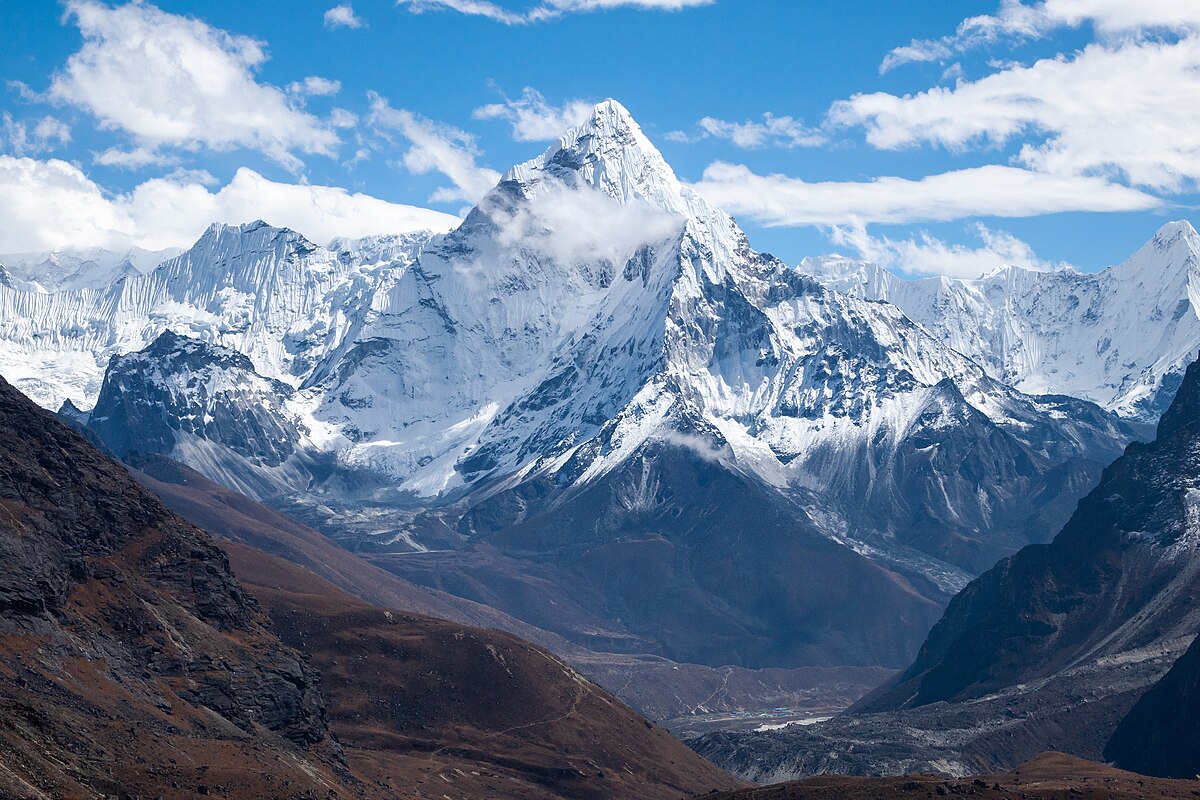
Two foreign mountaineers, one French and one South Korean, have tragically lost their lives during separate expeditions on Mount Ama Dablam in Nepal’s Solukhumbu region, highlighting the risks of high-altitude climbing.
French Climber Succumbs After Successful Summit
French climber Hugo Lucio Colonia Lazaro, aged 65, a member of the HV Int’l Mt. Ama Dablam Expedition 2025 Autumn I organized by Himalaya Vision Treks & Expedition Pvt. Ltd., successfully reached the summit on Kartik 6, 2082 (October 23, 2025). While descending, he faced severe health complications. Lazaro was airlifted from Camp III to Kathmandu and admitted to HAMS Hospital, where he passed away the following day. The Department of Tourism confirmed his death and is coordinating with the relevant authorities to repatriate his body to France.

South Korean Climber Dies Between Camps
South Korean climber Hong Khy Park, aged 66, a member of the 8K Int’l Ama Dablam Expedition 2025 Autumn and client of J Vill Nepal Treks, died on Kartik 9 (October 26, 2025) between Camp I and Camp II while descending the mountain. Park was climbing with a small team when he collapsed. The Department of Tourism stated it is working with expedition agencies to ensure Park’s body is safely returned to South Korea.
Ama Dablam: A Technically Challenging Peak
Ama Dablam, standing at 6,814 meters (22,356 feet), is often referred to as the “Matterhorn of the Himalayas” due to its steep faces and soaring ridges. Though smaller than Everest, the peak is known for its technical difficulty and is a popular choice for climbers seeking challenging ascents. This autumn season, Nepal issued 400 permits for Ama Dablam expeditions, reflecting the mountain’s popularity among international climbers.
Rising Risks in High-Altitude Climbing
The deaths of Lazaro and Park underscore the inherent dangers of high-altitude mountaineering, even for experienced climbers. Falling ice, extreme weather conditions, and health complications at high altitudes continue to pose serious risks. Nepal’s tourism department emphasized the need for climbers to maintain strict safety protocols and for expedition agencies to provide adequate support and emergency response measures.
Supporting Families and Repatriation
The Department of Tourism is actively coordinating with the respective expedition agencies to repatriate the climbers’ bodies to their home countries. Authorities also stressed the importance of proper medical support and evacuation planning for future expeditions to mitigate risks in the high mountains.
A Reminder of Mountaineering’s Perils
Ama Dablam remains a sought-after destination for both amateur and seasoned climbers. Its proximity to the Everest Base Camp trekking route makes it a popular preparatory climb for those aiming for higher peaks. However, these recent incidents serve as a sobering reminder of the dangers that come with Nepal’s majestic yet unforgiving high-altitude peaks.

Mountaineering and trekking are crucial sources of employment and income in Nepal, particularly for local Sherpa communities and expedition agencies. While the sector continues to attract adventure seekers globally, safety and preparedness remain paramount.
The tragic events on Ama Dablam follow similar incidents earlier this year in the Solukhumbu region, where another South Korean hiker lost his life on a trekking peak. Officials continue to emphasize that climbing in Nepal requires careful planning, adequate acclimatization, and awareness of rapidly changing mountain conditions.