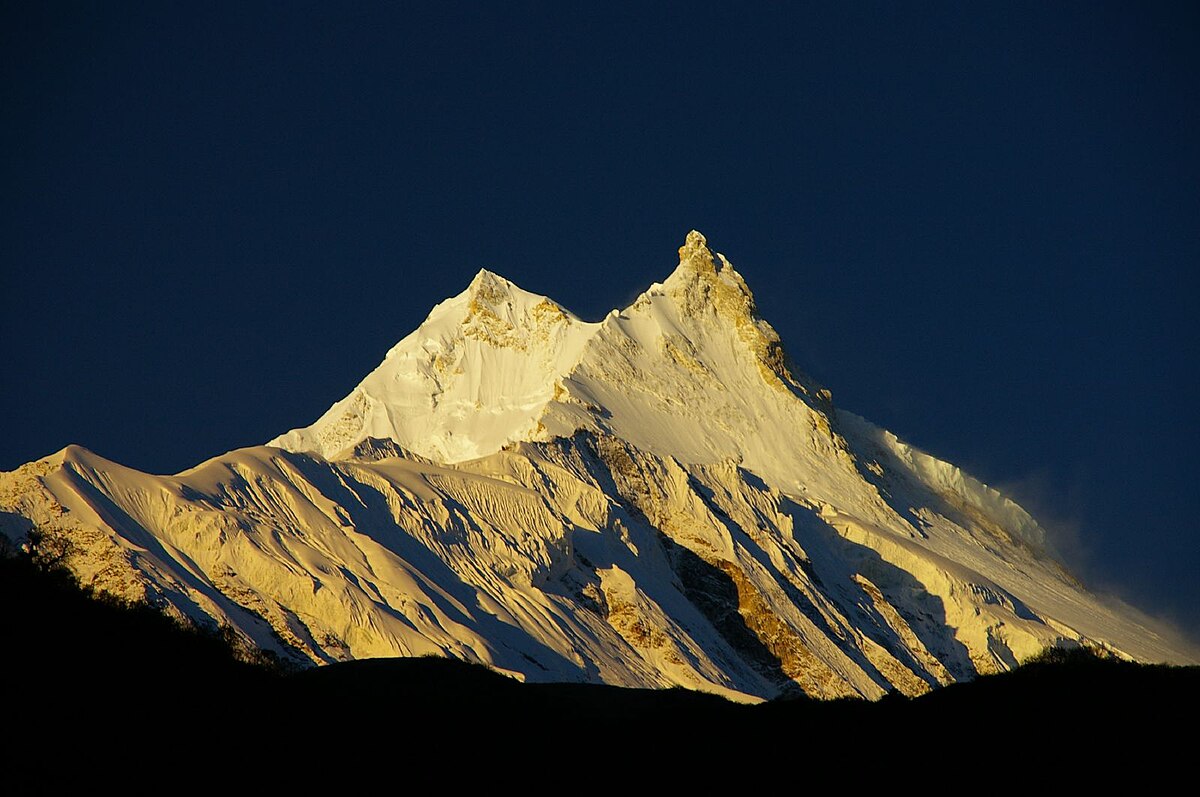
The Nason Rural Municipality of Manang district has initiated a preliminary study to explore the possibility of a new climbing route to Mount Manaslu, one of Nepal’s eight-thousanders. The study, being conducted in coordination with the Annapurna Conservation Area Project (ACAP), aims to identify a more accessible and safer westward route to the 8,163-meter peak.
Currently, climbers attempting to scale Manaslu generally follow the traditional eastern approach, starting their journey from Kathmandu to Gorkha’s Arughat and then trekking through Samagaun before ascending the mountain. However, the Nason Rural Municipality is studying the feasibility of an alternative route beginning from Lamjung’s Besisahar, passing through Dharapani, Tilche, Guwa, Suti Khola, and Yakkharka, before reaching Bhimthang. From Bhimthang, the route would allow climbers to approach Manaslu from the western side, which is believed to be shorter and potentially less time-consuming.
Revisiting the Historic Bhimthang Route
According to local officials, the Bhimthang route holds historical significance. The first successful ascent of Mount Manaslu on May 9, 1956, by Japanese climber Toshio Imanishi and Nepali Sherpa Gyaltsen Norbu, was made via Bhimthang. Later, the route was abandoned after it suffered damage from natural disasters, and the eastern Samagaun route became the standard path for climbers.

“Since the original ascent took place from Bhimthang, we have always believed there is potential to revive this route,” said Nason Rural Municipality Chairperson Dhan Bahadur Gurung. “If feasibility studies confirm that the route is safe and accessible, it will be the shortest route to reach the Manaslu base camp.”
Preliminary studies have begun with the involvement of experienced mountain guides and local experts. Karma Sherpa, one of the climbers involved in the survey, said the first phase of the study involved capturing photographs and videos of the potential route for further analysis. “When we visited, the region was covered in snow, so additional assessments are still required,” Sherpa said. “We need to evaluate technical aspects such as landslide risks and trail safety before making final conclusions.”
Potential for the Shortest Climbing Route
Chairperson Gurung emphasized that if the Bhimthang route proves viable, it could become Nepal’s most time-efficient approach to an 8,000-meter mountain. “We envision making Manaslu accessible through Bhimthang,” he explained. “This would be the shortest trekking route to a mountain base camp above 8,000 meters in Nepal.”
From Kathmandu, travelers can drive to Lamjung’s Besisahar, and then continue by road to Tilche in Manang. From there, trekkers can hike through Guwa, Suti Khola, and Yakkharka before spending the night in Bhimthang. The journey from Bhimthang to the Manaslu base camp could take just about two and a half days, significantly shorter than the current route from Gorkha.
The municipality’s early assessments also noted the availability of tourism infrastructure along the route. There are around 30 hotels and lodges along the path, including 11 hotels in Bhimthang alone, which sits at an elevation of 3,700 meters. Bhimthang has a total accommodation capacity for nearly 500 guests, making it a promising base for future climbers.
Balancing Accessibility and Environmental Safety
However, experts caution that while the route appears shorter, detailed geological and environmental assessments must be carried out before it can be officially opened for expeditions. “The trail crosses areas vulnerable to avalanches and landslides,” said Sherpa. “We must ensure the route can be used safely for both climbers and local trekkers.”
Local authorities believe that developing the route could also stimulate economic activity in the region, benefiting local communities through tourism-related employment and services. “If successful, this new route will not only make Manaslu more accessible but also boost tourism and economic opportunities for the people of Manang,” Chairperson Gurung added.
Survey to Determine Route’s Viability
The feasibility survey, conducted with technical support from ACAP, aims to identify the safest and most sustainable way to reopen the Bhimthang trail for future expeditions. The findings will guide whether to recommend the route to the Department of Tourism for official approval as an alternative climbing path to Manaslu.
If approved, the new route could attract both domestic and international climbers seeking shorter expeditions with reduced costs. Climbers and trekking guides who have explored both approaches agree that the western route through Manang is not only shorter but also offers scenic views and better acclimatization points.

Currently, trekkers from Dharapani walk through Tilche, Guwa, Suti Khola, Yakkharka, and Bhimthang to reach higher altitudes, with some already using parts of the trail as an alternate route to connect with the Manaslu base camp. The ongoing study is expected to help define an official and standardized path that could simplify logistics for mountaineers and trekking guides.
A Step Toward Reviving a Historic Path
As the survey continues, the local government remains optimistic. “We are hopeful that this study will prove successful,” Gurung said. “If confirmed, Bhimthang will once again serve as a gateway to Mount Manaslu, reviving a route that holds great historical and touristic significance.”
The Nason Rural Municipality expects to finalize the initial findings of the study in the coming months. If the results are positive, detailed technical assessments and environmental impact studies will follow before the route can be officially opened for expeditions. For now, the people of Manang are envisioning a future where climbers can reach the base of Manaslu more efficiently, through a route that combines heritage, adventure, and the promise of sustainable mountain tourism.