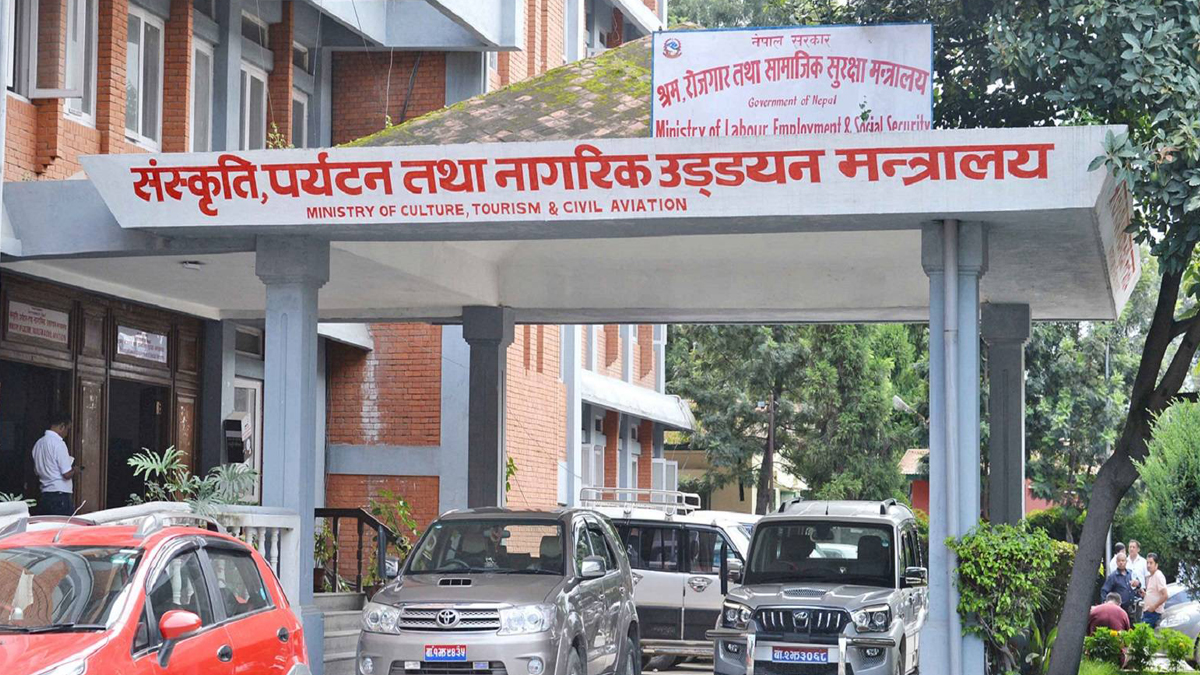
The Ministry of Culture, Tourism and Civil Aviation (MoCTCA) has invited applications for the listing of intangible cultural heritage for the current fiscal year 2082/83, calling on individuals, communities, and institutions associated with such heritage to submit applications by Chaitra 15, 2082. The initiative aims to formally recognize, document, and safeguard Nepal’s diverse living cultural traditions.
Call Issued Through Public Notice
Issuing a public notice, the ministry stated that applications must be submitted in accordance with the Internal Guidelines on Intangible Cultural Heritage (Listing and Management), 2082. The guidelines provide a structured framework for identifying, documenting, and managing intangible cultural heritage, ensuring consistency and transparency in the listing process.

The ministry emphasized that the initiative is part of a broader national effort to preserve Nepal’s cultural identity, promote cultural continuity, and protect traditional knowledge systems that are increasingly at risk due to modernization, migration, and social change.
Documentation and Eligibility Requirements
Applicants are required to submit comprehensive documentation to support their application. This includes a detailed description of the intangible cultural heritage, clearly explaining its nature, significance, and historical background. Supporting materials such as photographs, audio recordings, and video documentation must be provided to demonstrate the living practice of the heritage.
In addition, applicants must submit written consent from the concerned community or group, confirming their agreement to the listing. Information on intergenerational transmission, including how the knowledge, skills, or practices are passed down, is also mandatory. A recommendation letter from the relevant local government must accompany each application, ensuring coordination between federal and local authorities.
Where applicable, applicants are also required to provide proof of prior listing at the local level, reinforcing the principle that heritage recognition begins at the community and municipal levels.
Access to Guidelines and Application Forms
The ministry has made the guidelines and application forms easily accessible to interested applicants. These documents can be downloaded from the official website of the Ministry of Culture, Tourism, and Civil Aviation. Alternatively, hard copies may be obtained from the National Secretariat for Intangible Cultural Heritage Listing, operated under the Culture Division at Singha Durbar.
Officials noted that providing clear guidelines and standardized forms is intended to make the application process more accessible while ensuring that submissions meet the required technical and documentation standards.
Annual Application System and Regular Deadline
According to the ministry, applications for intangible cultural heritage listing can be submitted annually. While the deadline for the current fiscal year is Chaitra 15, 2082, the ministry has designated March 29, 2026, as the regular annual deadline for future submissions. This annual cycle is expected to encourage continuous identification and documentation of Nepal’s living heritage.
The ministry believes that a regular listing mechanism will help build a comprehensive national inventory of intangible cultural heritage, aligned with international best practices and UNESCO conventions.
Preserving Living Traditions and Cultural Knowledge
Nepal is home to a rich diversity of languages, rituals, festivals, craftsmanship, performing arts, oral traditions, and social practices, many of which are transmitted orally and through practice rather than written records. Officials warned that without systematic documentation and protection, many of these traditions face the risk of gradual disappearance.
Through this listing initiative, the government aims not only to recognize cultural heritage but also to create a foundation for safeguarding measures, awareness programs, and potential policy support in the future. The move is expected to strengthen collaboration between communities, local governments, cultural institutions, and the federal government.

Part of a Broader Cultural Preservation Effort
The ministry stated that the listing of intangible cultural heritage is a key component of Nepal’s commitment to cultural preservation and sustainable development. By formally documenting living traditions, the government seeks to ensure that cultural expressions remain vibrant and relevant for future generations.
The public notice inviting applications was first published on December 17, and the ministry has encouraged eligible stakeholders to submit their applications within the stipulated deadline to be considered for the current fiscal year’s listing process.