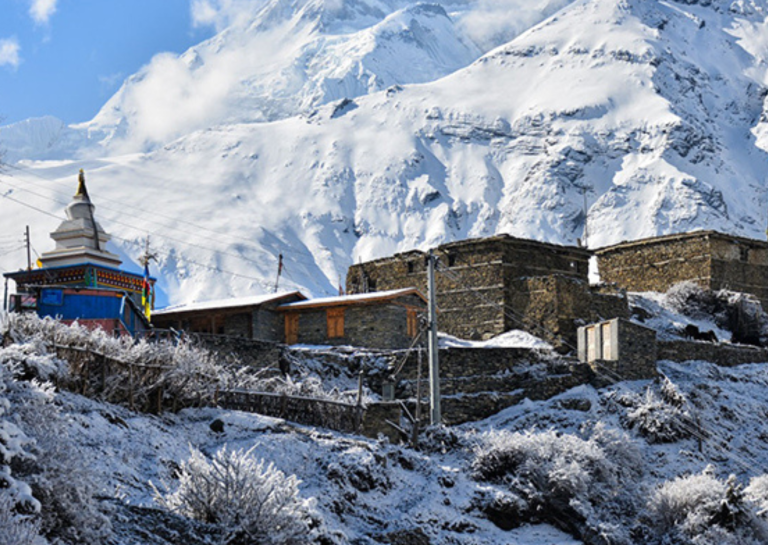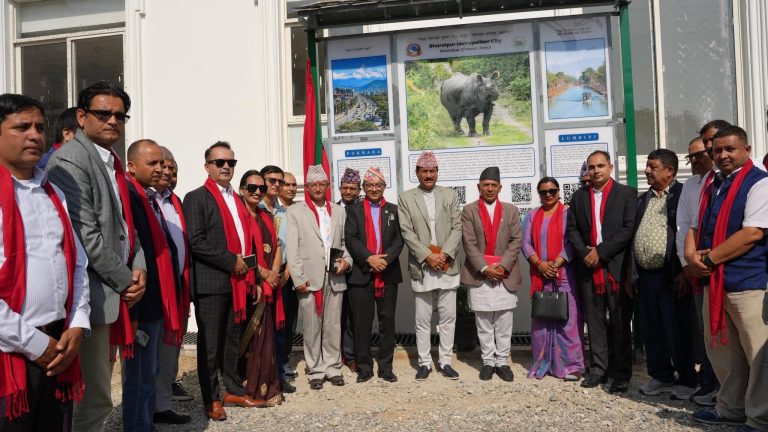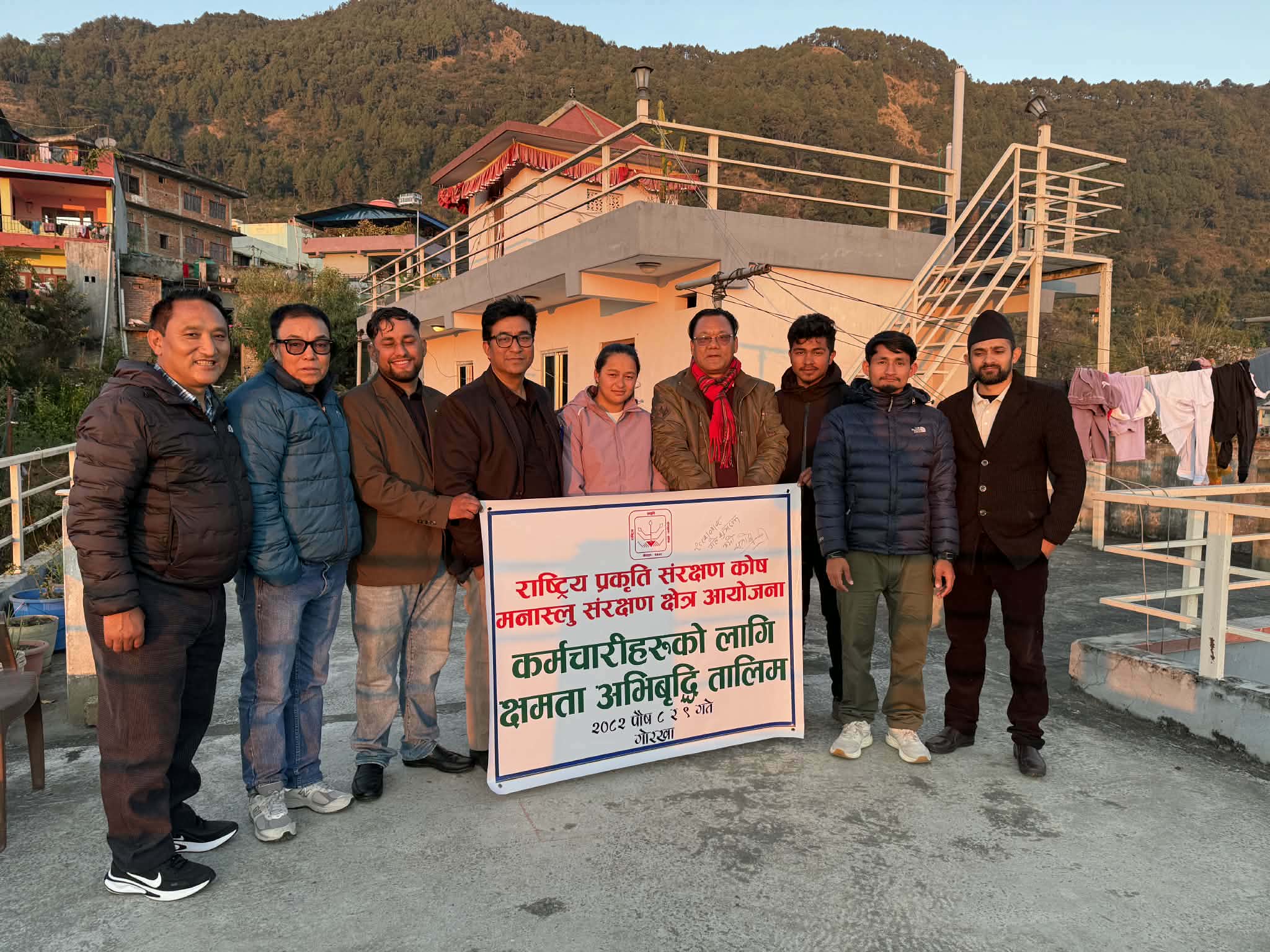
The Manaslu Conservation Area Project (MCAP) has taken a major step toward modernizing tourism management by providing MIS (Management Information System) training to Nature Conservation Assistants and Tourist Forest Product In-Charges working in the Manaslu region. The initiative aims to launch online data entry and digital tracking of tourists, making visitor monitoring more efficient, transparent, and technology-driven.
According to MCAP Office Chief Santosh Sherchan, the training was conducted to prepare frontline conservation staff for implementing a digital system that will record tourist information online at checkposts across the Manaslu Conservation Area. The two-day training program covered key technological tools including mobile GPS operation, GPS location identification, drone camera usage, and DSLR camera handling, equipping participants with modern skills to improve field operations.

Smart Checkposts in Jagat, Samagaun and Chhekampar
Currently, MCAP operates three major checkposts in Jagat, Samagaun and Chhekampar, where tourists are verified, tracked, and recorded before entering deeper into the conservation area. With the introduction of the MIS system, all tourist check-ins, travel tracking, and data entries will now be carried out through online technology, replacing the previous manual recording process.
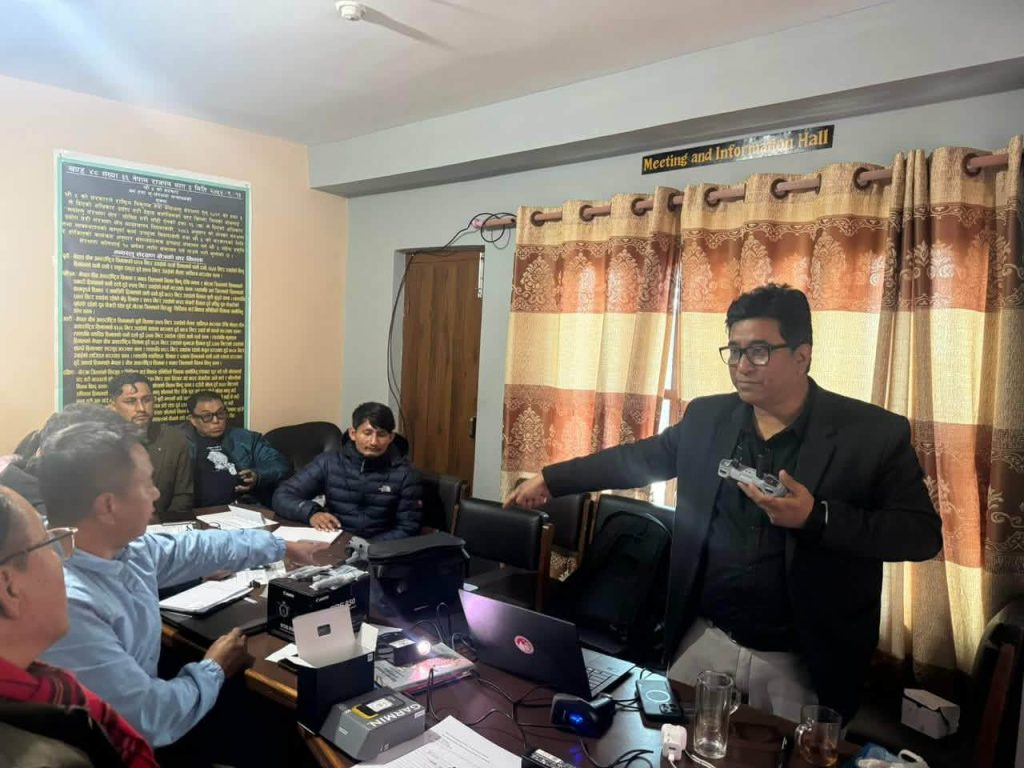
The training was facilitated by Narendra Shrestha, GIS Expert from the Annapurna Conservation Area Project (ACAP), who guided participants on geospatial data handling and digital monitoring tools. To support the transition, MCAP has also arranged printers, laptops, and drone cameras for the checkposts.

Drones to Support Rescue and Conservation Efforts
MCAP further informed that drone cameras will play a crucial role in tourist rescue operations, identifying emergency situations, and preventing illegal extraction and smuggling activities within the Manaslu Conservation Area. The integration of drone surveillance and online MIS platforms is expected to significantly strengthen both tourism safety and biodiversity conservation efforts.
Tourism stakeholders believe that the adoption of digital monitoring systems will enhance Manaslu’s reputation as a safe, well-managed, and environmentally responsible trekking destination, supporting sustainable tourism growth in one of Nepal’s most pristine Himalayan regions.