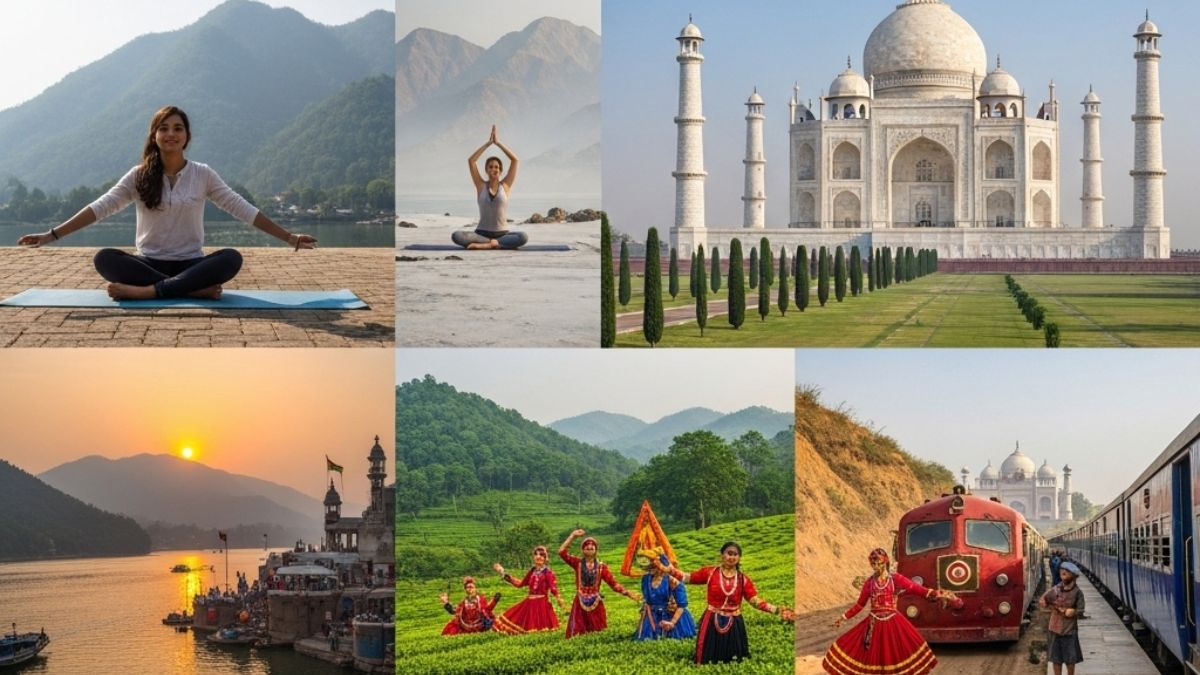
India’s tourism sector is experiencing a formidable resurgence, emerging as a cornerstone of the country’s growth story and global engagement. With a strong post-pandemic recovery in visitor numbers, renewed fiscal focus under the Union Budget 2026–27, and transformative infrastructure initiatives, India is steadily asserting itself as a premier and diverse travel destination on the world stage.
Inbound Tourism Registers Impressive Growth
The India Tourism Data Compendium 2025 reveals that International Tourist Arrivals to India reached 20.57 million in 2024, representing an 8.89 percent increase over the previous year. Within this total, Foreign Tourist Arrivals stood at 9.95 million, growing by 4.52 percent from 2023.
A particularly encouraging trend has been the rebound in arrivals by Non-Resident Indians, which surged by 13.22 percent to reach 10.62 million in 2024, underscoring renewed confidence among diaspora travelers and stronger emotional and economic ties with the homeland.
The United States continues to be India’s largest source market for foreign tourists, supported by sustained long-haul demand. Neighbouring Bangladesh and the United Kingdom also contribute significant visitor numbers, highlighting India’s appeal across both regional and mature international markets.
The following table provides a comparison of the top three source countries for foreign tourist arrivals in India for the years 2023 and 2024:
| Rank (2024) | Country | 2023 FTAs | 2024 FTAs | % Share in 2024 |
| 1 | United States | 1,691,498 | 1,804,586 | 18.13% |
| 2 | Bangladesh | 2,119,826 | 1,750,165 | 17.59% |
| 3 | United Kingdom | 920,591 | 1,022,587 | 10.28% |
Heritage Icons and Visitor Engagement
India’s centuries-old heritage continues to be a powerful magnet for both domestic and international travelers. The Taj Mahal remains the country’s most visited monument, attracting an estimated 6.26 million domestic visitors and 0.645 million foreign visitors in the 2024–25 fiscal year, reaffirming its unparalleled global appeal.
The following table provides the top 5 centrally protected ticketed monuments in India based on the number of foreign tourist visits for the most recent recorded period (FY 2024-25):
| Year | Name of the Monument | Number of Foreign Tourists |
| 2024-25 | Taj Mahal | 645,624 |
| 2024-25 | Agra Fort | 224,924 |
| 2024-25 | Qutub Minar | 220,044 |
| 2024-25 | Humayun’s Tomb | 158,043 |
| 2024-25 | Baori at Abhaneri | 116,378 |
Union Budget 2026–27: Infrastructure Push and Fiscal Reforms Shaping Tourism Growth
The Union Budget 2026–27 signals a calibrated and forward-looking approach to tourism development, positioning the sector as a catalyst for employment generation, regional development, cultural preservation, and foreign exchange earnings. Rather than treating tourism as a standalone industry, the budget integrates it firmly within India’s broader infrastructure and connectivity agenda.
A key enabler of this strategy is the sharp expansion of public capital expenditure to ₹12.22 lakh crore, one of the highest allocations ever for infrastructure development. This investment is expected to significantly strengthen roads, railways, airports, and multimodal transport systems that form the backbone of tourism growth. Improved connectivity, particularly to tier two cities, pilgrimage centers, and emerging destinations, is likely to enhance accessibility and support a more balanced distribution of visitor flows across regions.
Complementing this infrastructure focus is a significant fiscal reform aimed at reducing travel friction. The budget rationalizes the Tax Collected at Source regime on overseas remittances and tour packages. Previously, under the Liberalized Remittance Scheme, TCS on foreign travel could range from 5 percent to as high as 20 percent, creating substantial upfront costs for travelers.
Under the revised framework, TCS on overseas tour programme packages has been reduced to a flat 2 percent. In addition, TCS on remittances for education and medical purposes has been standardized at the same 2 percent rate. This simplification eases cash flow pressure on travelers and families, lowers the initial financial burden of international travel, and streamlines compliance for consumers and service providers alike.
Industry stakeholders, particularly outbound tour operators and travel intermediaries, have welcomed this reform. They view the reduced TCS as a confidence-building measure that can stimulate outbound travel demand, improve affordability, and support India’s deeper integration with global travel markets.
Transformative Infrastructure and Strategic Initiatives
The Union Budget 2026–27also outlines a range of infrastructure and tourism-centric interventions that reinforce India’s long term tourism potential.
- High-speed rail networks, including seven proposed corridors such as Delhi to Varanasi, aim to drastically reduce travel time between major cultural and commercial hubs, making multi-destination itineraries more seamless for both domestic and international travelers.
- The introduction of a Seaplane Viability Gap Funding scheme is expected to improve access to remote and scenic locations, particularly in coastal and waterway-rich regions, unlocking new tourism circuits.
- Human capital development receives focused attention through a pilot programme to train 10,000 tourist guides across 20 iconic sites via a structured 12-week curriculum, raising service standards and visitor engagement.
- On the digital front, the proposed National Destination Digital Knowledge Grid will systematically document India’s cultural and heritage assets, expanding digital access, research capacity, and destination storytelling.
- The establishment of five Regional Medical Hubs, integrating AYUSH centres and diagnostic facilities, reflects India’s ambition to strengthen its position in medical and value-added tourism.
- Eco tourism initiatives, including new mountain trekking trails in the Himalayas and turtle nesting trails along the coasts of Odisha, Karnataka, and Kerala, further demonstrate a commitment to sustainability and conservation-led tourism development.
Collectively, these measures reflect an integrated approach that links physical infrastructure, human capital, digital engagement, and ecological responsibility.
Outlook: From Takeoff to Sustained Global Leadership
India’s tourism takeoff is no longer defined solely by recovery statistics. It is increasingly shaped by intent, scale, and strategic clarity. Rising visitor numbers provide momentum, but it is the convergence of bold public investment, policy reform, and destination development that signals a deeper transformation underway.
The Union Budget 2026–27 reflects a long-term view of tourism as a national growth engine rather than a seasonal or auxiliary sector. Record capital expenditure, enhanced connectivity, skills development, digital heritage mapping, and sustainability-led initiatives collectively point towards a more resilient and diversified tourism ecosystem. The rationalization of tax measures such as the 2 percent TCS further demonstrates an effort to ease travel friction and align fiscal policy with tourism expansion.
At the same time, the continued global pull of India’s heritage icons underscores a fundamental truth. Tourism growth must balance modern infrastructure with cultural authenticity. As India expands its tourism footprint through high-speed rail, seaplane connectivity, medical tourism hubs, and eco circuits, the success of this takeoff will depend on inclusive planning, destination stewardship, and consistent global engagement.
If these elements remain aligned, India is well-positioned to move beyond resurgence and into an era of sustained leadership in global tourism. The journey ahead is not just about attracting more visitors, but about delivering richer experiences, broader regional benefits, and a tourism model that truly reflects India’s ambition, diversity, and global vision.
Conclusion: Leveraging India’s Tourism Boom for Nepal’s Cross-Border and Short-Haul Opportunities
Nepal stands at a strategic vantage point to benefit from India’s tourism resurgence. With stronger connectivity, increased outbound travel from India, and fiscal measures like the reduced TCS easing international travel costs, Nepal can position itself as the preferred cross-border and short-haul destination for Indian travelers.
Collaborative marketing, integrated travel itineraries, and enhanced border tourism infrastructure can help Nepal capture a share of India’s growing domestic and outbound tourist flows. By aligning its tourism offerings with India’s expanding travel circuits, pilgrimage routes, heritage trails, adventure tourism, and eco-friendly experiences, Nepal can leverage its proximity and cultural affinity to generate measurable economic and social benefits. The India-Nepal tourism synergy offers a timely opportunity for both nations to deepen people-to-people ties while driving sustainable growth in the region.
Jayshakti Sarraf is the Senior Officer at Nepal Tourism Board