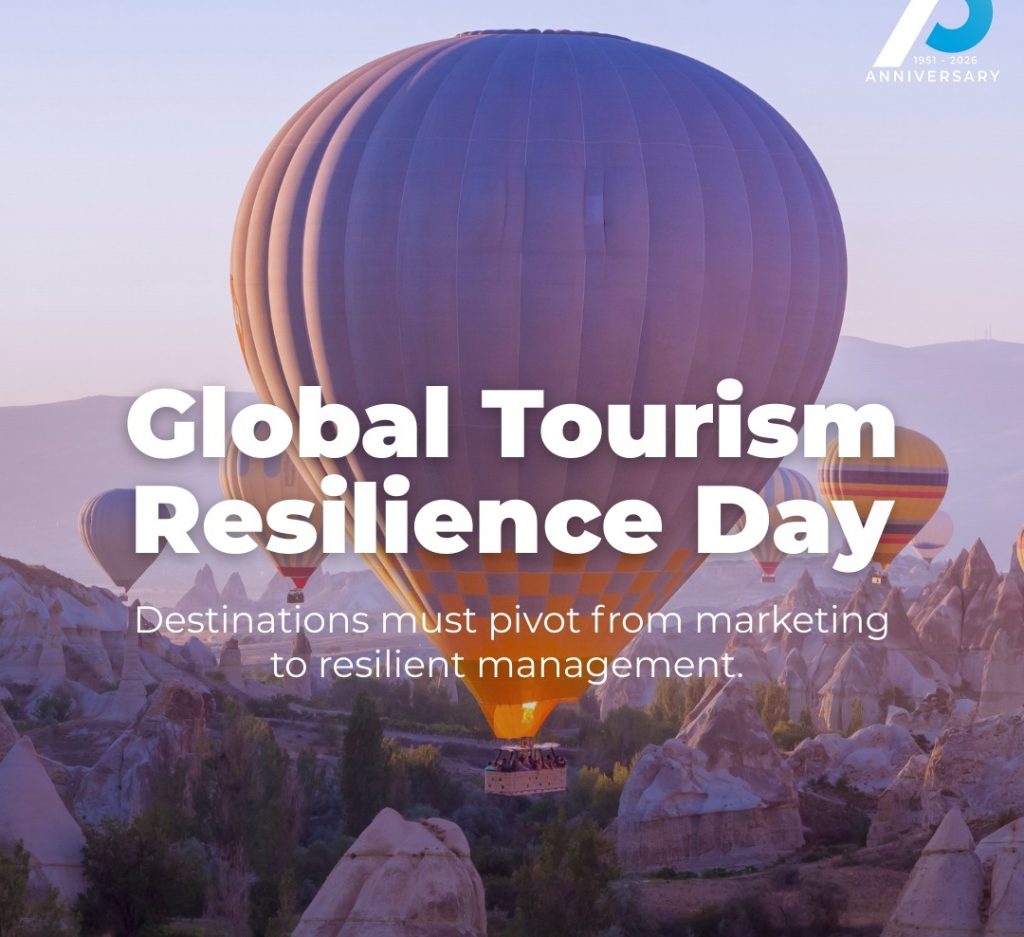
Global Tourism Resilience Day, marked annually on February 17, is gaining importance as countries worldwide recognize the urgent need to build a tourism sector capable of withstanding global shocks. The international community is reaffirming the importance of strengthening tourism systems to withstand global shocks as countries observe Global Tourism Resilience Day on 17 February. The observance, proclaimed by the United Nations General Assembly through Resolution A/RES/77/269, highlights the urgent need to develop resilient and sustainable tourism models capable of responding to crises such as pandemics, climate-related disasters, and economic disruptions.
The day serves as a global call to action for governments, industry stakeholders, and communities to design national strategies that support tourism recovery and long-term sustainability. Emphasis has been placed on strengthening public–private partnerships and diversifying tourism products to ensure the sector remains adaptive in an increasingly uncertain global environment.

Tourism’s Crucial Role in Developing Economies
Tourism remains a lifeline for many developing nations, including least developed countries, small island developing states, and several African and middle-income economies. In these regions, the sector is a major contributor to national income, foreign exchange earnings, tax revenues, and employment generation.
Because tourism connects people directly with natural and cultural heritage, it also holds unique potential to encourage environmental stewardship. Sustainable tourism practices, particularly ecotourism, are increasingly recognized as tools that balance economic benefits with conservation, helping safeguard ecosystems while supporting livelihoods.
According to global development experts, tourism’s cross-cutting nature enables it to contribute simultaneously to economic growth, poverty reduction, and the creation of decent work opportunities, aligning closely with the Sustainable Development Goals (SDGs).
Driving Sustainable Development Through Travel
Sustainable tourism is now viewed not merely as a leisure industry but as a transformative force capable of accelerating responsible consumption and production patterns. It supports the sustainable use of oceans and marine resources, promotes local culture and heritage, and enhances the quality of life for host communities.
Importantly, the sector has demonstrated its ability to empower women, youth, Indigenous populations, and rural communities by creating inclusive employment and entrepreneurship opportunities. It also fosters rural development by improving infrastructure and providing alternative income sources for smallholder farmers and family-run enterprises.
By formalizing segments of the informal economy and mobilizing domestic resources, tourism can contribute to broader financial inclusion while reinforcing environmental protection and biodiversity conservation.
Data-Driven Insights to Guide Recovery
Global tourism recovery and resilience planning are increasingly supported by evidence-based tools such as the Tourism Data Dashboard developed by UNWTO, the United Nations agency responsible for promoting responsible, sustainable, and universally accessible tourism.
The dashboard provides comprehensive statistics on international arrivals, tourism’s contribution to exports and GDP, seasonality trends, accommodation capacity, and source markets. Such data enables policymakers and industry leaders to identify vulnerabilities, track recovery patterns, and design informed strategies for sustainable growth.
Toward 2027: International Year of Sustainable and Resilient Tourism
In a further step to elevate the global agenda, the United Nations has proclaimed 2027 as the International Year of Sustainable and Resilient Tourism. The designation encourages countries, UN agencies, and private stakeholders to intensify collaborative efforts, promote innovation, and invest in tourism models that are environmentally responsible and economically inclusive.
The initiative aims to leverage tourism as a catalyst for long-term sustainable development by encouraging international cooperation, knowledge-sharing, and community-centered approaches.

A Sector Redefining Its Future
As the world continues to navigate complex global challenges, tourism is being reimagined as more than a driver of travel; it is emerging as a pillar of resilience, sustainability, and inclusive economic transformation.
By integrating environmental responsibility, cultural preservation, and innovative economic strategies, nations are increasingly recognizing that a resilient tourism sector is essential not only for recovery from crises but also for building a more sustainable and equitable future.