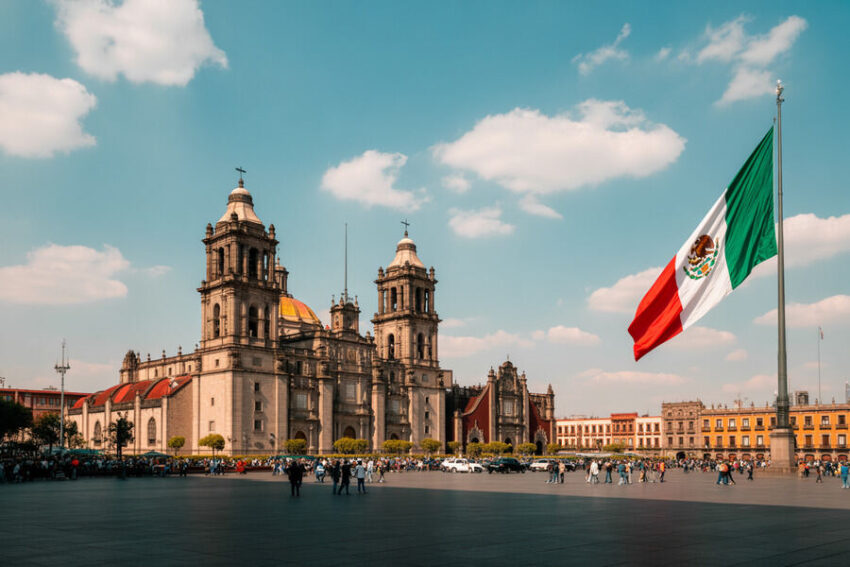
Mexico’s tourism industry achieved unprecedented growth in 2025, welcoming a record 47.8 million international visitors, marking a 6.1% increase from the previous year. As the sixth most visited country in the world, the country’s rich cultural heritage, stunning landscapes, and vibrant hospitality have cemented its status as a top global destination. Among the contributing nations, the United States emerged as the dominant force, driving tourism growth across land and air travel, while Canada, Brazil, Argentina, Colombia, Chile, and other countries also played key roles in bolstering Mexico’s international appeal.
U.S. Travelers Drive Tourism Surge with Land and Air Travel
The United States continues to be it’s largest source of tourists, with American travelers flocking to the country for its proximity, affordability, and variety of experiences. Land crossings saw the most remarkable growth, with U.S. visitors arriving by car or bus surging by 15.6% to 4.5 million in 2025. This increase highlights the importance of cross-border tourism, especially from Southern California, Texas, and Arizona, where infrastructure supports seamless travel and border connectivity.

While air arrivals from the U.S. experienced a slight 1.3% decline due to seasonal and travel preference shifts, the spending per air traveler rose to an average of $1,221.36. This combination of increased land arrivals and high-value air travelers underscores the sustained importance of American tourists in Mexico’s tourism economy, particularly for beach resorts, cultural cities, and adventure destinations.
Canada: A Robust Secondary Market
Canada remains a vital contributor to Mexico’s tourism success, with 2025 seeing air arrivals from Canadian cities grow by 11-13%, adding nearly 200,000 visitors compared to 2024. Canadians are particularly drawn to Mexico’s sun-soaked destinations such as Cancún, Puerto Vallarta, and Los Cabos. Direct flights from Toronto, Vancouver, and Montreal have made travel easier, while the allure of warmer winters continues to attract snowbirds seeking extended vacations.
Brazil and Argentina: Latin America’s Growing Influence
Brazil has emerged as a key Latin American contributor, with rising air arrivals from São Paulo and other major cities. Brazilian tourists are increasingly drawn to Mexico’s Pacific coast resorts, Mexico City’s cultural offerings, and historical attractions. Meanwhile, Argentina has experienced a nearly 15% increase in tourism, with travelers seeking a combination of beaches, cultural exploration, and adventure tourism. Destinations like Cancún, Playa del Carmen, Los Cabos, Chichen Itza, and Teotihuacan are particularly popular among Argentine visitors.
Colombia, Chile, and Regional Growth
Colombia and Chile, along with other Latin American countries, have shown significant increases in tourism to Mexico. Colombia’s Bogotá and Medellín continue to be major sources of visitors, attracted by affordable luxury resorts and cultural experiences. Chile’s rising middle class, coupled with direct flights from Santiago, has led to more travelers exploring Mexico’s historic and scenic locations, further diversifying the country’s tourism base.
Mexico’s Global Tourism Position Strengthened
Mexico’s tourism sector is now firmly positioned among the world’s leading destinations. With record-breaking visitor numbers, the country generated $31.7 billion in tourism revenue in 2025, up 4.9% from the previous year. December 2025 alone welcomed 5.21 million foreign tourists, a 9% increase from December 2024, contributing $3.44 billion in revenue despite a slight decrease in average spending per tourist. These figures reflect the combined impact of U.S. dominance, robust North American contributions, and growing Latin American markets.

Sustaining Growth and Global Appeal
The United States’ role as Mexico’s top tourism driver cannot be overstated, with strong land and air arrivals continuing to boost international revenue. Meanwhile, Latin American nations including Brazil, Argentina, Colombia, and Chile add depth to the tourism landscape, reinforcing Mexico’s growing status as a premier global destination. As infrastructure and connectivity improve, Mexico is expected to maintain its upward trajectory, potentially joining the top five most visited countries in the coming decades.
With continued investment in tourism infrastructure, enhanced regional connections, and the strong appeal of its diverse destinations, Mexico’s tourism industry is poised for sustained success. The U.S. remains the cornerstone of this growth, ensuring that Mexico continues to thrive as a world-class destination for travelers from across the globe.