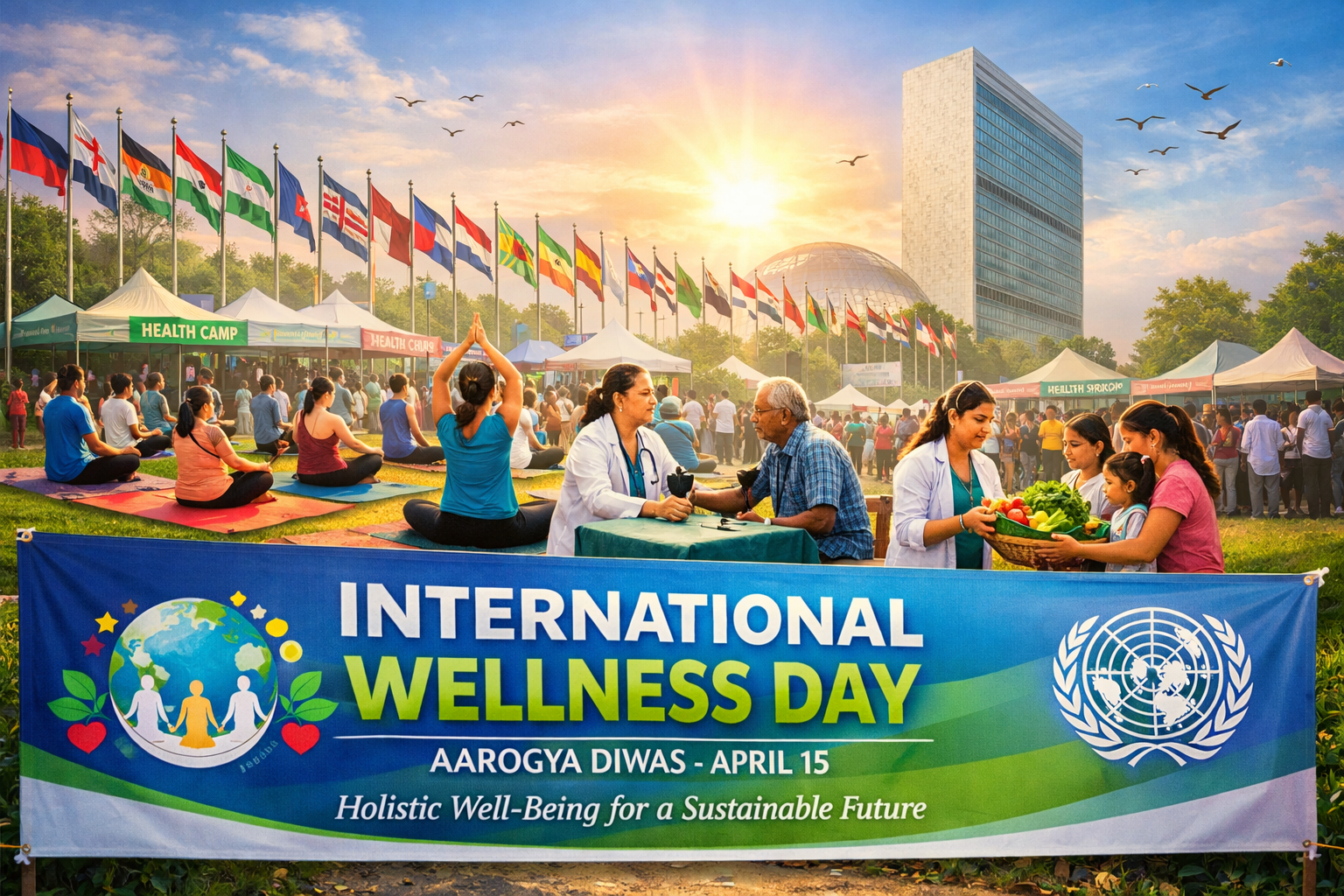
The International Wellness Day is being marked across the globe today with a series of programmes, awareness campaigns, and community initiatives aimed at promoting holistic well-being and sustainable lifestyles.
The day holds special significance this year, as it is being observed following a landmark decision by the United Nations General Assembly. Acting on an initiative led by Nepal, the UN on March 10, 2026, formally endorsed a resolution declaring April 15 as International Wellness Day, also referred to as Aarogya Diwas.
According to the UN, the observance is intended “to promote awareness and action for holistic well-being,” encouraging individuals, communities, and governments worldwide to prioritise health in its broadest sense, encompassing physical, mental, emotional, and social dimensions.

A Global Platform for Awareness and Action
International Wellness Day is envisioned as a global platform that brings together people from diverse cultural, social, and economic backgrounds to share knowledge and practices related to well-being. Various events, including seminars, yoga sessions, health camps, workshops, and cultural programmes, are being organised in multiple countries to mark the occasion.
The UN emphasised that the day encourages the adoption of wellness practices that are accessible, inclusive, and affordable for all. These practices range from traditional healing systems and mindfulness exercises to modern preventive healthcare approaches.
Health experts note that the growing stress of modern lifestyles, rising non-communicable diseases, and mental health challenges have made the concept of well-being more relevant than ever. By fostering awareness and encouraging preventive measures, the day seeks to address these pressing global concerns.
Nepal’s Initiative Gains Global Recognition
The declaration of International Wellness Day marks a significant diplomatic and cultural achievement for Nepal. By initiating the resolution at the United Nations, Nepal has successfully brought global attention to the importance of integrating wellness into everyday life and policy frameworks.
Officials and experts in Nepal have expressed pride in the country’s role in promoting a global agenda that aligns closely with its traditional values of balanced living, harmony with nature, and community well-being.
In Nepal, the day is being observed with various programmes organised by government bodies, health institutions, and community organisations. Activities include free health check-ups, wellness awareness campaigns, and public engagement events aimed at encouraging healthier lifestyles.
Wellness and Sustainable Development Goals
The United Nations has underscored the growing importance of the telehealth sector in contributing to the achievement of the Sustainable Development Goals (SDGs). The sector is increasingly recognised as a driver of economic growth, job creation, and poverty reduction.

Well-being initiatives, according to the UN, not only improve quality of life but also support inclusive and sustainable economic development. By promoting healthier populations, countries can reduce healthcare costs, increase productivity, and enhance overall social well-being.
Furthermore, wellness practices are closely linked to environmental sustainability. Encouraging mindful consumption, sustainable living, and the protection of natural resources helps ensure that future generations can enjoy a healthy and balanced life.
Promoting Inclusive and Affordable Wellness
A key message of International Wellness Day is the need to make wellness accessible to all segments of society. The UN has highlighted that wellness should not be viewed as a luxury but as a fundamental component of human well-being and dignity.
Efforts are being made globally to promote low-cost and community-based well-being practices, ensuring that even vulnerable and marginalised populations can benefit. These include public health education, community fitness programmes, and the integration of traditional knowledge systems into modern healthcare.
Experts stress that achieving meaningful progress in wellness requires collaboration among governments, the private sector, civil society, and individuals. Collective action is essential to building resilient communities and promoting long-term health outcomes.

A Step Towards Healthier Futures
As International Wellness Day is observed for the first time following its official recognition, it sets the stage for a sustained global movement focused on well-being. The day serves as a reminder that health extends beyond the absence of disease and involves a balanced and fulfilling way of life.
With growing global participation and awareness, International Wellness Day is expected to play a vital role in shaping policies, inspiring behavioural change, and fostering a culture of wellness worldwide. The observance not only highlights the importance of individual health but also reinforces the idea that collective well-being is essential for building a more sustainable, inclusive, and prosperous future for all.