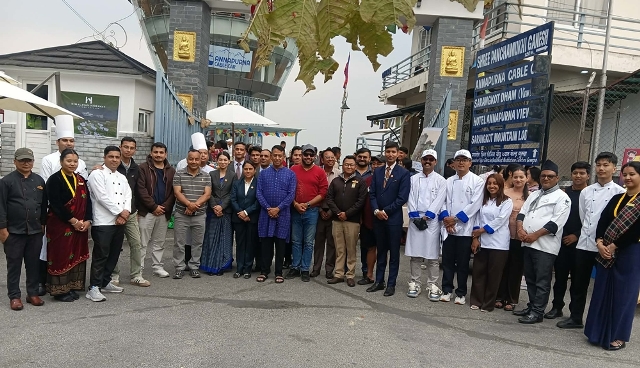
In a vibrant celebration of Nepali New Year 2083, Sarangkot, one of Pokhara’s most popular hilltop destinations, hosted its first-ever Vegan Fest, drawing significant attention from both domestic and international visitors. The event marked a unique blend of tourism, sustainability, and culinary innovation, positioning Sarangkot as an emerging hub for eco-conscious travel experiences.
The festival was jointly organized by the Nepal Tourism and Hotel Management College in collaboration with Annapurna Cable Car. The initiative aimed to promote plant-based diets while enhancing tourism activities during the festive New Year season.

Strong Participation from Hotels and Tourism Stakeholders
The Vegan Fest featured a wide range of food stalls hosted by renowned hospitality establishments, including Sarangkot Mountain Lodge, Himalayan Hideaway, Annapurna View Sarangkot, and Hotel Mystic Mountain.
These hotels showcased a variety of plant-based cuisines, highlighting the growing trend of vegan dining within Nepal’s hospitality industry. The presence of such prominent hotels added credibility and appeal to the festival, attracting a diverse crowd of visitors.
Festival Draws Tourists and Promotes Conscious Living
According to Principal Prakash Regmi of the organizing college, the festival witnessed an enthusiastic turnout. He noted that the event became a major attraction, particularly for religious tourists and visitors celebrating the New Year in Pokhara.
The festival successfully raised awareness about vegan diets and environmentally friendly lifestyles. Organizers emphasized that such initiatives contribute not only to tourism promotion but also to broader goals such as animal welfare and sustainable living.
Tofu Takes Center Stage
A key highlight of the festival was the display and tasting of tofu-based dishes. Out of 27 varieties prepared from soybeans, eight signature dishes were presented for visitors to sample. The food stalls were managed by trainees who had recently completed a two-week tofu production training program conducted by the college. Visitors had the opportunity to taste, purchase, and even take away packaged vegan products, making the experience both interactive and educational. Regmi shared that some trainees have already expressed interest in launching their own tofu production units and vegan restaurants, indicating a growing entrepreneurial spirit among young participants.
Skill Development and Youth Engagement
The event also served as a platform for skill development and youth engagement. The organizers announced plans to conduct free tofu production training for students who have recently completed their Secondary Education Examination (SEE). This initiative is expected to encourage self-employment and innovation in the food and hospitality sector, especially among young individuals exploring career opportunities.
Diverse Culinary Offerings Attract Visitors
Adding to the festival’s appeal, participating hotels introduced a range of international vegan dishes. According to Manmohan Rimal, Operations Manager at Annapurna View Resort, their stall featured Japanese-inspired items such as sushi and omni rice. Visitors also showed strong interest in items like soy milk-based tea and tofu chili, reflecting a growing acceptance of plant-based alternatives among consumers.

A Step Toward Sustainable Tourism
Organizers and stakeholders highlighted that the Vegan Fest represents a step toward integrating sustainability into Nepal’s tourism model. By promoting plant-based diets and eco-friendly practices, the event aligns with global trends in responsible tourism.
The success of the festival has encouraged organizers to consider making it an annual event, further strengthening Sarangkot’s identity as a destination that offers not just scenic beauty but also meaningful and conscious travel experiences.