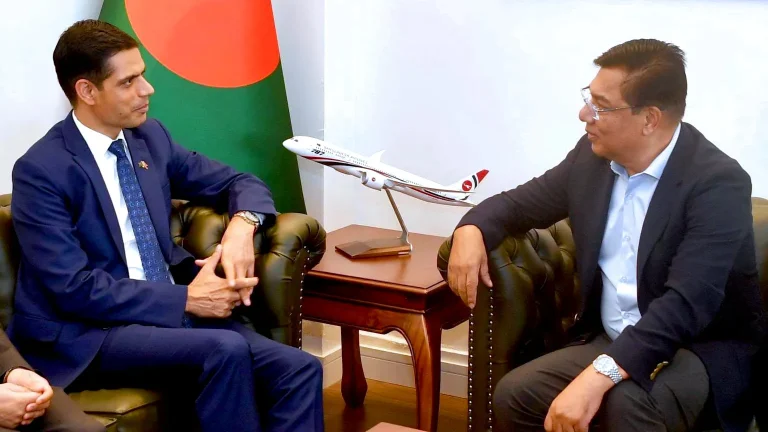
In a quiet morning in Kathmandu, the hills wrapped in soft haze and the streets alive with the rhythm of daily life, Tourism Info Nepal had the privilege of sitting down with one of the world’s most influential tourism thinkers. Prof. Dr. Wolfgang Georg Arlt kindly greeted the team with a calm smile. Having made Nepal his home in 2024, he carries a rare combination of academic insight and lived experience of the country.
Prof. Dr. Wolfgang Georg Arlt is a globally respected tourism expert, widely known for his work on China’s outbound tourism and the concept of “Meaningful Tourism.” Now based in Nepal, he serves as the Director of the Meaningful Tourism Centre Ltd. and as CEO of COTRI China Outbound Tourism Research Institute. He also acts as an advisor and knowledge partner for international organisations such as the WTTC, UN Tourism, PATA, and others.
With decades of international experience advising companies and governments in more than 80 countries, he is now closely engaged in understanding and shaping its tourism future. In this exclusive interview, he kindly shares his deep insights on its tourism transformation, with a strong emphasis on local tourism, authenticity, and sustainable growth.

Why did you choose Nepal as your home in 2024 instead of global tourism hubs?
Prof. Arlt smiled warmly before answering this question and kindly explained that Nepal possesses a very rare combination of human warmth, culture, and natural diversity. He respectfully noted that the Nepali people are extremely friendly, and visitors never feel like outsiders in Nepal.
“The people here are very welcoming,” he said with a smile. “The food is good, simple but authentic, and the climate is one of the best for living.” He further added that its geographical diversity is unmatched. “In a very short distance, one can experience hot plains, mild hills, and cold mountains. This combination of nature and culture is extremely rare in the world,” he observed.
You first visited Nepal in 2015. What has changed since then?
He reflected for a moment and smiled slightly before answering. “I first came here in 2015 to conduct several workshops, just after the earthquake. That was actually a very important moment for its tourism,” he respectfully shared. He explained that the country has improved in visibility and digital presence since then. “Nepal is now more visible globally. The awareness is higher, and digital promotion has improved,” he said.
However, he became serious and politely added, “But what has painfully remained the same is the shortcomings concerning infrastructure, coordination, and execution. Nepal has potential, but it is still not fully organized to leverage that potential.”
Nepal has received multiple opportunities. Is there another opportunity now?
He nodded and smiled slightly before offering a very important observation. “Yes, Nepal has another very strong opportunity this year,” he kindly stated. He explained that it has repeatedly benefited from global events.
“After the 2015 earthquake, Nepal gained global attention. After COVID-19, people started looking for nature, wellbeing, and open destinations like Nepal. And now, due to geopolitical tensions in other regions, especially the Middle East, travel patterns are shifting again,” he said.
He paused and added, “But the country is still operating at least ten years behind in tourism development. Opportunities are arriving, but Nepal is not moving fast enough to fully utilise them.”
What should Nepal do to take advantage of this opportunity?
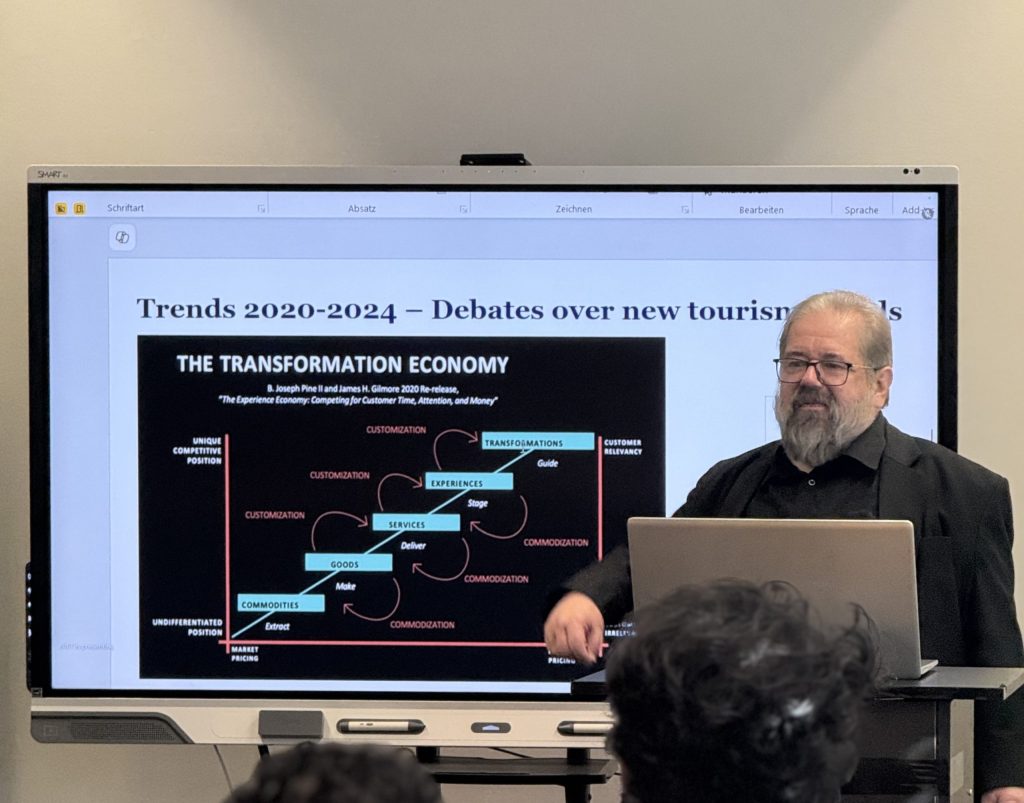
He smiled slightly and leaned forward as he answered. “Nepal must move away from brochure-based tourism,” he respectfully advised. “Tourists today do not come for brochures and sightseeing; they come for transformational experiences.”
He strongly emphasised local tourism. “The country must focus on local tourism and authentic experiences, not only Kathmandu, Pokhara, and Chitwan, but also villages, culture, and community life.” He added, “If Nepal only promotes the limited number of traditional destinations, it will miss its biggest strength.”
What does Meaningful Tourism mean for Nepal?
He smiled again when asked this and kindly explained: “Meaningful Tourism means tourism that is good for everyone, the visitor, the host communities, the companies and their employees, and the place.”
He explained that Nepal must ensure local benefits. “A trekking guide, a homestay owner, a local driver, they must all benefit fairly,” he said. He added, “Tourism must not only bring visitors; it must bring dignity, pride, and income to local communities.”
What role should local tourism play in Nepal?
He became more serious and politely stated, “Local tourism should be the foundation of Nepal’s tourism strategy.” He explained that Nepal is still too focused on limited destinations. “The country has over-relied on Kathmandu, Pokhara, and Chitwan. But the real experience lies in villages, rural life, and cultural landscapes,” he said.
He added with a smile, “This is what modern travellers actually want, real, local, authentic experiences. Tourism demand has moved from sightseeing to experiences and now to transformation: from taking pictures of local people to talking with them, and now to learning from them.”
Is Nepal fully using its tourism potential?
He shook his head slightly and smiled gently. “No, not yet,” he respectfully acknowledged. He explained that its rural and cultural resources are underutilised. “Nepal has 123 ethnic groups and over 120 languages. This is a huge asset, but it is not yet fully integrated into tourism,” he said.
He emphasised, “Local culture should not be simplified for tourists; it must be turned into a product without destroying its soul, as has happened in many other destinations. It should be presented authentically.”
What is Nepal’s biggest weakness in tourism?
He paused and smiled lightly before answering. “The biggest issue is not promotion; it is execution,” he respectfully observed. He explained, “Flights are delayed, transport is inconsistent, and systems are not always reliable. This affects the tourist experience.” He added, “Beautiful destinations alone are not enough. Tourism needs reliability and accessibility.”
What is Nepal’s biggest strength?
He smiled with clear enthusiasm and said, “Its biggest strength is its diversity within very short distances.” He explained, “In one journey, a visitor can experience tropical heat, green hills, and cold mountains, as well as many different varieties of cultures. Very few countries can offer this.” He added, “This is a very powerful tourism advantage if marketed correctly.”
What other countries do better than Nepal?
He smiled slightly before responding that every country has something Nepal can learn from. He respectfully noted that Bhutan stands out in particular for its clarity of tourism strategy and highly controlled development model, fitting for such a small country. “Nepal, on the other hand, has far greater diversity in landscapes, culture, and experiences, but it still lacks a clear positioning in the global market.”
He added that Nepal cannot copy Bhutan, as it needs to create many more jobs and revenue for its inhabitants and companies. “Nepal must maintain its own identity while becoming more focused and structured in how it presents itself to the world,” he said.
Can you please share the most critical question from international buyers?
He reflected for a moment before answering in a calm tone. “International buyers most often ask one simple but very important question: whether Nepal is reliable,” he kindly shared. He explained that this reliability refers mainly to infrastructure, logistics, and service consistency.
“My honest answer is that it offers extraordinary and unique travel experiences,” he said, “but at the same time, it still struggles with reliability in transport systems, punctuality, and coordination.” He added that this gap between experience and reliability is one of its biggest challenges in global tourism competitiveness.

If the NTB called you tomorrow as a paid consultant, what would be your first recommendation, the one thing you would insist they change immediately?
“The first and most important action should be the establishment of a Transformative Tourism Taskforce, which advises on short-term, medium-term, and long-term actions based on a clear strategy. At the same time, there is a need for shifting the focus from promoting the same old sightseeing tours to product development and infrastructure readiness.”
He emphasised that marketing alone is not enough. “Marketing without preparation creates disappointment,” he said. “And disappointment damages a destination’s long-term reputation.” He added that Nepal must ensure more diverse tourism products according to the different demands of different source market segments, reliable systems, and better infrastructure to enable itself to promote internationally more successfully.
Nepal is planning Tourism Year 2027 with a focus on Wellness and Wellbeing. If they keep confusing these terms, what will be the real-world consequence for a tourist booking a trip to Nepal?
He smiled slightly and gave a clear opinion. “It is naturally a well-being destination,” he respectfully explained. He noted that its strength lies in its mountains, spirituality, heritage, peaceful landscapes, and strong community culture. “These elements already represent well-being in its purest form,” he said.
He warned that it must be very careful in defining its tourism branding for the future. “If Nepal confuses wellness and wellbeing, it will create serious problems in visitor expectations,” he kindly advised. He explained that wellness tourism globally is associated with spas, luxury resorts, detox programmes, and commercial health services, concentrating on the body. “Well-being, however, is much broader,” he said. “It includes nature, community, spirituality, the mind, the heart, and the soul to achieve meaningful life experiences.”
He added that confusing the two would not fit with what Nepal can actually offer and would diminish the appeal to potential visitors. He concluded this section with visible enthusiasm. “Its greatest advantage is its unique ability to combine nature, spirituality, and extreme geographical diversity in a very short distance,” he said. He explained that, unlike countries such as India, Sri Lanka, or Bhutan, Nepal offers multiple climate zones within a short travel time.
“A traveller can move from tropical plains to mid-hills and then to high mountains within hours,” he said. He added that this makes Nepal exceptionally powerful in wellness and wellbeing tourism if properly positioned. “This diversity, combined with spiritual depth and natural beauty, gives Nepal a unique global advantage that very few countries can match,” he said.

What is the most important message for Nepal’s tourism future?
He smiled warmly in conclusion and said, “Nepal has a golden opportunity this year, but it is still not fully prepared.” He explained that Nepal must act quickly. “After the earthquake, after COVID-19, and now again due to global changes, it has repeatedly received opportunities to change. But it is still many years behind in tourism development.”
He added firmly, “Nepal must focus on local tourism, infrastructure, and meaningful experiences, not just brochures and promotion. The country does not need to copy other countries; it needs to become the best version of itself.” As the conversation came to an end, Prof. Dr. Wolfgang Georg Arlt smiled thoughtfully, reflecting on its long tourism journey and its repeated waves of opportunity.
He respectfully reiterated that Nepal is at a critical turning point, with global shifts after the 2015 earthquake, the post-COVID-19 recovery, and recent national and geopolitical changes once again providing the country with both the need and the opportunity to develop a clear strategy and vision for the development of tourism. The PATA (Pacific Asia Travel Association) has declared the development of “A Meaningful Tourism Economy” as the vision for the Asia-Pacific region.
Nepal would be well advised to adopt this vision for its national tourism strategy as well. Based on such a strategy, priorities for short-term, medium-term, and long-term activities become clear, and their execution and levels of success become transparent.
He kindly emphasised that this is the moment for Nepal to act decisively by strengthening local tourism, improving infrastructure, and focusing on authentic, experience-based travel founded on a clear strategy. With a calm smile, he concluded that Nepal does not need to imitate other destinations but must instead unlock its true strength, its people, culture, and landscapes, to become the most meaningful and distinctive tourism destination in the world.