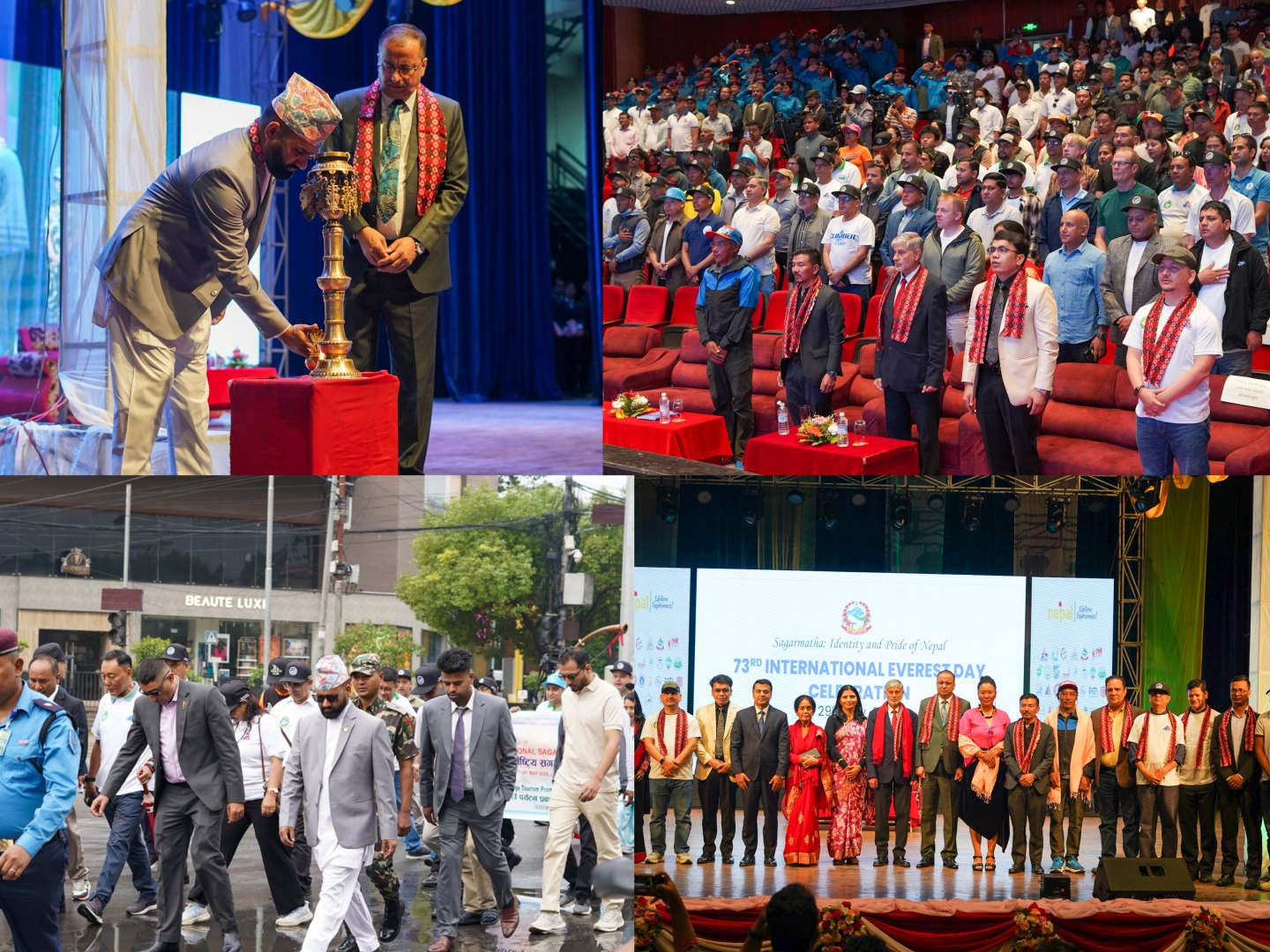
Speakers at a special programme organised on the occasion of the 73rd International Everest Day on Friday warned that the Himalayan region is increasingly at risk due to the growing impacts of climate change, stressing that mountain conservation should be treated not only as a national responsibility but also as a shared global duty.
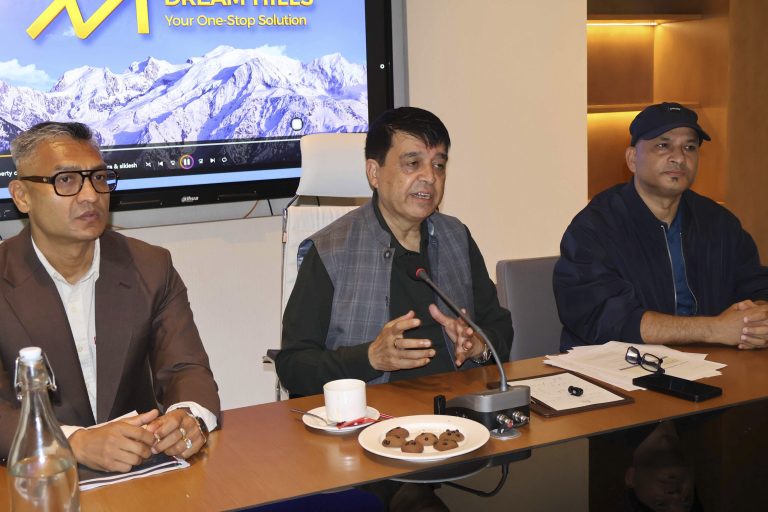
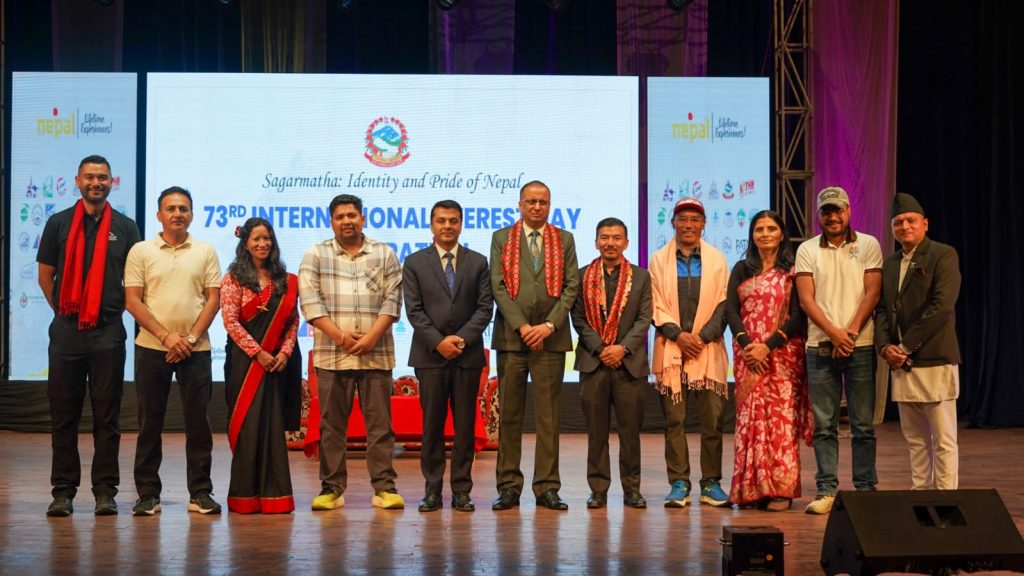
The programme was jointly organised by Nepal’s Ministry of Culture, Tourism and Civil Aviation, the Nepal Tourism Board, and the Department of Tourism to commemorate the historic first ascent of Mt. Everest and to honour the importance of the Himalayas to humanity, culture, and global ecology.
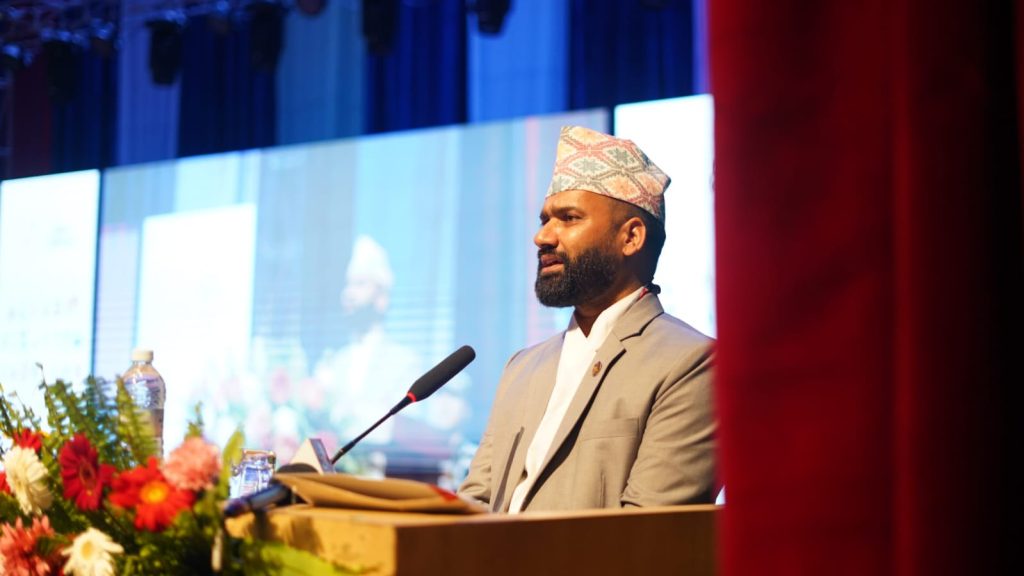
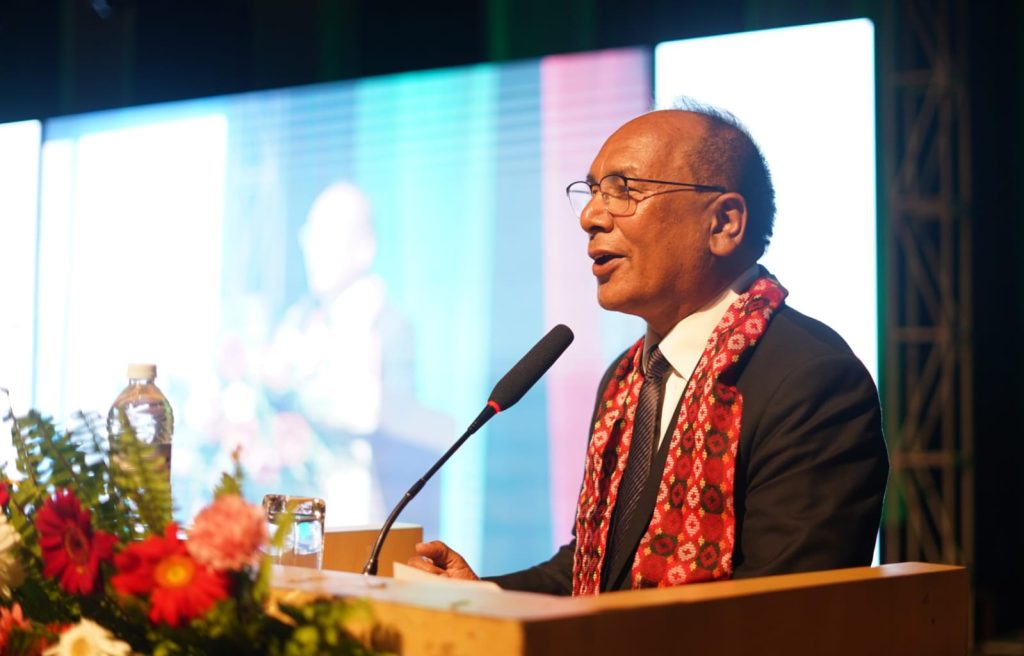
Addressing the event, Khadak Raj Paudel said that Sagarmatha (Mt. Everest) is not merely a peak to conquer but a symbol of human courage, spirituality, and shared human consciousness.
“Everest is not something to be conquered. It is an experience, and perhaps not everyone is destined to feel that experience,” Minister Paudel said during his address. “The mountains are not only Nepal’s property; they are the shared heritage of the world. Unless we protect the mountains, humanity itself cannot remain safe.”
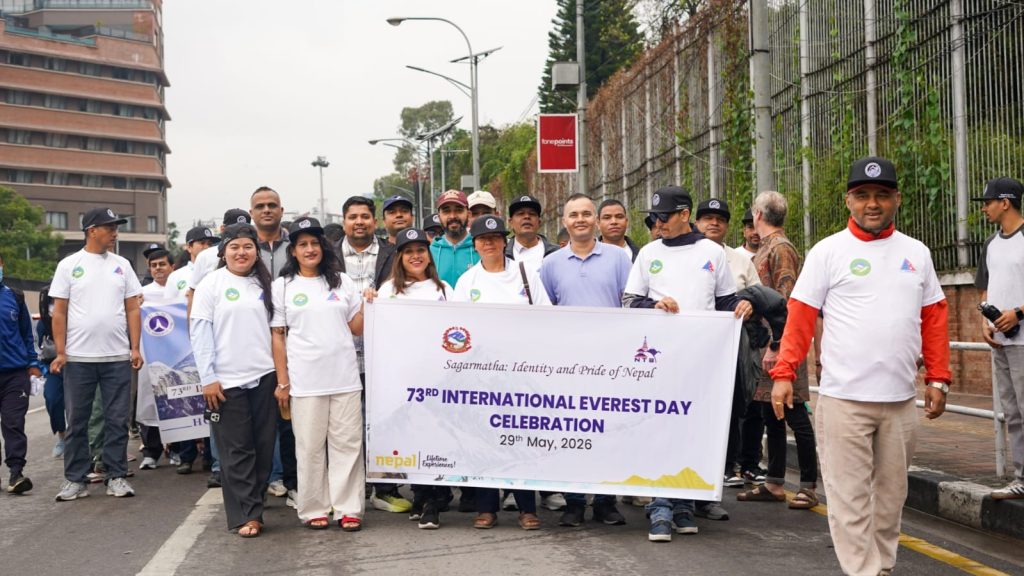
The minister expressed concern over the rapidly increasing impacts of global warming, stating that glaciers and snow in the Himalayan region are melting at an alarming pace. He warned that the consequences of climate change would not remain limited to mountain communities alone but would also affect coastal regions, ecosystems, and human life across the world.
“Everest and other mountains are under serious threat. Human consciousness must rise even higher than the height of the mountains themselves,” he added.
Himalayas Facing Increasing Climate Risks
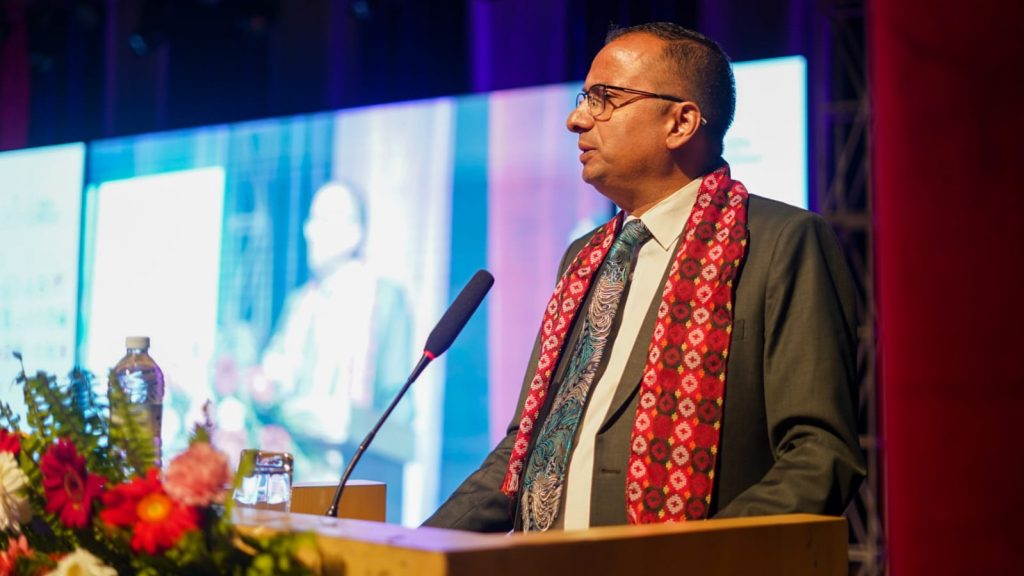
Speakers throughout the programme repeatedly highlighted the growing environmental challenges facing the Himalayan region. Secretary at the Ministry of Culture, Tourism and Civil Aviation, Mukunda Prasad Niraula, said that the effects of climate change are becoming increasingly visible in mountain areas, making mountain conservation one of today’s most urgent priorities.
“The rapid acceleration of climate change is clearly affecting the Himalayas. Protecting the mountains has become an urgent necessity,” Secretary Niraula said.
Officials and tourism stakeholders noted that the Himalayas play a critical role in maintaining ecological balance, preserving biodiversity, and sustaining freshwater resources for millions of people living downstream across South Asia.
The speakers also stressed that the issue of climate change should be addressed through stronger international cooperation, scientific research, sustainable tourism policies, and responsible mountaineering practices.
Private Sector’s Role Crucial in Mountain Tourism
President of the Nepal Mountaineering Association, Phur Gelje Sherpa, highlighted the important role played by the private sector in promoting Nepal’s mountain tourism globally.
He said the mountaineering sector has continuously worked since 1976 to support the development of Nepal’s mountains, improve climbers’ experiences, and promote the country’s adventure tourism industry internationally.
“We have continuously contributed to the development of Nepal’s mountains, climbers’ facilitation, and global promotion of mountain tourism since 1976,” Sherpa said. “The government alone cannot achieve success without the support of the private sector. Therefore, the new tourism legislation should be private sector-friendly.”
He also expressed hope that the upcoming tourism law would help strengthen mountain tourism management and create a more practical and sustainable regulatory framework.

Seven Deaths Reported During Spring Climbing Season
During the programme, Director General of the Department of Tourism, Ram Krishna Lamichhane, shared details about this year’s spring mountaineering season.
According to Lamichhane, seven people, including foreign climbers and Nepali Sherpa guides, lost their lives during expeditions on Mt. Everest and other Himalayan peaks this season. He also informed that several Nepali and foreign climbers are currently undergoing treatment both inside Nepal and abroad.
The Director General stressed that Everest Day should not only be viewed as a celebration of mountaineering achievements but also as an opportunity to review policies, research, innovation, and sustainable practices related to mountain tourism.
“There is an urgent need to strengthen Himalayan conservation, internationally promote Nepal’s mountain identity, develop systems that maintain ecological balance, and ensure good governance in tourism,” Lamichhane said.
He further stated that the tourism bill currently under preparation is expected to introduce more practical and effective provisions for the mountain tourism sector.

Outstanding Contributors Honoured
The event also honoured several individuals for their extraordinary contributions to mountaineering, rescue operations, research, and Himalayan tourism.
Veteran climber Pasang Dawa Sherpa, who has successfully summited Mt. Everest 31 times, received the “International Everest Award” in recognition of his remarkable mountaineering achievements.
Similarly, helicopter pilot Priya Adhikari was honoured with the “Tenzing-Hillary Search and Rescue Award” for her contribution to mountain rescue operations.
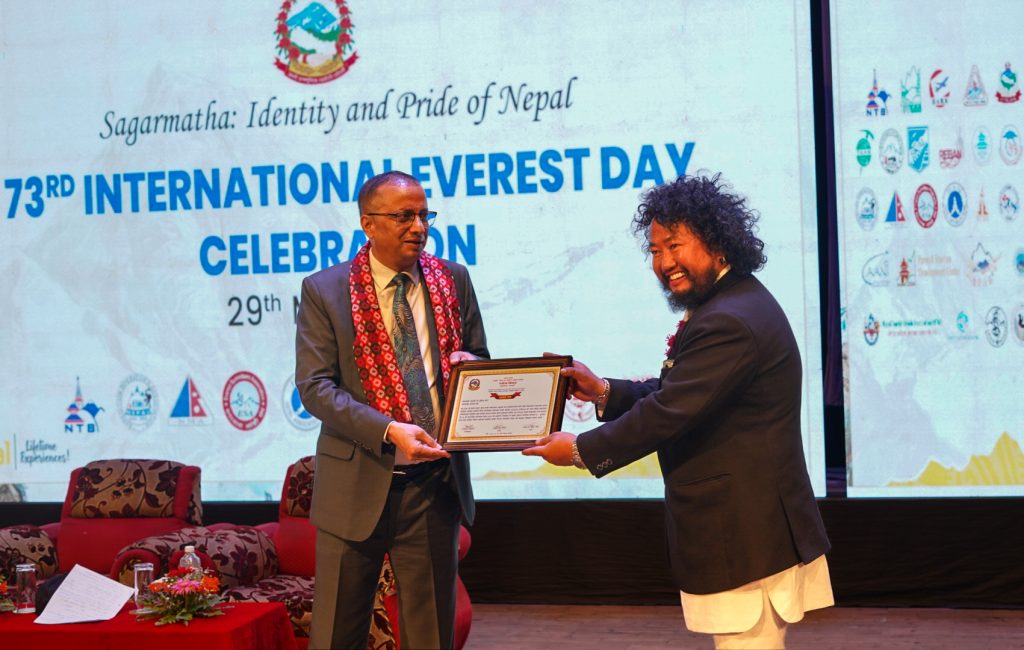
Mountaineer Tenzing David Sherpa received the “Tenzing-Hillary Record Climber Award,” while renowned climber and photojournalist Purnima Shrestha was honoured with the “Pema Doma Women Climber Award.”
Likewise, noted geographer Bishal Nath Upreti was presented with the “Tenzing-Hillary Research and Study Award” for his contribution to the study and research of Nepal’s Himalayan region.
The programme also recognised the contribution of the “Icefall Doctors” team responsible for fixing ropes in the dangerous Khumbu Icefall section, the rope-fixing teams working on Mt. Everest and Mt. Lhotse, as well as liaison officers deployed at the Department of Tourism’s temporary field offices during the climbing season.

Everest Day Celebrated with Focus on Sustainability
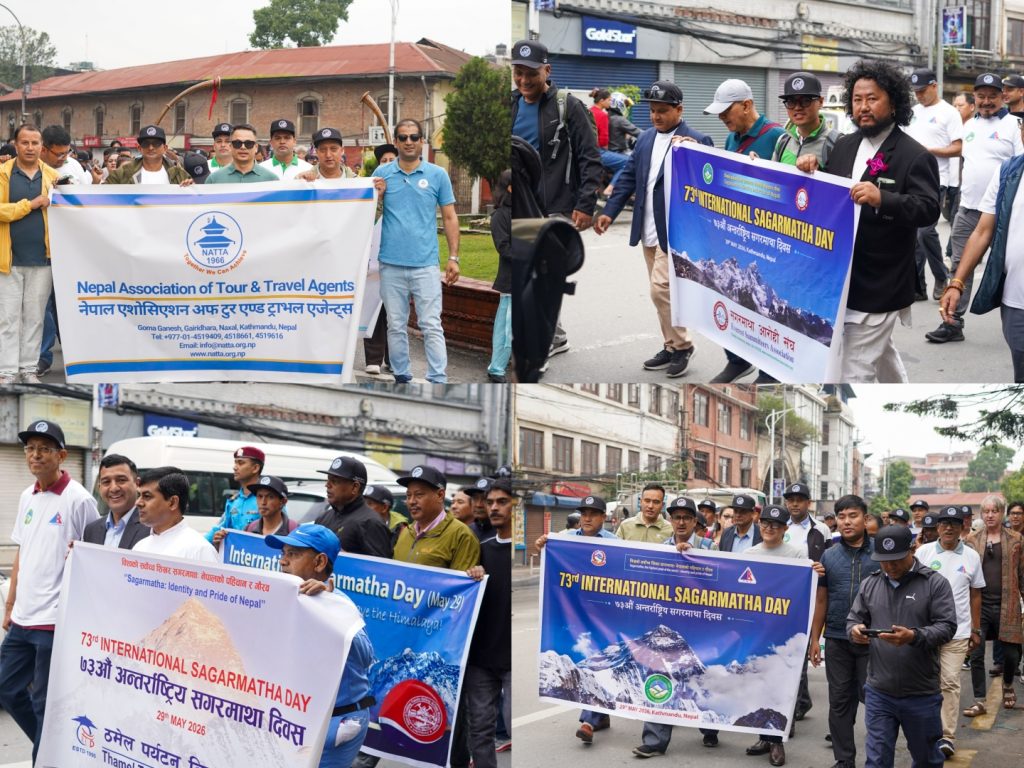
This year’s International Everest Day was celebrated under the slogan “Sagarmatha: Identity and Pride.” The programme strongly emphasised the sustainability of mountain tourism, conservation of the Himalayas, protection of mountain culture, and the urgent global challenges posed by climate change.
Speakers noted that Nepal, home to eight of the world’s 14 highest peaks, carries a unique responsibility in preserving the fragile Himalayan ecosystem. At the same time, they stressed that the burden of protecting the Himalayas cannot rest on Nepal alone, as the impacts of climate change transcend borders and affect the entire planet.
The programme concluded with a collective call for stronger environmental action, sustainable tourism practices, and international solidarity to ensure that future generations can continue to witness the beauty, culture, and significance of the Himalayas.