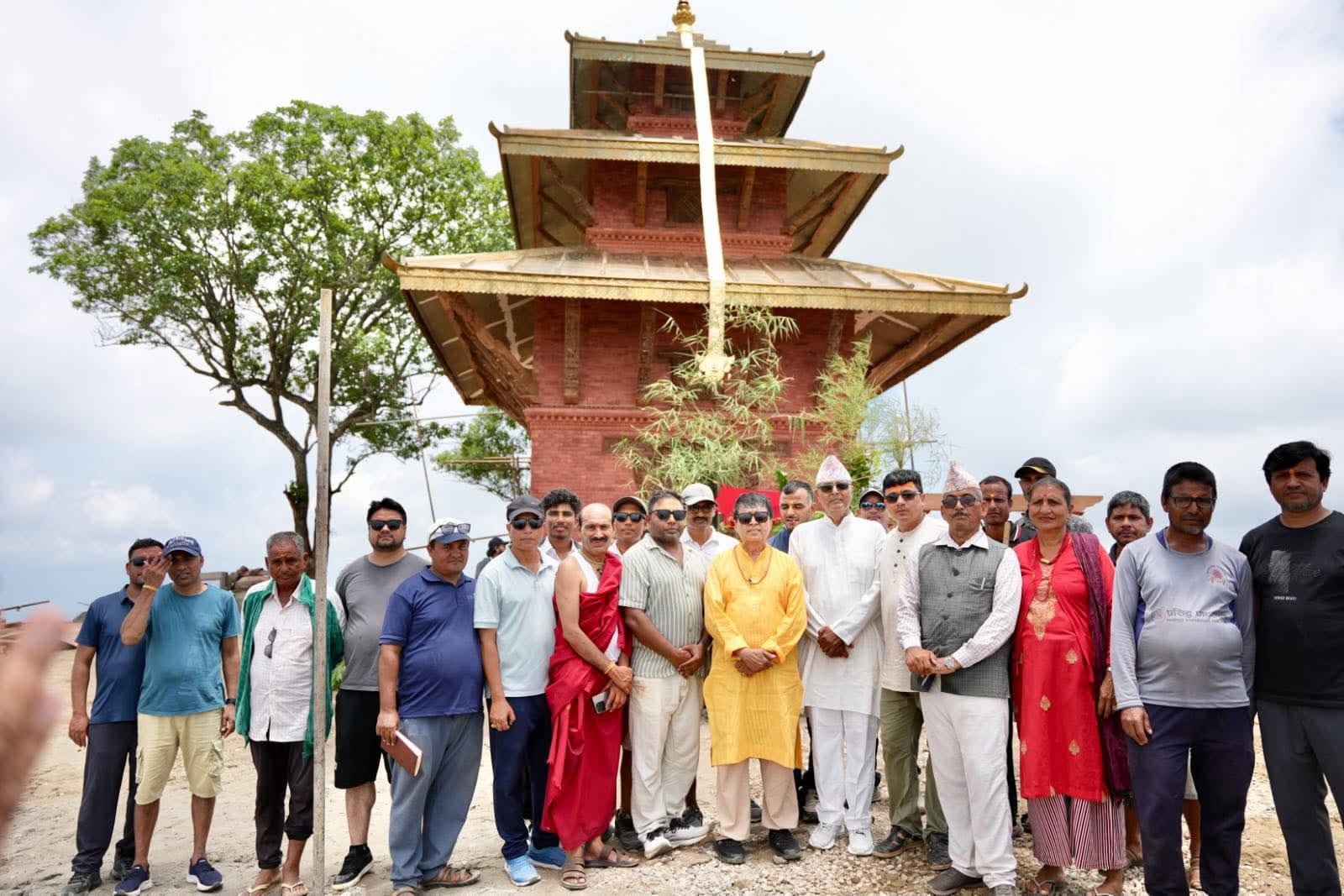
The under-construction Jalapadevi Cable Car Project in Kailali has reached a significant milestone with the consecration of the newly built Jalapadevi Temple, as developers prepare to bring the ambitious tourism project into commercial operation within the next two months.
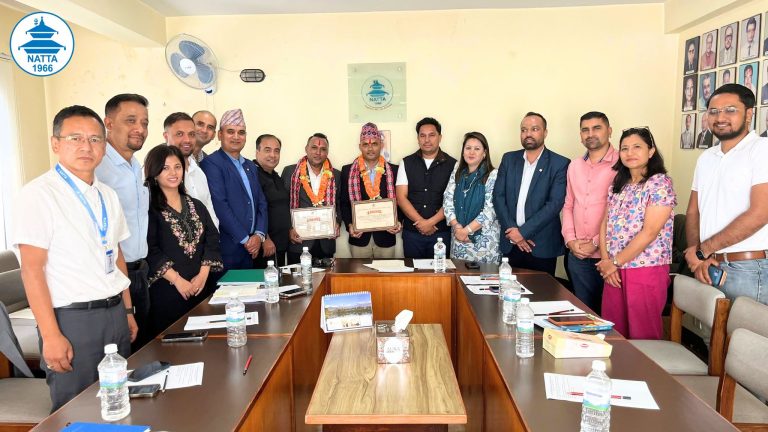
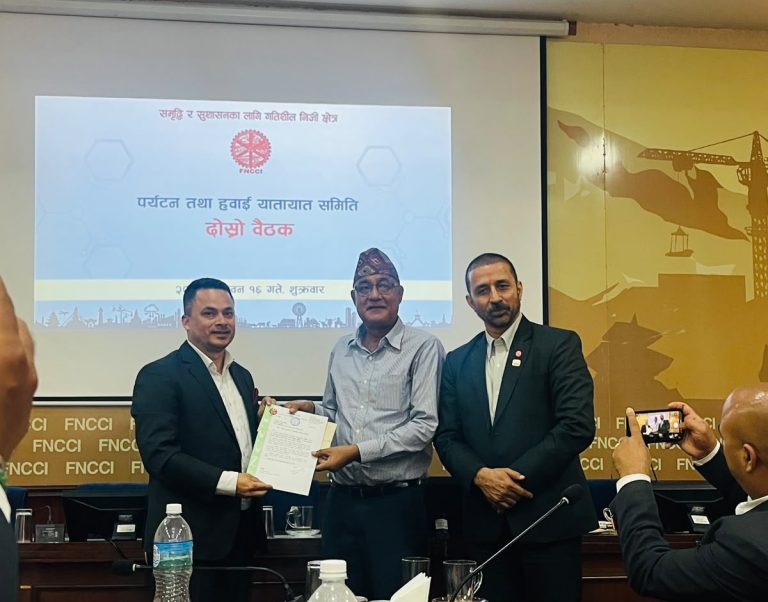
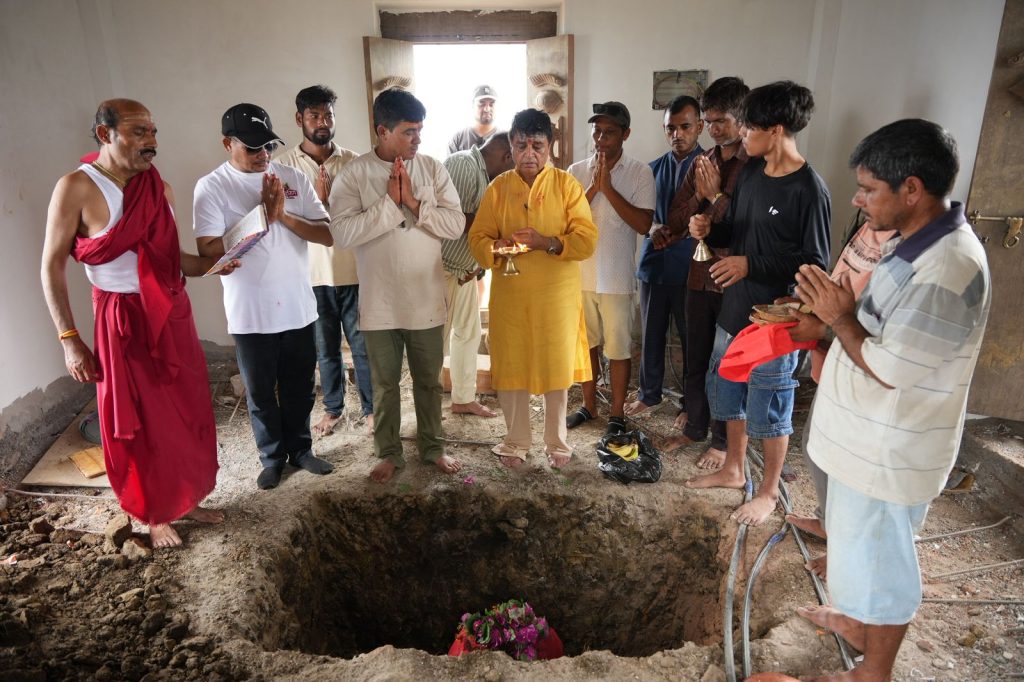
A special Kshama Puja (ritual of forgiveness) and idol consecration ceremony was held on Friday at the newly constructed Jalapadevi Temple in Rajkanda, Ward No. 7 of Mohanyal Rural Municipality. The ceremony was led by Chandra Prasad Dhakal, Chairman of Jalapadevi Cable Car Pvt. Ltd. and Immediate Past President of the Federation of Nepalese Chambers of Commerce and Industry (FNCCI).
The religious ceremony marked the formal installation of the goddess’s idol in the temple’s sanctum, following traditional Hindu rituals involving sacred conch shells, bells, and Vedic chants. The idol was ceremonially transferred from the old temple to the newly built modern shrine.

Cable Car Construction in Final Phase
According to the company, construction of the cable car project is progressing rapidly and has entered its final stage. The project, being developed primarily with investment from the IME Group, is expected to commence commercial operations within two months if construction continues according to schedule.
Most of the major civil works, including the installation of towers, construction of the top and bottom stations, and other physical infrastructure, have been substantially completed. The next phase will involve the project’s key technical works, including installation of the haul rope and gondola cabins. The total investment in the project is estimated at around Rs. 6 billion, including various phases of tourism infrastructure development.
Integrated Tourism Destination Taking Shape
The Jalapadevi Cable Car will connect Chisapani in Lamkichuha Municipality–3 with Rajkanda in Mohanyal Rural Municipality–7 through a 3.1-kilometre cable car system. The project is being developed as a comprehensive tourism destination rather than a standalone cable car facility.
At the lower station in Chisapani, developers are constructing a five-star hotel, casino, banquet hall, and supporting commercial facilities. Meanwhile, the upper station at Rajkanda will feature a resort, the newly constructed Jalapadevi Temple, a skywalk, walking trails, restaurants, children’s park, and other tourism amenities designed to enhance visitor experiences.
According to project engineer Bijay Poudel, construction of both the top and bottom station infrastructure has reached its final phase. “The Jalapadevi Cable Car Project has now entered its final stage of construction. Most structural works, including the stations and towers, have been completed, and rope installation and gondola assembly will begin soon,” he said.
Dhakal Highlights Private Sector’s Delivery Capacity
Speaking during the idol installation ceremony, Chairman Chandra Prasad Dhakal said the project demonstrates the private sector’s ability to complete large-scale infrastructure projects on schedule while maintaining quality and cost efficiency. “We began construction of the Jalapadevi Cable Car Project around 12 months ago,” Dhakal said. “With the consecration of the temple, which is the spiritual heart of this project, we are confident that the cable car will also come into operation within the scheduled timeframe.” He noted that the successful completion of such projects reflects the growing capacity of Nepal’s private sector to deliver transformative tourism infrastructure.
Tourism Infrastructure Key to Nepal’s Economic Transformation
Dhakal emphasized that expanding investment in tourism infrastructure is essential for Nepal’s long-term economic transformation. According to him, improving tourism facilities is crucial for extending visitors’ length of stay, increasing foreign currency earnings, generating employment, and creating sustainable economic opportunities across the country. He also reiterated his long-term vision of developing major tourism infrastructure projects in all seven provinces of Nepal to unlock regional tourism potential and stimulate balanced economic growth.
Catalyst for Sudurpashchim’s Tourism and Economy
The Jalapadevi Cable Car Project is widely regarded as one of the largest tourism investments in Sudurpashchim Province and is expected to become a catalyst for regional economic development. Located amid the scenic landscape surrounding the Karnali River and the iconic Chisapani Bridge, the project is expected to generate substantial benefits for the local economy by boosting the hospitality, transportation, agriculture, trade, and service sectors.
Local business leaders believe the project will create significant employment opportunities while encouraging new private investment in surrounding communities. Residents also expect Rajkanda to emerge as an attractive hill station for visitors seeking relief from the intense summer heat of Nepal’s southern plains.
Strong Potential to Attract Indian Tourists
The project’s strategic location near Nepal’s western border is expected to make it a major attraction for Indian tourists. With convenient road access from the border crossings at Gaddachauki in Kanchanpur, Gauriphanta in Kailali, and Rupaidiha in Banke, the destination is well positioned to serve both domestic and cross-border tourism markets.

Visitors from Indian states such as Uttarakhand and Uttar Pradesh, including major cities like Delhi, Lucknow, Bareilly, and Dehradun, can reach the destination within a few hours by road. From the Nepal-India border, the cable car site is accessible within approximately two hours’ drive. Developers believe this accessibility will make the Jalapadevi Cable Car one of western Nepal’s most attractive tourism destinations for Indian pilgrims and leisure travelers visiting the Karnali-Chisapani region.
Local Enthusiasm Grows as Project Nears Launch
The rapid progress of the cable car and associated tourism infrastructure has generated considerable optimism among local communities and businesses. Residents expect the project to increase tourist arrivals, create jobs, stimulate entrepreneurship, and enhance the national profile of Mohanyal and the wider Sudurpashchim region.
With its combination of religious heritage, modern tourism infrastructure, luxury hospitality facilities, and scenic natural surroundings, the Jalapadevi Cable Car Project is poised to become one of Nepal’s newest integrated tourism destinations and a landmark investment in western Nepal’s tourism industry.