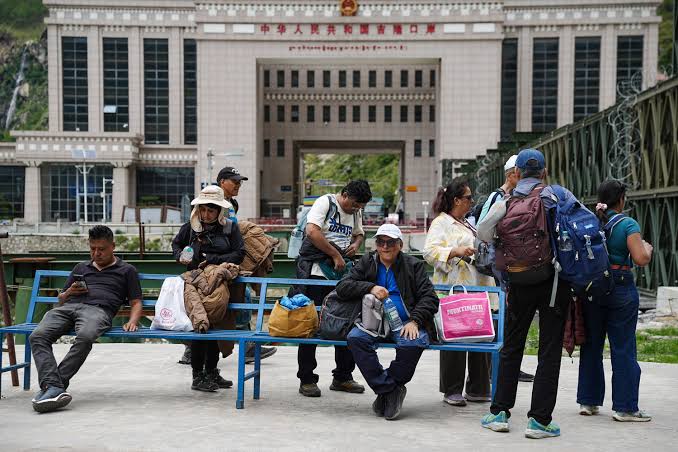
A total of 13,523 religious tourists travelled through the Rasuwagadhi border point to visit the sacred Mount Kailash and Lake Mansarovar in Tibet during the fiscal year 2082/83, according to data released by the Immigration Office, Rasuwagadhi. The figure represents an 18.75 percent increase compared to the 11,387 pilgrims who used the same route in the previous fiscal year, highlighting the growing popularity of the overland pilgrimage corridor connecting Nepal and China’s Tibet Autonomous Region.
Rasuwagadhi Route Gains Popularity
Officials attribute the increase in pilgrim arrivals to the rising preference for the Rasuwagadhi–Kerung (Gyirong) route, which has emerged as a more affordable and accessible alternative to helicopter and air travel via Nepal’s Humla district. The route has become the primary overland gateway for pilgrims travelling from Kathmandu to the revered pilgrimage sites in Tibet.

Devotees typically travel by road from Kathmandu to Timure, cross the Nepal-China Friendship Bridge into Kerung, and continue through Saga before reaching Lake Mansarovar and Darchen, the starting point for the sacred Kailash Parikrama (Kora). The importance of the Rasuwagadhi corridor increased significantly after the Kodari-Tatopani border crossing suffered extensive damage during Nepal’s devastating 2015 earthquake, resulting in much of the pilgrimage traffic shifting to the Rasuwagadhi-Kerung route.
Kailash Mansarovar Holds Deep Religious Significance
Located at an altitude of approximately 6,638 metres in Purang County of Tibet, Mount Kailash is regarded as one of the world’s most sacred mountains. For Hindus, it is believed to be the abode of Lord Shiva, while Lake Mansarovar is considered a symbol of purity and spiritual enlightenment. The pilgrimage also holds profound religious significance for Buddhists, Jains, and followers of the ancient Bon religion, making it one of Asia’s most important spiritual destinations. Every year, thousands of devotees undertake the challenging pilgrimage, combining religious devotion with a physically demanding high-altitude journey.
Indian Pilgrims Continue to Dominate Visitor Numbers
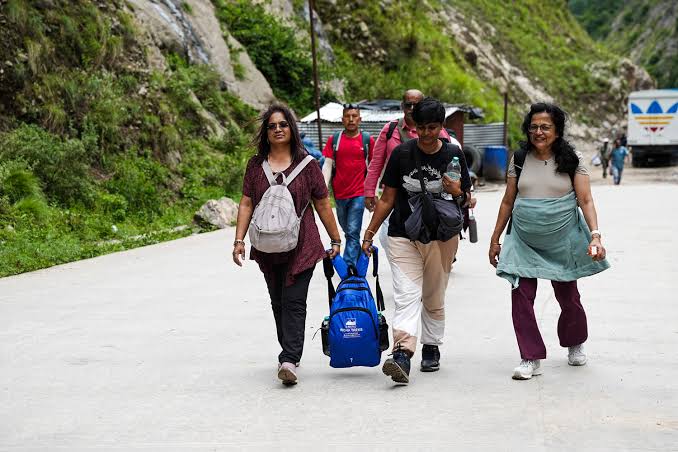
According to immigration records, Indian nationals accounted for the largest share of pilgrims travelling through Rasuwagadhi during the fiscal year. The route also welcomed a significant number of Nepali devotees, along with smaller groups of pilgrims from countries including the United Kingdom, Russia, and several other international markets. The diverse mix of visitors reflects the global religious significance of the Kailash Mansarovar pilgrimage.
Spring Remains the Peak Pilgrimage Season
Immigration officials reported that pilgrim movement was highest between April and June, when weather conditions on the Tibetan Plateau are considered most suitable for travel. During this year’s spring season, thousands of pilgrims crossed the Rasuwagadhi border as favorable weather and improved road access encouraged more devotees to undertake the pilgrimage. Tour operators say the overland journey has become increasingly attractive because it allows travelers to acclimatize gradually to the high altitude while offering a more economical option than helicopter-based packages.

Growing Demand Expected in Coming Years
With religious tourism continuing to recover and cross-border connectivity improving, tourism entrepreneurs and government officials expect the number of pilgrims using the Rasuwagadhi-Kerung corridor to increase further in the coming years. The steady rise in pilgrim traffic reinforces Nepal’s role as a key transit hub for the Kailash Mansarovar Yatra and highlights the growing importance of the Rasuwagadhi border point in facilitating cross-border religious tourism between Nepal and China.
Kailash Mansarovar Pilgrimage via Rasuwagadhi (FY 2082/83)
| Indicator | FY 2082/83 | FY 2081/82 | Change |
|---|---|---|---|
| Total Religious Tourists | 13,523 | 11,387 | +18.75% |
| Main Border Crossing | Rasuwagadhi–Kerung | Rasuwagadhi–Kerung | |
| Peak Travel Season | April–June | April–June | |
| Largest Visitor Group | Indian Pilgrims | Indian Pilgrims | |
| Other Major Visitors | Nepali, UK, Russia & Others | Nepali & International Pilgrims |